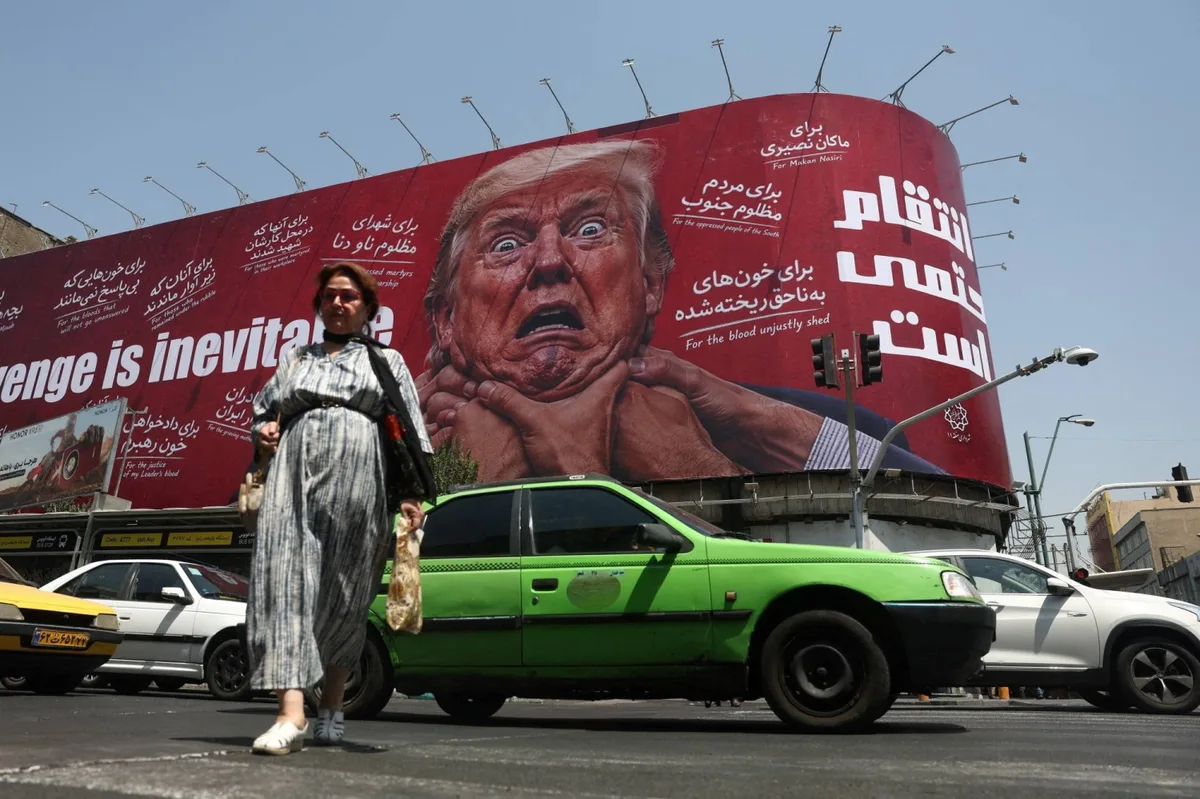
President Donald Trump's foreign policy agenda remains stalled as he heads into the November 2026 midterm elections, with ongoing crises in Iran, Ukraine, and Gaza unresolved after months of tension and conflict across multiple fronts [1, 2, 3, 4, 5, 6, 7]. On August 19, Trump canceled talks with Iran, announcing a new campaign of economic warfare against Tehran, further escalating tensions with no resolution in sight [1, 3, 4, 5, 6, 7]. The conflict with Iran has driven gasoline prices and inflation higher in the U.S., contributing to Trump's approval rating dropping to about 33% amid growing domestic frustrations [1, 3, 4, 5, 6, 8, 7].
Diplomatic efforts to ease conflicts have faltered. Jared Kushner, Trump’s son-in-law, led recent peace talks on Gaza that stalled without breakthrough, and Trump’s planned visit to Kyiv to renew Ukraine peace negotiations has yet to take place [1, 8, 7]. Despite early-term successes such as brokering a Gaza ceasefire and the U.S. military capture of Venezuelan President Nicolas Maduro without casualties, Trump has not secured lasting peace agreements in recent months [1, 3, 4, 5, 6, 8, 7]. Experts say Trump's heavy reliance on coercive economic and military pressure forces rivals to negotiation tables but rarely leads to durable deals [3, 4, 5, 6, 8, 7].
"Trump has successfully challenged and disrupted the comfortable foreign policy consensus in Washington, but has not translated that disruption into a strategy with deliverables for Americans," said Asli Aydintasbas of the Brookings Institution [1]. Stephen Wertheim from Carnegie Endowment described Trump as "obsessed with coercive measures and sometimes flatters opponents to make them submit, ignoring their strategic goals and domestic politics" [3]. An unnamed Trump ally acknowledged, "The conflict with Iran weighs intensely on the president, and there is no consensus inside the White House on how to resolve it" [1].
Violence escalated in August, with Israeli airstrikes killing 11 in Lebanon on August 16 despite ongoing U.S.-brokered peace efforts, and Russian airstrikes killing 16 in Kyiv on August 20, deepening the Ukraine conflict and undermining peace efforts [3, 4, 5, 6, 8, 7]. Meanwhile, Trump recently renewed threats to bomb Oman, a U.S. ally involved in Gulf peace negotiations with Iran [1, 2, 7]. Opponents including Vladimir Putin, Xi Jinping, and Iran’s leaders appear to use delay tactics ahead of midterms to await potential changes in U.S. politics [3, 4, 5, 6, 8, 7].
The overseas conflicts and economic effects have raised investor concerns about rising U.S. borrowing costs and are limiting Trump’s options domestically [3, 4, 5, 6, 7]. Republicans risk losing control of one or both houses of Congress in the November midterms partly due to these diplomatic setbacks and mounting economic pressures [1, 3, 4, 5, 6, 7]. Nick Snyder of the Hudson Institute summarized Trump’s approach: "The president hopes for a more stable world and tries to solve disputes, whether hot conflicts like Ukraine or cold disputes like trade and excess capacity" [3].
Reports on August 22 underscored the White House’s mounting pressure and discord over foreign policy amid faltering public support [1, 2, 3, 4, 5, 6]. With Labor Day on September 7 marking the traditional start of intensified election campaigning, Trump and his administration face critical weeks ahead as they attempt to regain momentum before the midterm polls [1].