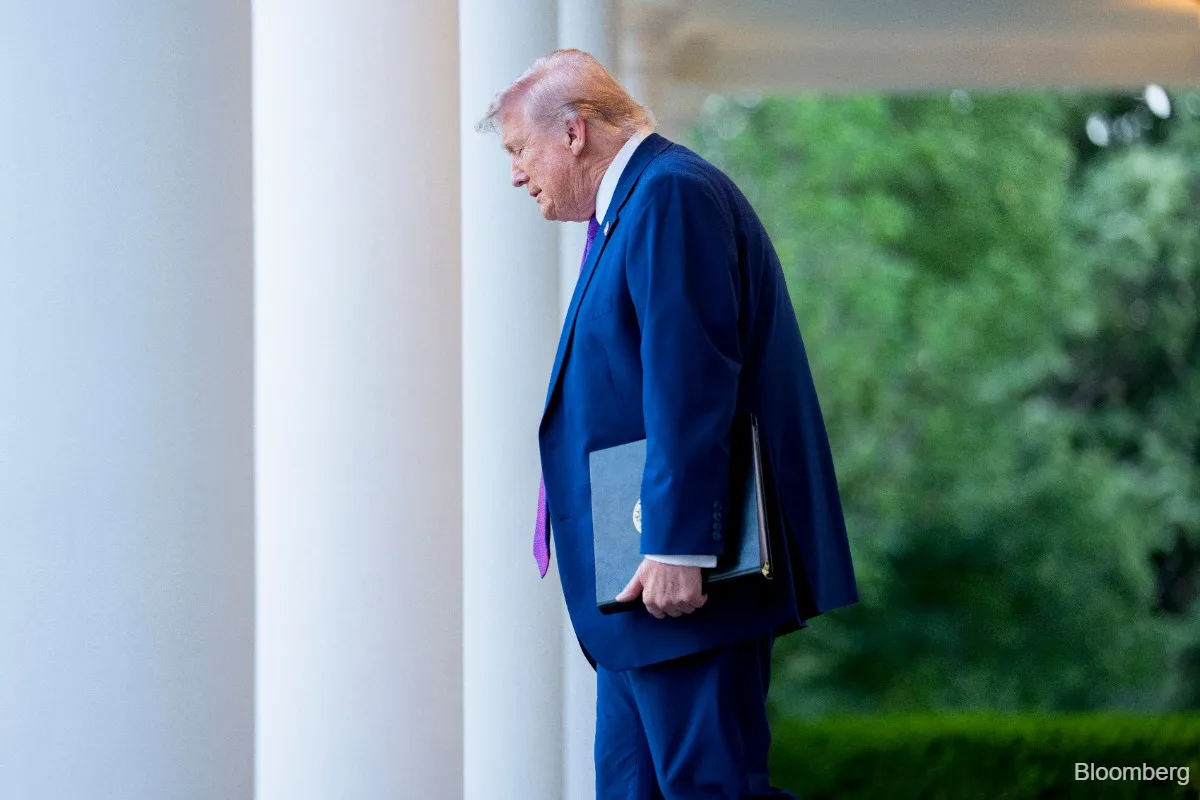
US President Donald Trump said further Federal Reserve interest rate cuts might have to wait until the war with Iran has ended. He told reporters, "You can’t really look at the figures until the war is over," referring to the war’s impact on inflation and market analysis [1, 2, 3].
Trump claimed Iran was "dying to sign" a ceasefire deal with the US, but often sends documents that do not match agreed terms. "They make a deal, and then they send you a paper that has no relationship to the deal you made," he said [1, 3]. However, Iran continues to insist on verified sanction relief and refuses US demands to dismantle its nuclear enrichment infrastructure, resulting in fragile negotiations [3].
Geopolitical tensions in the Middle East, such as drone attacks on UAE nuclear facilities, are adding to market concerns and inflationary pressures. Brent crude recently traded over $109 per barrel, and West Texas Intermediate crude above $105, reflecting supply risks from these conflicts [3].
The US consumer price index report from May 12 showed 3.8% annual inflation, the highest in three years amid these tensions [2]. Market expectations for Federal Reserve policy have shifted sharply. Before the Iran war, markets expected over two quarter-point rate cuts by the end of 2026 [2]. Now risks of inflation and the war have increased the chance of a 0.25% rate hike by March 2027 [2, 3].
Kevin Warsh will become the new Federal Reserve Chairman on June 15, replacing Jerome Powell. Warsh steps in amid low policy flexibility due to economic and geopolitical uncertainty [3].
Trump also stressed the importance of the US winning the AI technology race against China [3].
The next major economic milestone will be the Federal Reserve’s policy actions under Warsh’s leadership starting mid-June 2026, which will reflect evolving assessments of inflation and geopolitical risks.