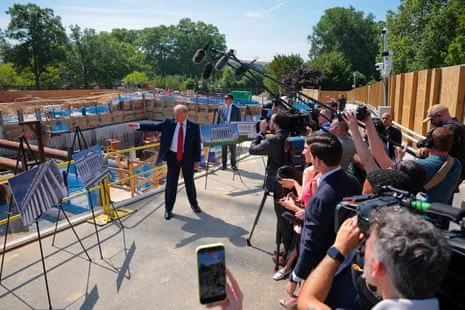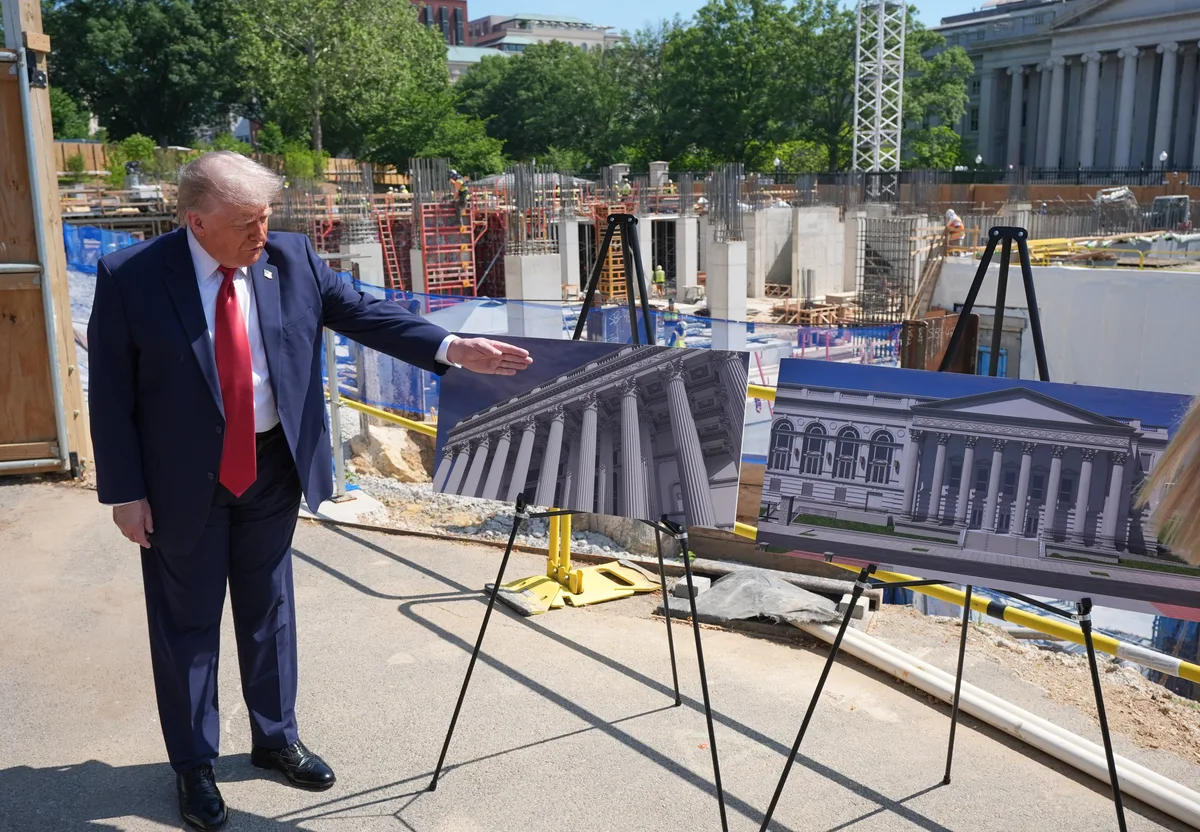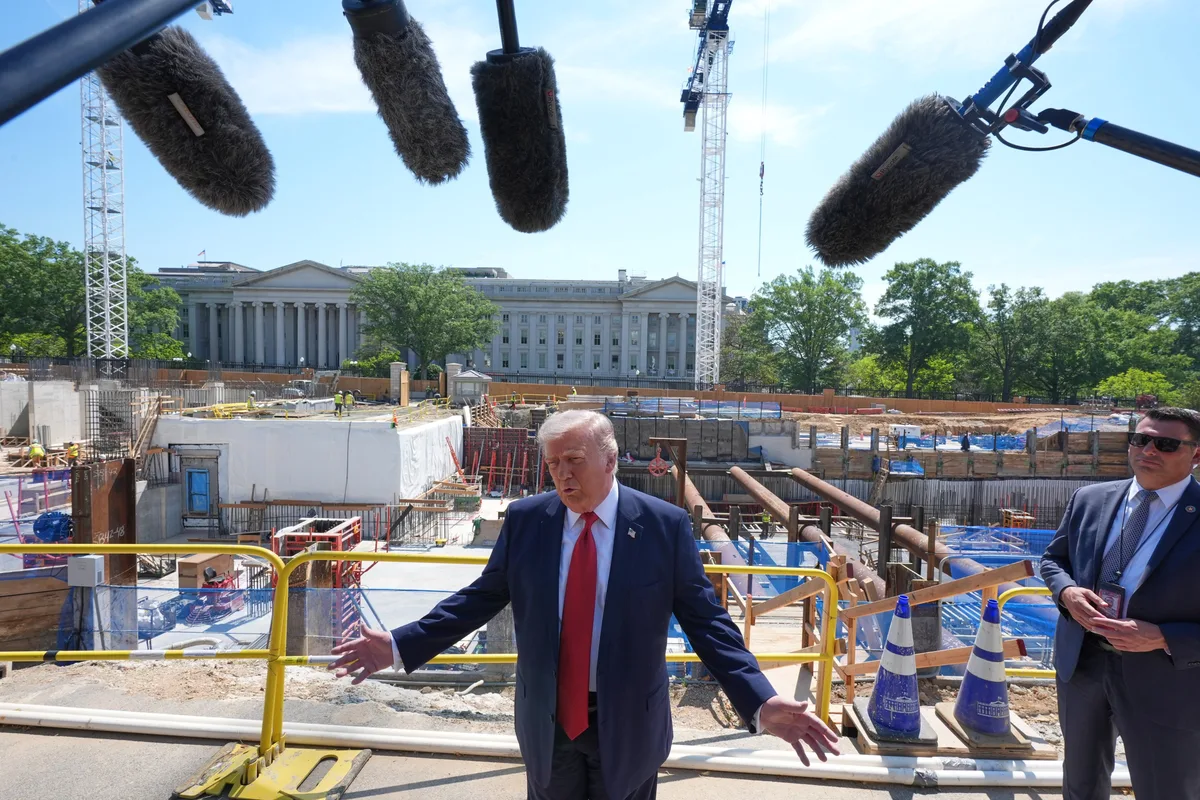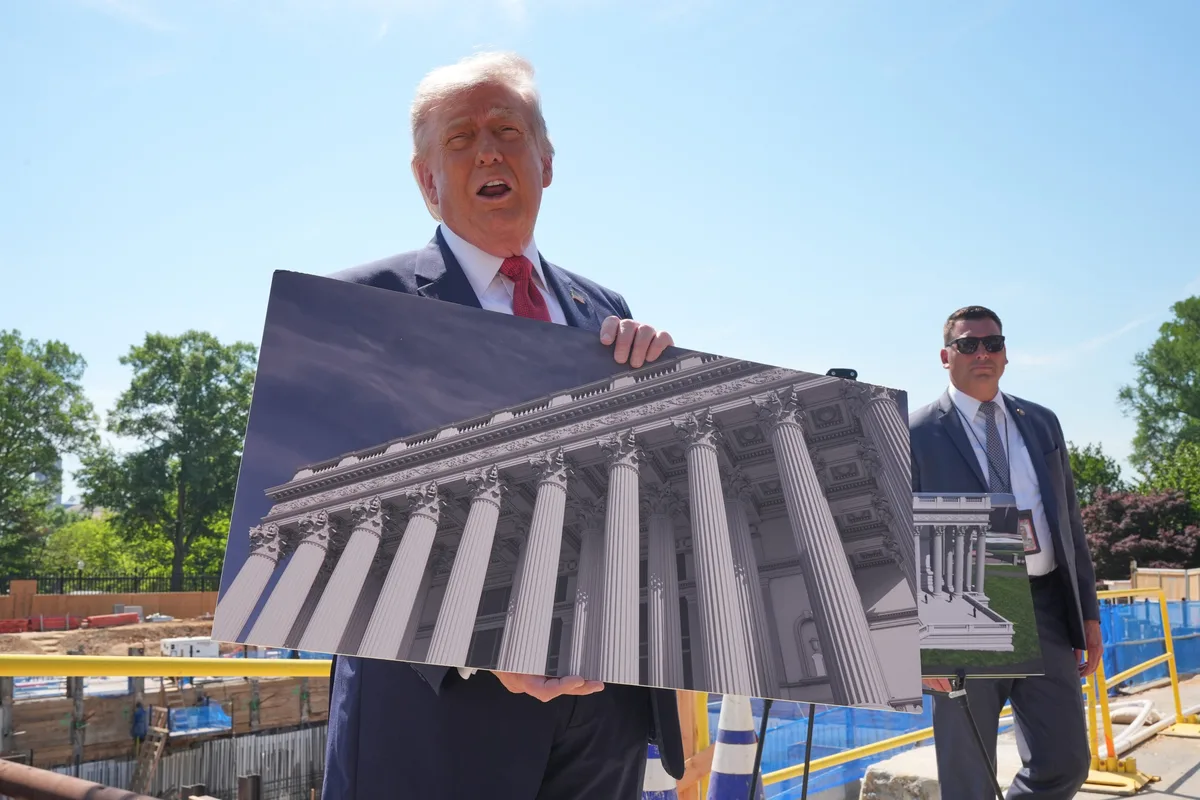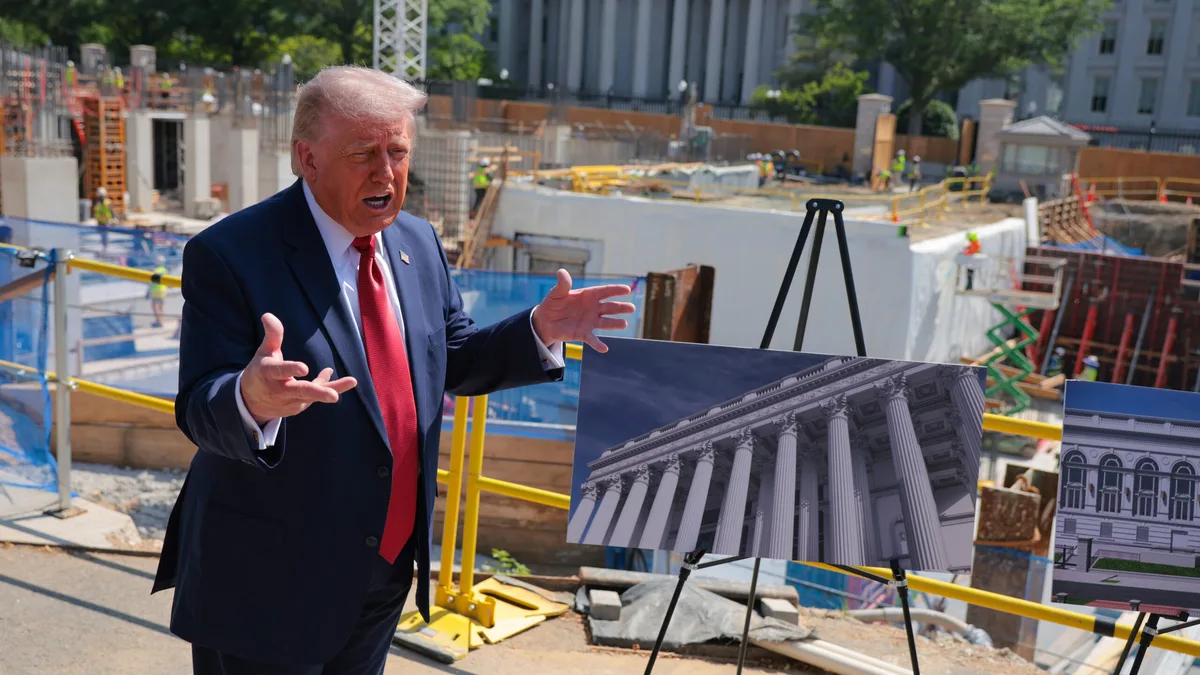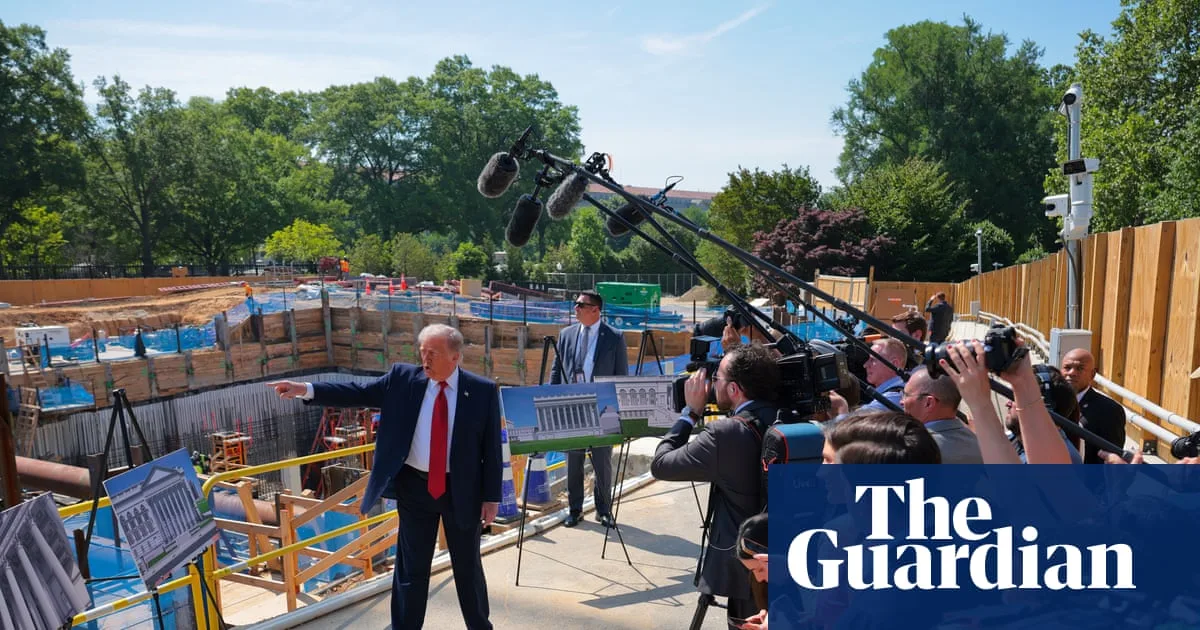
President Donald Trump gave reporters a tour on May 19, 2026, of the construction site for a new White House ballroom on the former East Wing site [1, 2, 3, 4]. The six-story underground complex will hold a ballroom for about 1,000 people, a military hospital, research facilities, offices for the first lady, and a full kitchen [1, 2, 4].
Trump described the rooftop as flat and made of strong steel, calling it "impenetrable" and "drone-proof," with a "drone port" capable of housing unlimited military drones to protect Washington [1, 2, 3, 5, 4]. He said, "The roof also goes down into the basement. This is one well-knit building. One thing doesn’t work without the other" and added, "The roof is dead flat with absolutely nothing but strength on it...a drone port with unlimited numbers of drones" [1, 4].
Construction uses 9,000 pounds of concrete and four-inch-thick glass to harden defenses [4]. Trump called the ballroom a "gift" to the country and emphasized coordination with the military and Secret Service on the project [2]. He said, "There will never be another building like this built, that I can tell you" and noted sniper capabilities saying, "I hate to use the word snipers, but we have great sniper capacities built for our snipers. Not the enemy snipers, our snipers" [1, 4].
The ballroom's estimated $400 million construction cost is funded by private donors, including Trump, separate from the $1 billion Congress was asked to approve for additional White House security upgrades [1, 2, 3, 4]. Congress, including members from both parties, is balking at approving the $1 billion in taxpayer funding amid inflation and election-year concerns [1, 2, 4]. The Senate parliamentarian ruled May 17 that the $1 billion security funding request could not be included in an immigrant enforcement agency funding bill [1, 4].
The project involves demolishing the White House’s former East Wing and has prompted a lawsuit from the National Trust for Historic Preservation over authority concerns [4]. The Pentagon issued guidelines in January 2026 encouraging physical hardening of critical infrastructure with hardened roofs and barriers to defend against drone threats [3].
The next scheduled funding decision awaits congressional action amid ongoing debates over the $1 billion security budget separate from the privately funded ballroom construction.