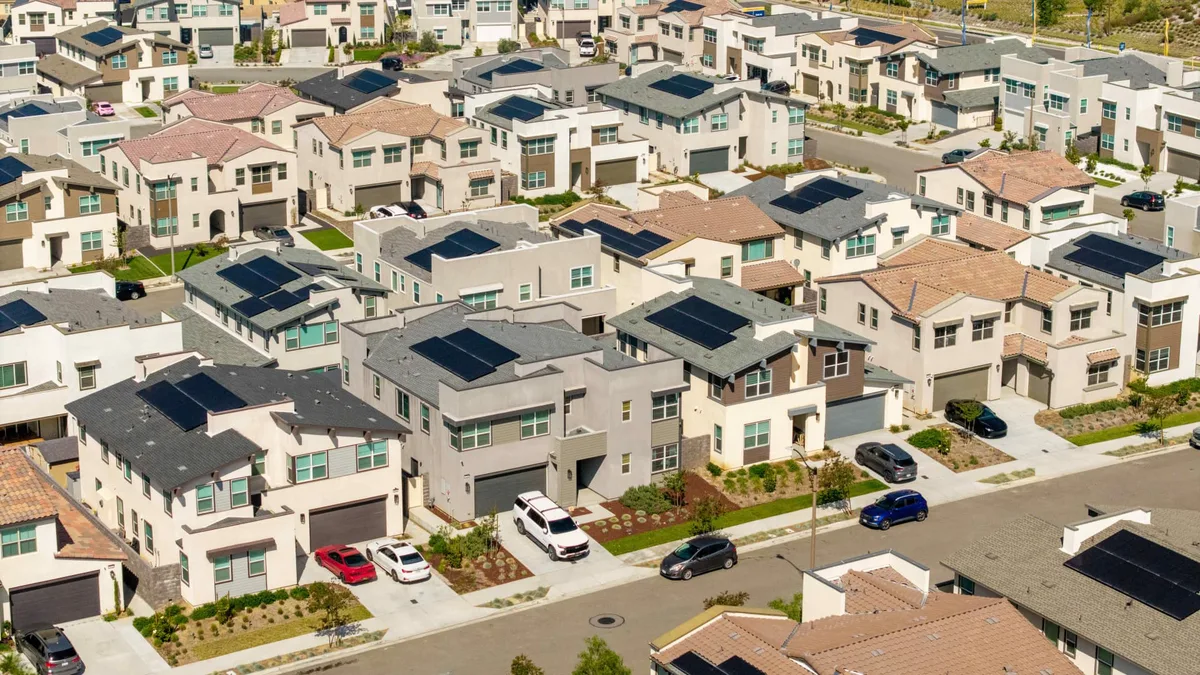
The U.S. House of Representatives passed a bipartisan housing affordability bill on May 20, 2026, that limits major investors from purchasing single-family homes but permits them to build additional housing units[citation needed] [1, 2]. The measure passed overwhelmingly with a 396-13 vote, reflecting strong bipartisan backing [2]. The bill bans large institutional investors from buying new single-family homes, a key priority supported by both the Trump administration and Senator Elizabeth Warren [1, 2].
The final House version removes a Senate provision requiring investors who own 350 or more housing units to sell newly built homes within seven years [1, 2]. Senate leaders had expressed concern that this forced sale requirement could reduce the overall housing supply [1]. Senate Majority Leader John Thune said the Senate will "deal with it accordingly" once it receives the House-passed bill [1].
Senator Bernie Moreno criticized the removal of the forced sale provision, saying the House bill "basically gutted President Trump's principal priority, which is to make certain that young people have access to single-family homes to buy." Moreno added, "If we kill the build-and-rent industry, so be it. We don't want homes to be for rent, we want them to be the way that young people, especially, build generational wealth" [1]. Despite this, a White House official said the administration supports the revised House bill following negotiations and changes [1, 2].
House Financial Services Committee Chairman French Hill said the bill "prioritizes American families by expanding homeownership, enhancing affordability, reducing burdensome regulations that drive up costs, and increasing housing supply nationwide. Importantly, it delivers on President Trump's call to limit institutional investors from competing with the American people as they seek to purchase a home" [2]. A May 2026 survey indicated 70% of voters support banning large investors from owning more than 350 homes [2].
The bill sets the threshold for investor ownership at 350 housing units, determining which provisions apply [1, 2]. Earlier in March 2026, senators had voted against the bill due to concerns over the forced sale of build-to-rent homes [1]. After the House's passage on May 20, 2026, Senate Majority Leader Thune reiterated the Senate will act on the legislation [1].