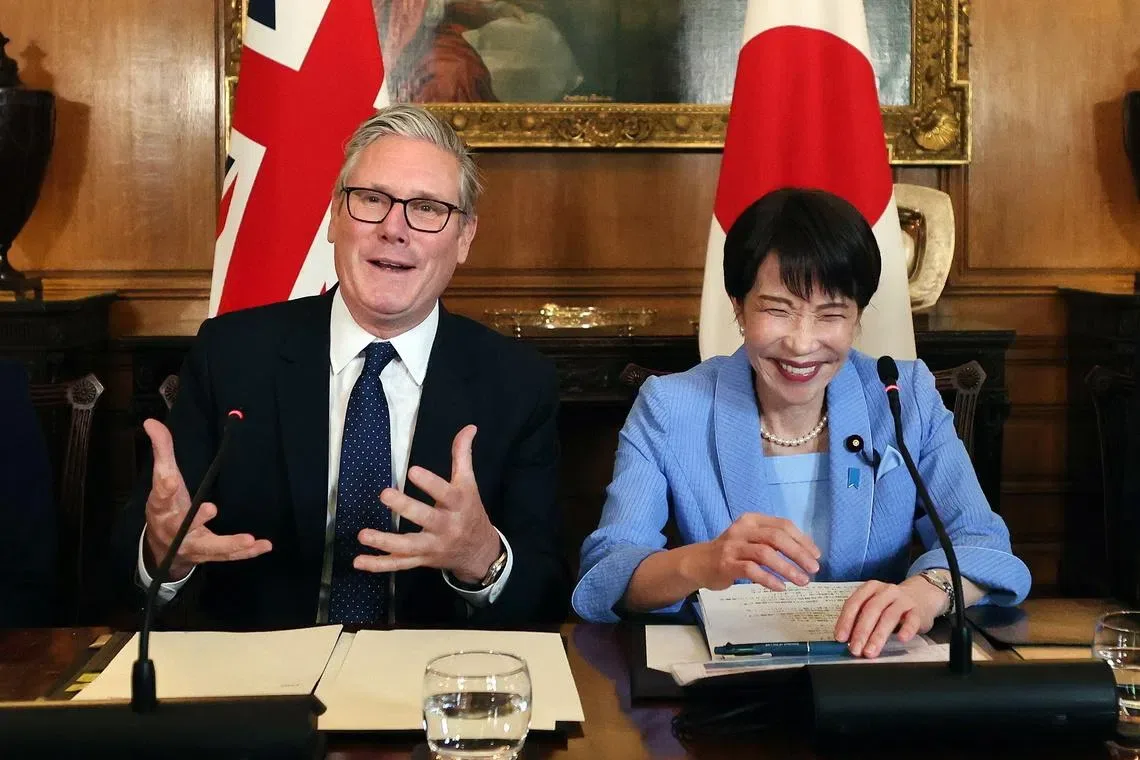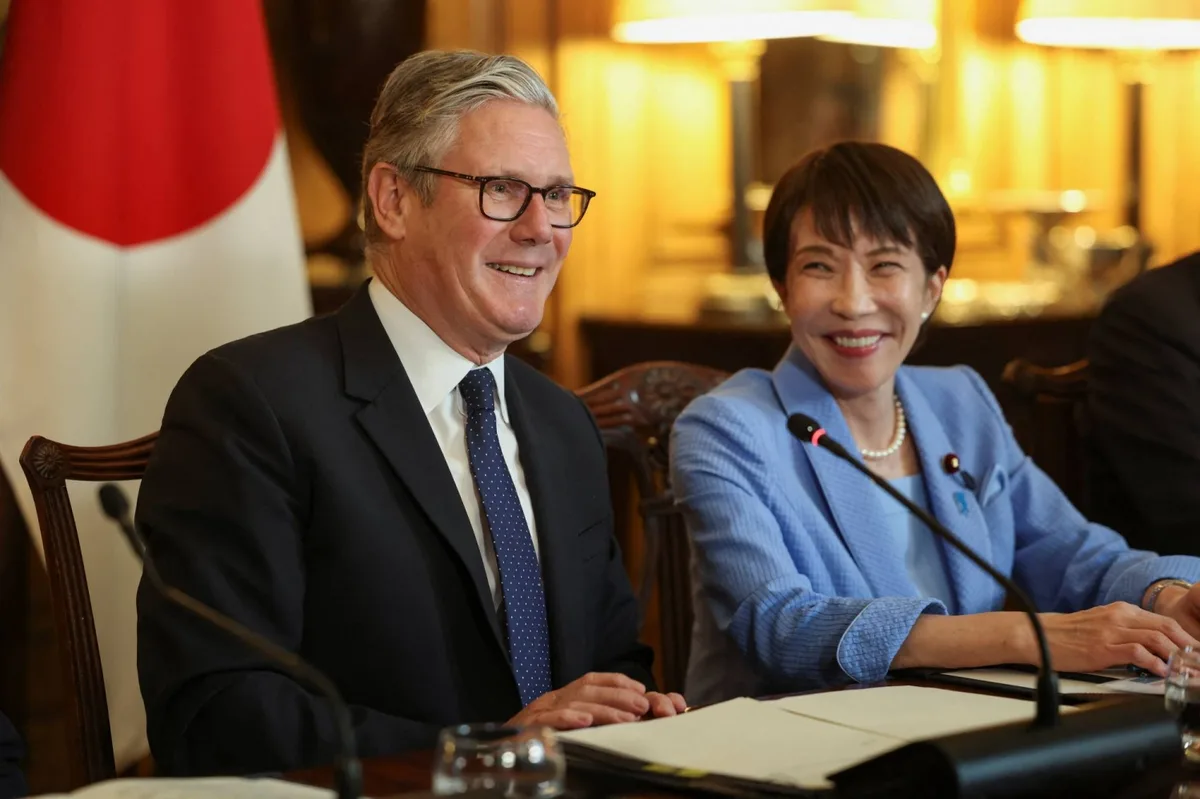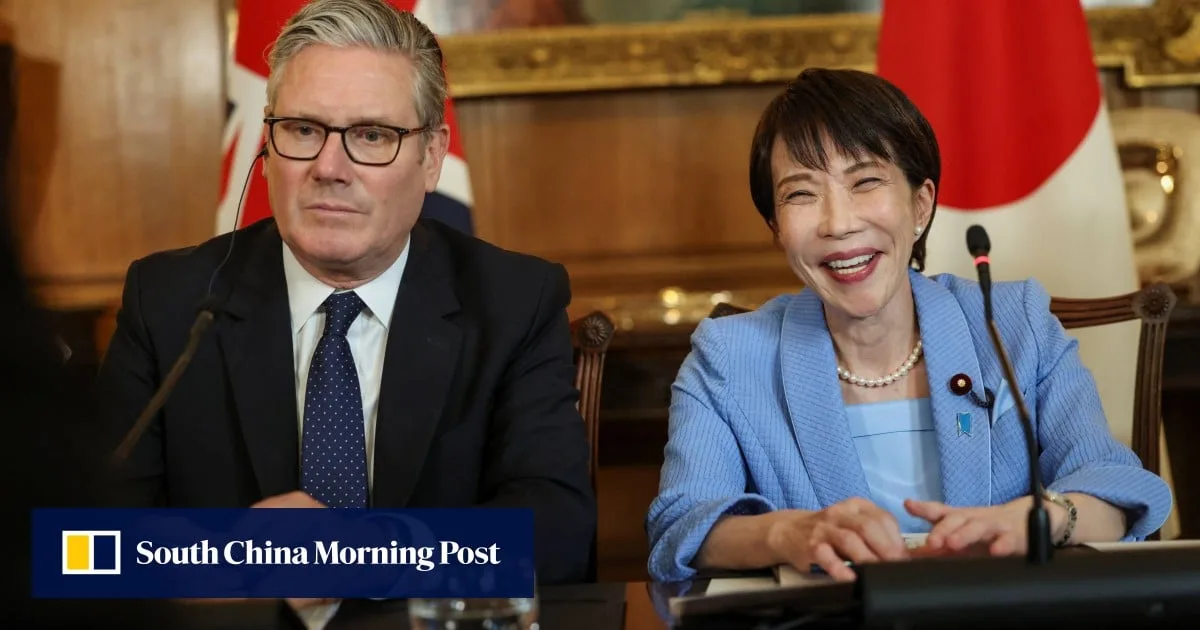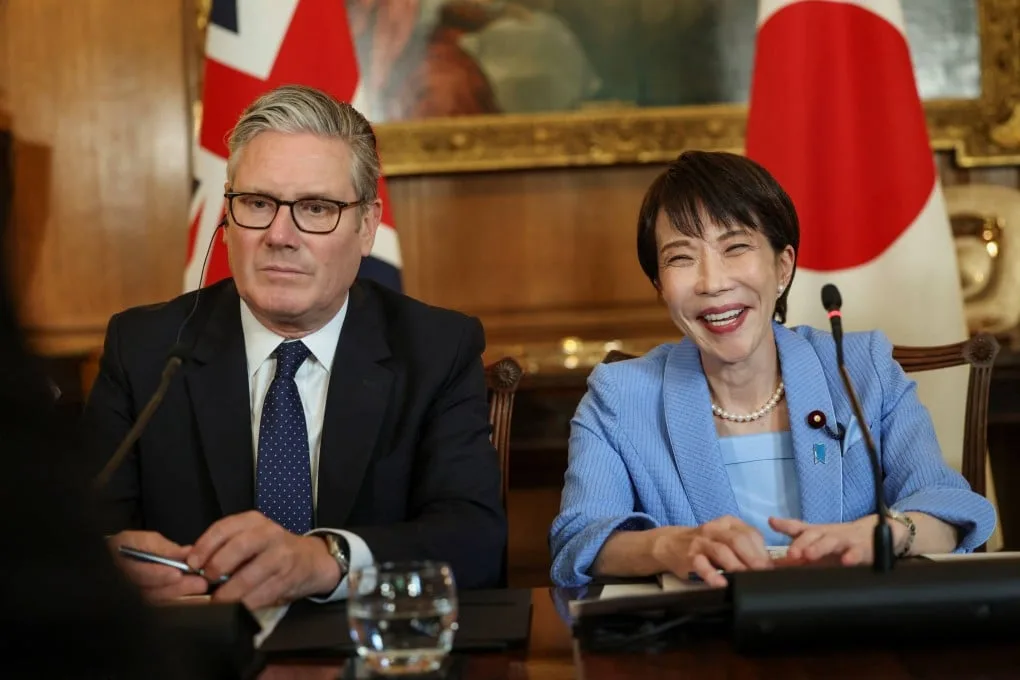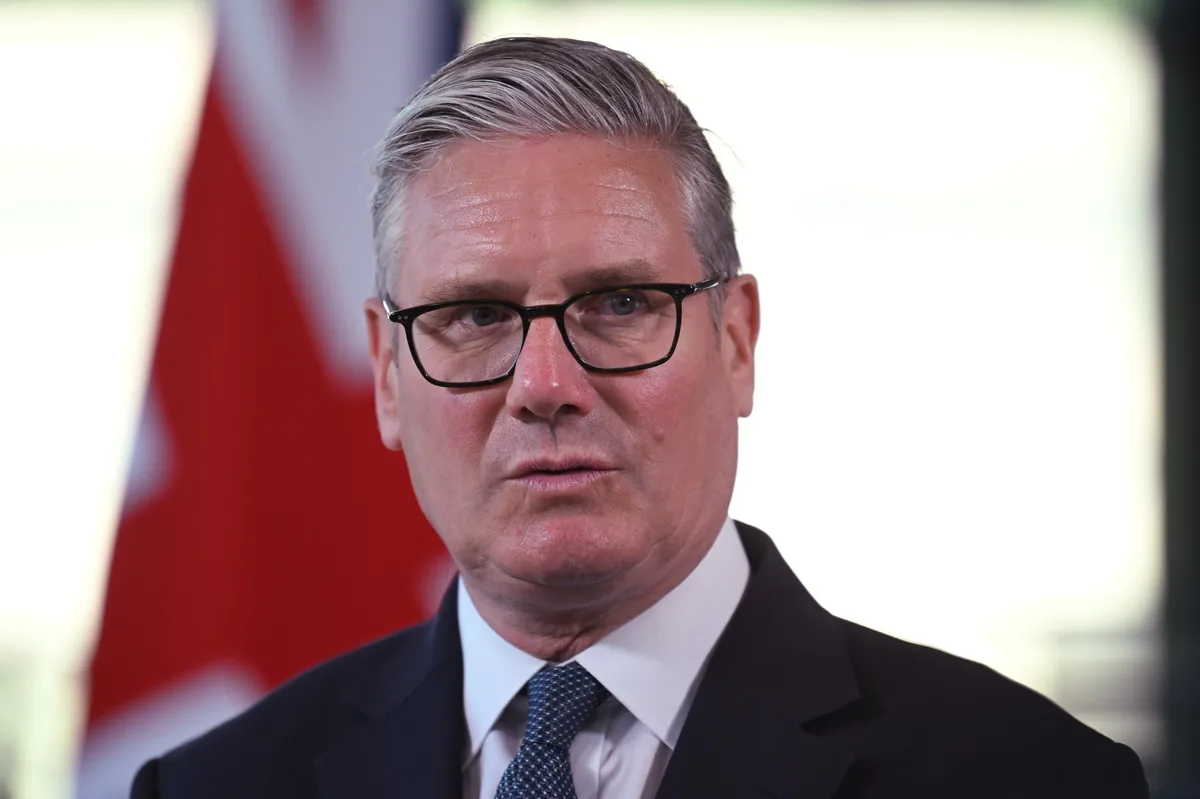
British Prime Minister Keir Starmer met Japanese Prime Minister Sanae Takaichi in London on June 14, 2026, to discuss the Global Combat Air Programme (GCAP), a trilateral effort to develop a next-generation fighter jet by 2035 involving the UK, Japan, and Italy [1, 2, 3, 4]. The two leaders expressed strong, ongoing commitment to the programme and planned to sign an international contract in June to launch the next phase [2, 3, 4].
GCAP faces challenges due to delays in Britain’s financial contribution. The UK Defence Secretary John Healey resigned on June 11, heightening uncertainty around the UK’s funding commitment [1, 2, 3]. Britain initially planned to announce its GCAP funding as part of its 10-year defence investment plan in late 2025 but postponed it due to disagreements between the Defence Ministry and Treasury [2, 3].
Japan has invested over ¥500 billion in GCAP in the five years up to March 2026 and allocated an additional ¥170 billion for the current fiscal year beginning April 2026 [2]. Italy’s Parliament approved a $10.7 billion funding plan for the project earlier this year in February 2026 [2, 5].
During the London talks, Takaichi said, “The UK is a very important partner to Japan given the deepening of ties across a wide range of fields, including security and defence. Given the GCAP project, I think we have reached a level that we can call a near-alliance.” Starmer added, “I’m really pleased that today we can reconfirm our deep commitment in relation to GCAP.” She also noted, “Japan and the UK are strengthened global strategic partners and also maritime nations. Therefore, we share the understanding that the security of each country’s region is inextricably linked.” [2]
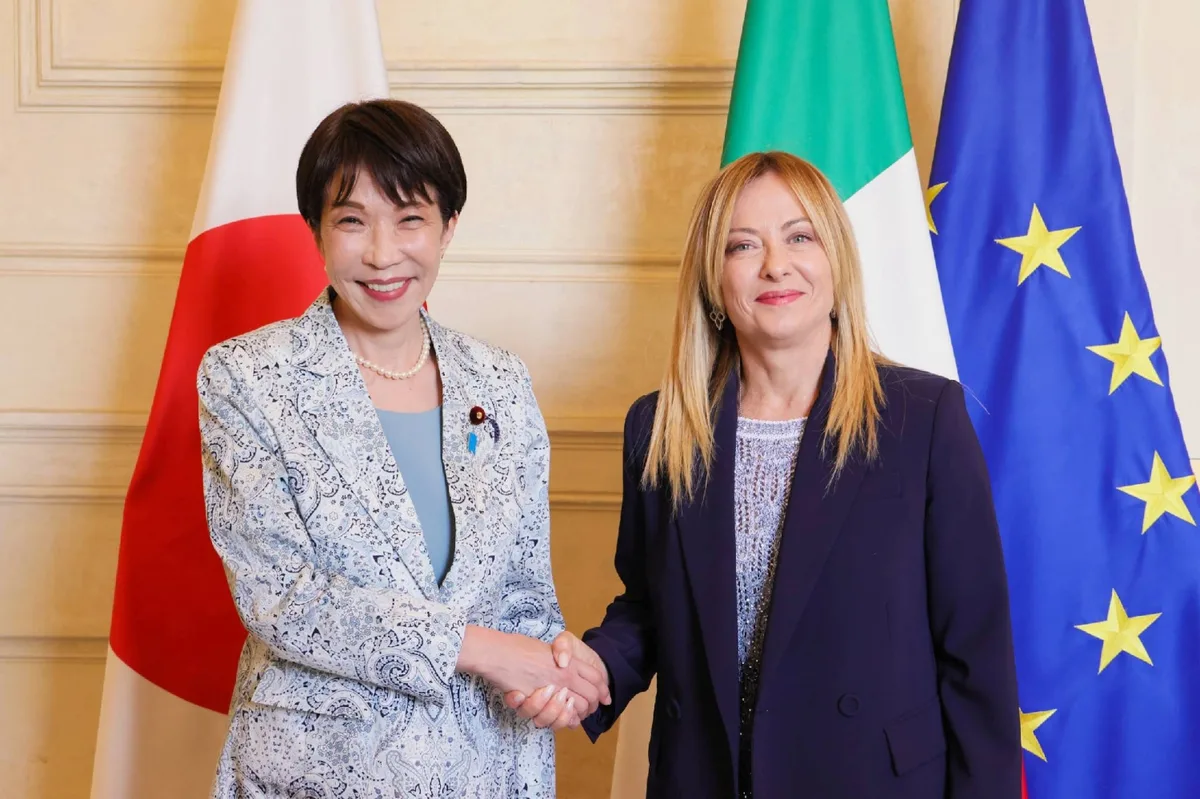
On June 15, following the UK-Japan meeting, Japan and Italy held talks in Rome. They agreed to promote joint development of the fighter jet with the UK and to strengthen cooperation on economic security and technology [5]. Italian Prime Minister Giorgia Meloni said, “Italy and Japan were strategic partners and I was able to exchange views with my Japanese counterpart on a wide range of issues.” [5]
Starmer and Takaichi also agreed to deepen economic security cooperation, including supply chain resilience for critical minerals, implicitly addressing concerns about China [4, 5].
The three nations aim to finalize contracts to launch GCAP’s next phase later this month, moving forward despite Britain’s unsettled funding position [2, 3, 4, 5].