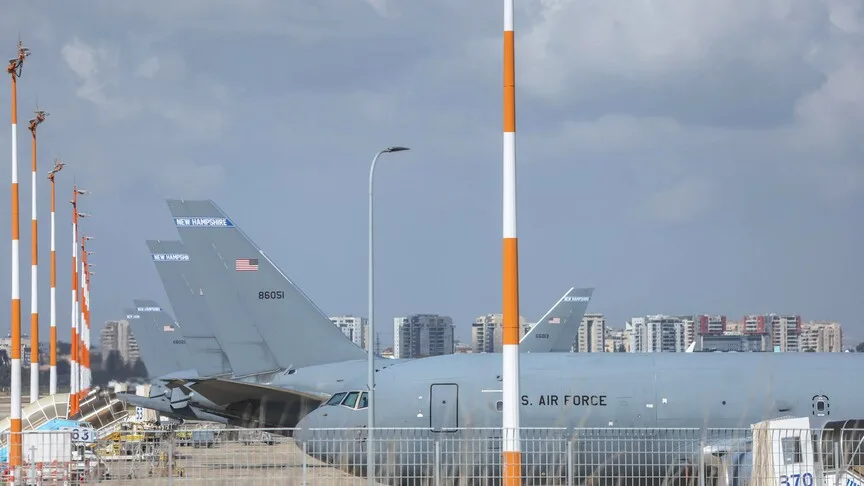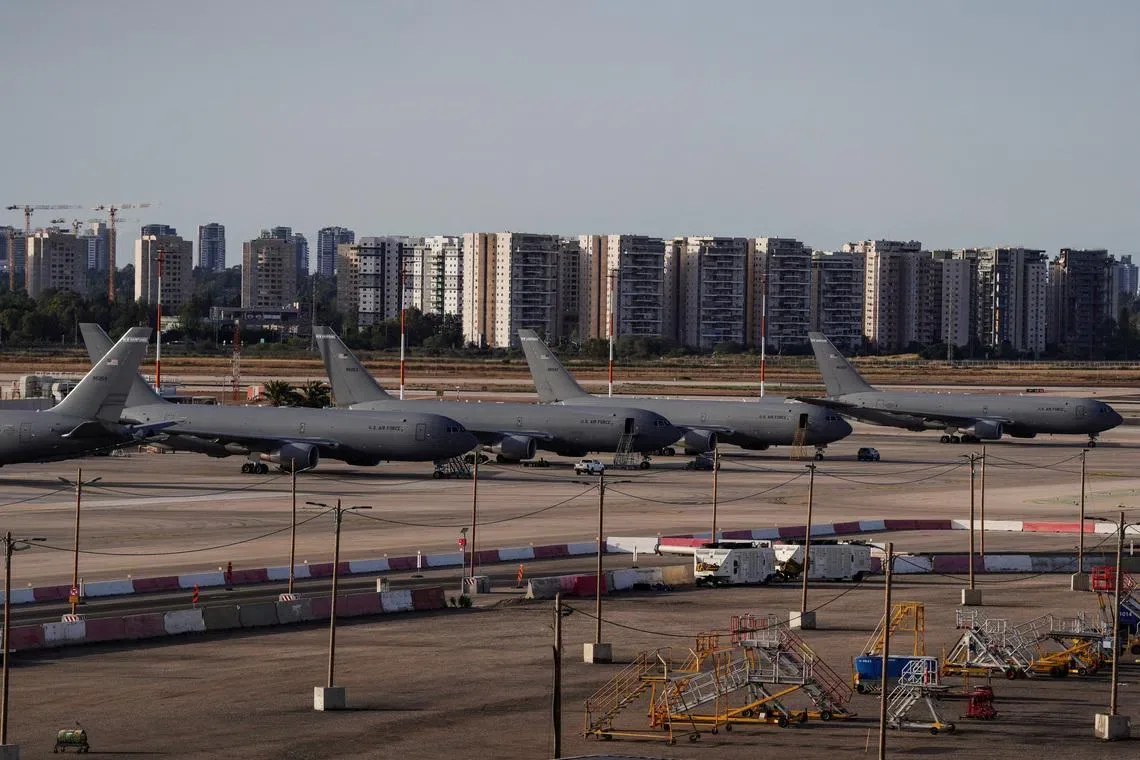
The United States deployed 14 more aerial refueling aircraft to Israel on the weekend of July 17-18, 2026. This reinforcement boosts the existing US fleet amid increasing military tensions with Iran [1, 2].
As of June 25, nearly 98 US military aircraft were stationed across Israeli bases, including refueling tankers positioned at Ben Gurion International Airport near Tel Aviv and southern airfields such as Ramon Airport. Officials said the distribution aims to reduce Iranian strike risks and minimize disruptions to civilian air traffic [3, 4, 5, 1, 2].
An Israeli senior official confirmed, "The US had decided to adjust its force posture in the region and to reinforce the existing fleet of aerial refuelling aircraft stationed in Israel with additional refuelling aircraft" [3]. An unnamed Israeli Air Force source added, "If the Americans intensify their attacks against Iran, this will necessitate the deployment of more US refueling aircraft to Israel" [1].
The increased refueling capacity supports ongoing US air operations targeting Iran. Since mid-July, the US Central Command has launched continuous airstrikes on Iranian infrastructure and military sites for at least seven to eleven consecutive nights [6, 7, 8]. These strikes have targeted bridges, railways, power, and water facilities, to which Iran has responded with retaliatory attacks against US and allied targets in the Gulf region [6, 2, 7].
President Donald Trump has considered further escalation including strikes on Iran’s nuclear facilities and potentially seizing Kharg Island. He said, "Normally, I wouldn't say that. If I thought they could do something about it, I would never say that. But we'll be hitting that area pretty soon, and very heavily" [6, 9, 10, 7, 8].
Israel has not yet joined the US air campaign but stands prepared to enter the conflict if Iran attacks Israeli territory. Defense Minister Israel Katz stated, "If Iran attacks Israel, we will fight back without any other considerations or conditions. The first thing we will do is target their missile launchers" [3, 4, 11]. Israeli officials warn that extensive US military escalation could provoke direct Iranian retaliation against Israel [7, 11].
The US continues planning to send additional F-16 and F-35 fighter jets to the Middle East as tensions rise further with Iran [9, 10, 8]. The Pakistani-mediated ceasefire agreement between the US and Iran agreed in June 2026 has collapsed, fueling the spike in hostilities [3, 1, 2, 10, 7].
The immediate next stage will likely see additional US force deployments as the military campaign unfolds amid tense regional dynamics.