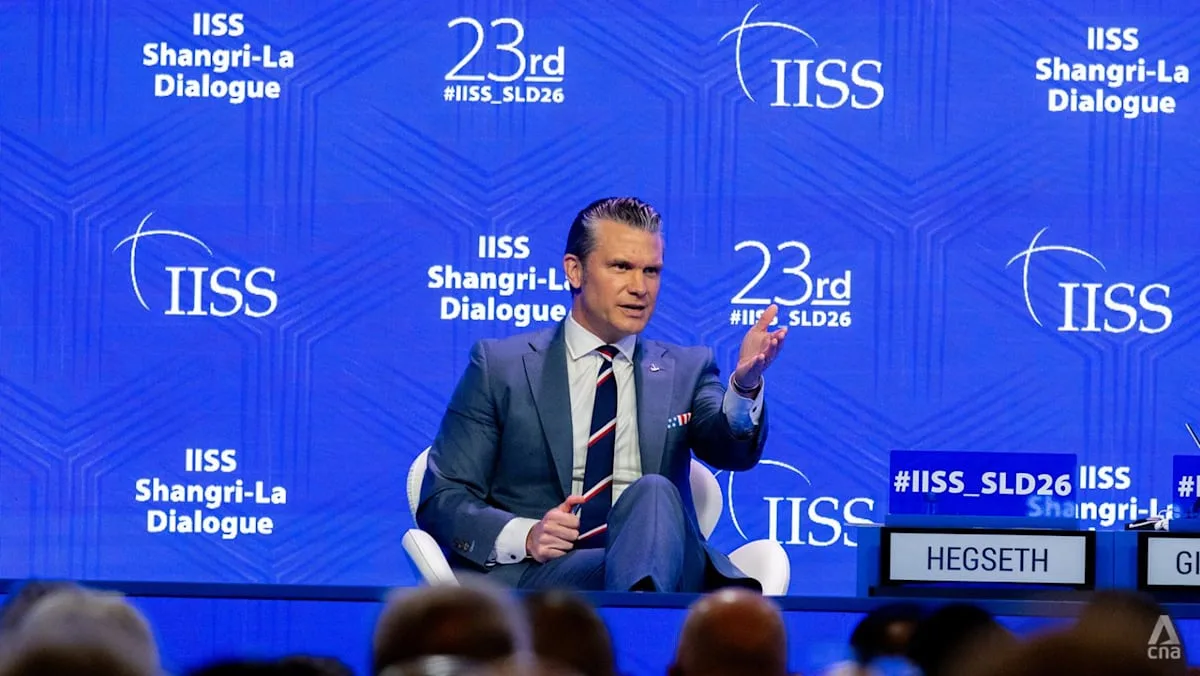
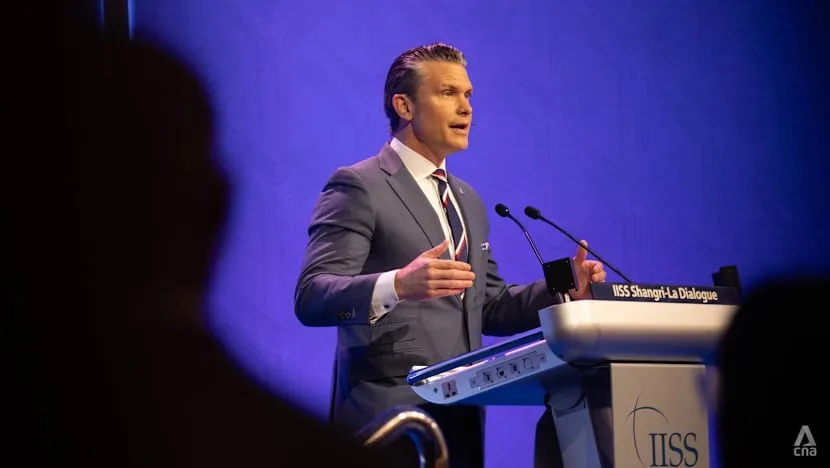
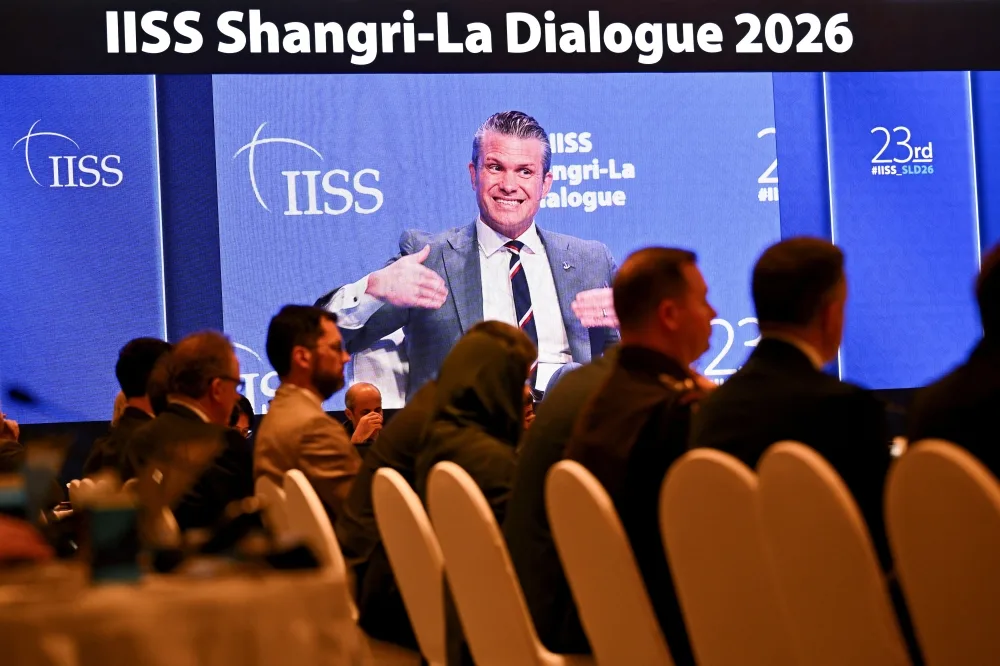
US Defense Secretary Pete Hegseth delivered the keynote speech at the Shangri-La Dialogue in Singapore on May 30, 2026, urging Asian allies to increase defence spending to 3.5% of GDP to counter China’s military buildup in the Indo-Pacific [1, 2, 3]. He warned of “rightful alarm regarding China’s historic military buildup and the expansion of its military activities in the region and beyond,” emphasizing the need for stronger regional deterrence [1].
Hegseth described the US approach as seeking a stable balance in Asia with no single hegemon, stressing “disciplined strength and steady resolve” to protect US and allied interests [1, 2, 3]. He criticized allies for “freeloading” and said “the era of the US subsidizing defence of wealthy nations is over,” calling for all partners to have “skin in the game” [1, 2]. “We need partners, not protectorates,” he said [1].
The Shangri-La Dialogue, Asia’s premier annual defence forum hosted in Singapore, brings together defence officials from about 45 countries [4, 5, 6, 7]. This year, China’s Defence Minister Dong Jun skipped the event for a second consecutive year. Beijing instead sent a low-profile delegation of military scholars and experts. Retired PLA colonel Zhou Bo said a reduced delegation is not unprecedented, though the lower level this year was notable [5]. Hegseth acknowledged the absence, saying, “I wish my counterpart was here at this conference, but I look forward to other options when we can cross paths and communicate” [5].
Hegseth noted continued military-to-military contacts between the US and China despite tensions. He sought to strike a more measured tone on China in 2026 compared to stronger rhetoric in 2025 [1, 2, 5, 3]. Meanwhile, US President Donald Trump recently visited China and indicated arms sales to Taiwan could be a bargaining chip in negotiations with Beijing, according to regional experts [4, 3].
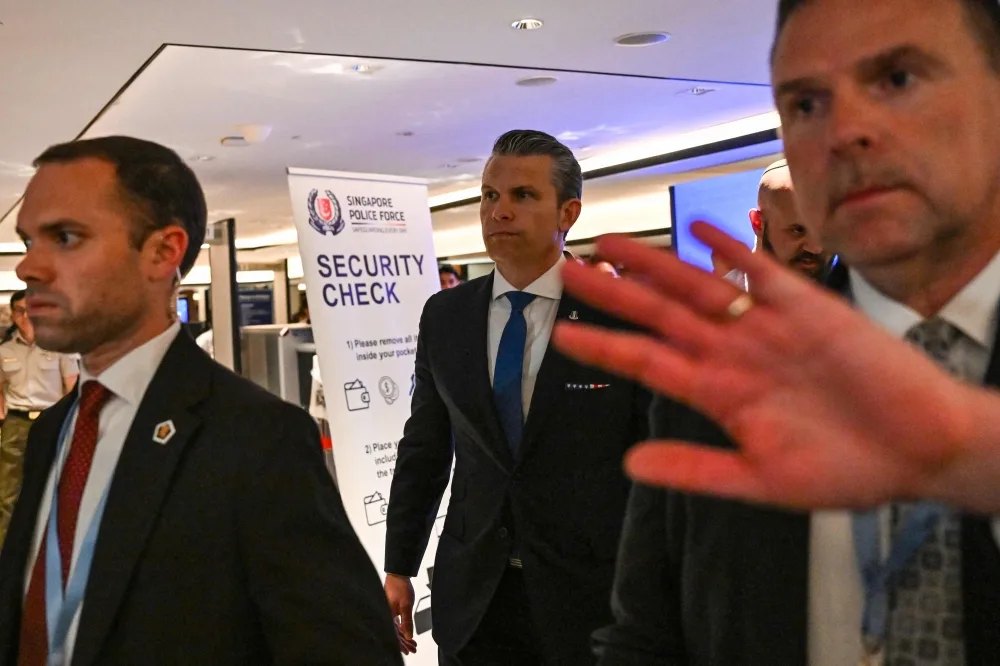
During his visit, Hegseth held bilateral meetings with Singapore’s Prime Minister Lawrence Wong and Defense Minister Chan Chun Sing to discuss regional security cooperation [6, 7]. The US has pledged $1.5 trillion in military investment and aims for Asian allies to raise defence spending to 3.5% of GDP to enhance collective deterrence [1, 2].
China remains heavily reliant on seaborne crude imports from the Middle East, at 5.9 million barrels per day or 57% of its total in 2025, highlighting strategic vulnerabilities [4]. The Shangri-La Dialogue will continue through the next day with further sessions focused on Indo-Pacific security issues.