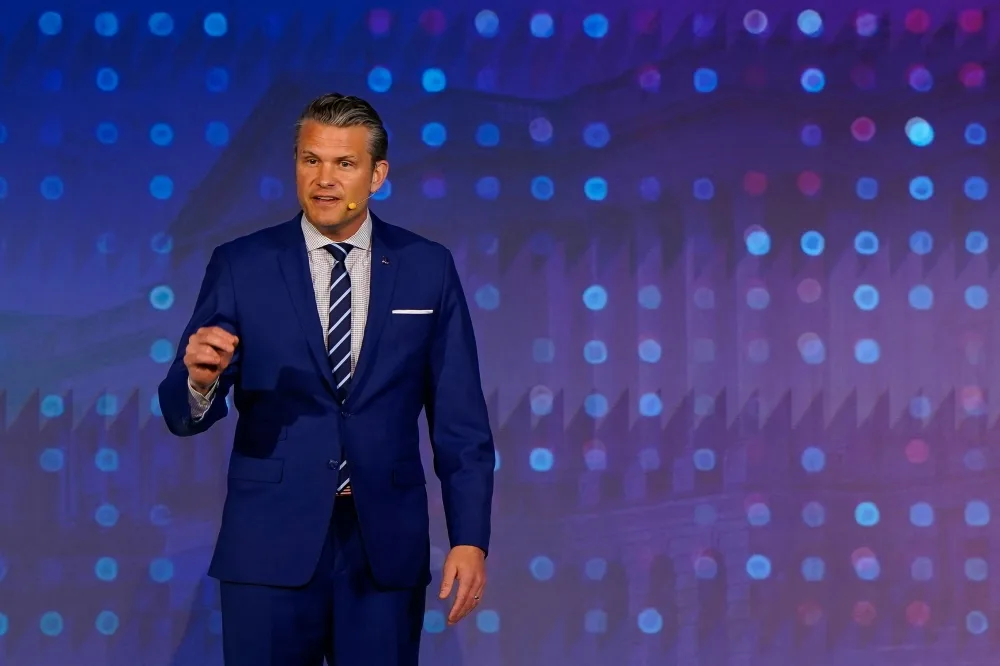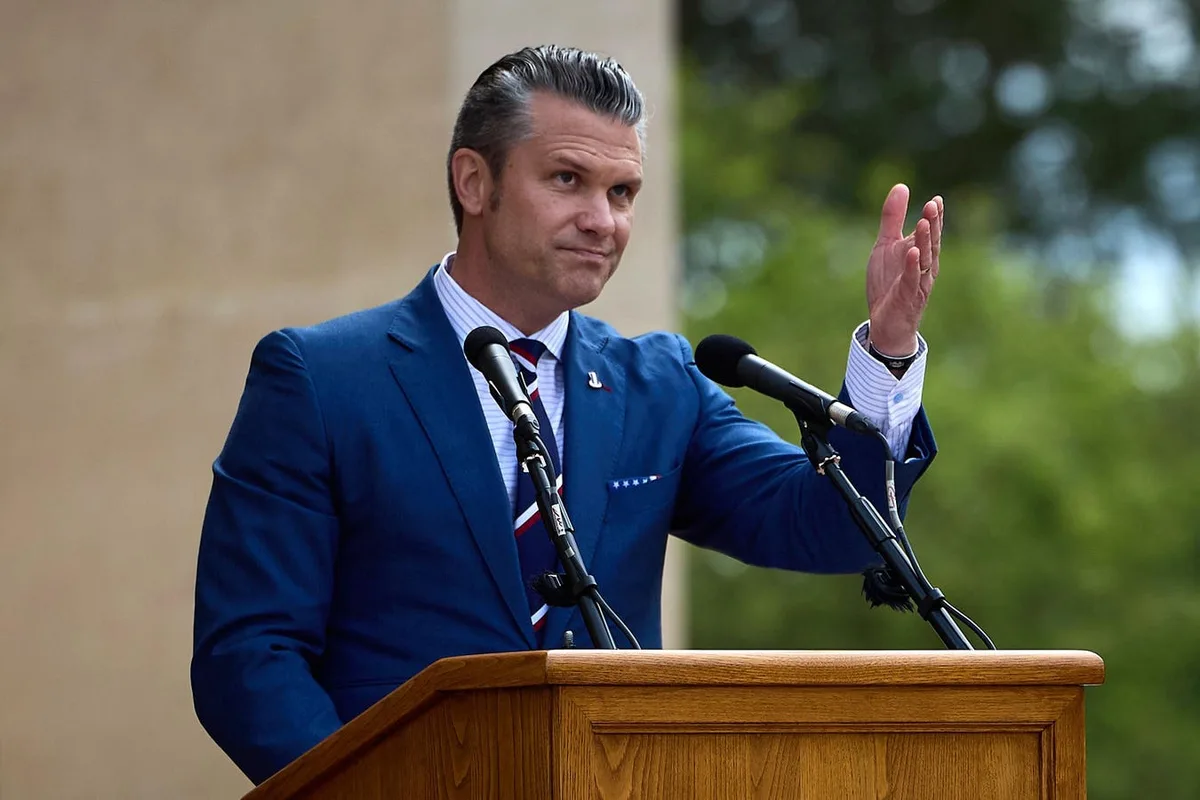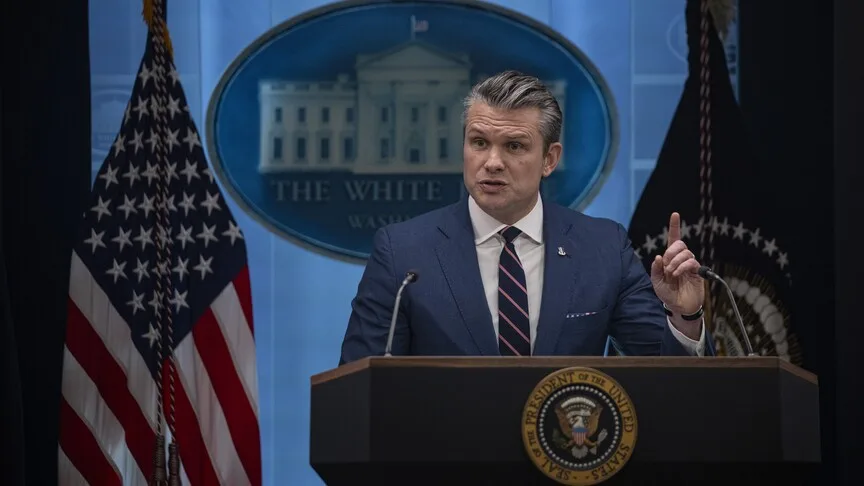
US Defense Secretary Pete Hegseth warned Europe of an "invasion" of dangerous ideologies arriving by sea during a speech on June 6, 2026, at the Normandy American Cemetery in Colleville-sur-Mer. His remarks were delivered at the 82nd anniversary of the Allied landings in Normandy and linked current immigration to the legacy of those World War II landings [1, 2, 3, 4].
"Sadly, today, different European beaches are stormed by different, dangerous ideologies," Hegseth said. He named Spain, Italy, Greece, and Bulgaria as entry points where "boats and men arrive" carrying these threats [1]. He challenged European capitals, asking, "When will European capitals do something about that invasion or is it too late? I pray not, and I believe not" [2].
Hegseth emphasized that freedom and peace require strength and purpose, saying, "We forgot that freedom is not free. We forgot that peace is not wished into being. It is bought with purpose, with honor and with strength. The men who landed on these beaches knew this; the question we ask ourselves is, do we?" [3]
His comments echo previous criticisms from the Trump administration and Vice President JD Vance about Europe's immigration controls and security. In 2025, a US National Security Strategy document warned that Europe faces "civilizational erasure" if it does not change course and remain a reliable ally [1, 2, 5]. Last year, President Donald Trump told European leaders their "countries are going to hell" due to immigration policies [3]. Vice President Vance renewed his criticism on June 5, 2026 [1, 2, 3, 5].
European officials are reconsidering their reliance on US technology and defense amid these concerns. The European Union recently advanced new immigration policies to increase deportations and create detention centers outside the bloc, known as "return hubs" [1, 2, 3, 5]. However, only about 28% of rejected asylum seekers return under current EU rules, according to a Dutch lawmaker [3].
Hegseth’s speech at Normandy underlined his call for urgent action on immigration and security. His remarks came during the 82nd anniversary commemorations of the D-Day landings, highlighting the ongoing relevance of the historic defense of Europe [1, 2, 3, 4].