The US Department of Justice announced on August 9, 2026, it is investigating the City University of New York’s Black Male Initiative (BMI), a 21-year-old program aimed at supporting African American, Caribbean, and Hispanic male students across 22 to 24 campuses within the CUNY system [1, 2, 3].
The DOJ Civil Rights Division alleged the BMI may provide preferential treatment to certain non-white minority students, violating federal law that prohibits race from being a factor in distributing educational resources or opportunities. Assistant Attorney General Harmeet K. Dhillon said, "Race can never play a role when deciding how to distribute educational resources or opportunities. This Justice Department will not tolerate universities directing educational benefits to certain students over others based on their race" [3].
The Equal Protection Project (EPP) filed a civil rights complaint in June 2026 accusing the BMI of race-based discrimination, arguing that educational resources should be allocated based on need rather than race. William Jacobson, EPP’s founder, said, "If CUNY had a 'White Male Initiative' structured similarly to BMI such race-based recruiting would not be tolerated, much less funded and promoted. It is up to DOJ to ensure that the civil rights laws are enforced in a race-neutral manner." He also stated, "Every student deserves equal treatment. The discriminatory behavior in the initiative should have been stopped nearly 15 years ago." [1, 2, 3]
CUNY spokespersons responded to earlier complaints by saying the BMI is open to all students regardless of race, gender, or nationality, a claim disputed by the DOJ and plaintiffs who say the program effectively targets minority males by race [1, 2].
The BMI has operated across 22 to 24 CUNY campuses, designed to improve enrollment, retention, GPA, and graduation rates for African, Caribbean, and Latino/Hispanic males [1, 2, 3]. The exact number of campuses differs slightly between sources [1, 2, 3].
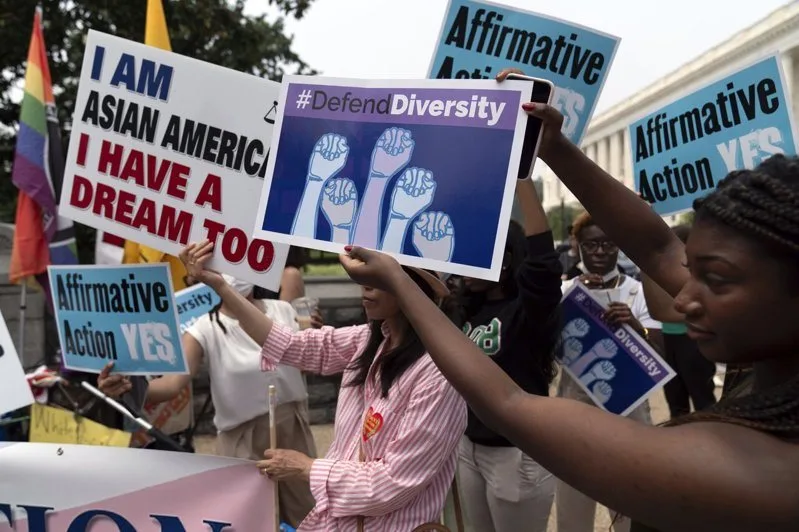
The legal foundation of race-based educational programs like BMI has come under pressure since the 2023 US Supreme Court ruling that struck down affirmative action in university admissions. That decision weakened the defense for race-targeted programs in higher education [1, 2]. In 2012, during the Obama administration, a federal education department investigation had found the BMI program permissible as a race-targeted recruiting effort [1, 3].
The Equal Protection Project has filed lawsuits against over 120 institutions nationwide, challenging over 550 race-based scholarships and special programs [1, 2].
As of now, the DOJ Civil Rights Division has not reached any conclusions in its investigation of the BMI program [3]. Further developments are expected as the inquiry proceeds.