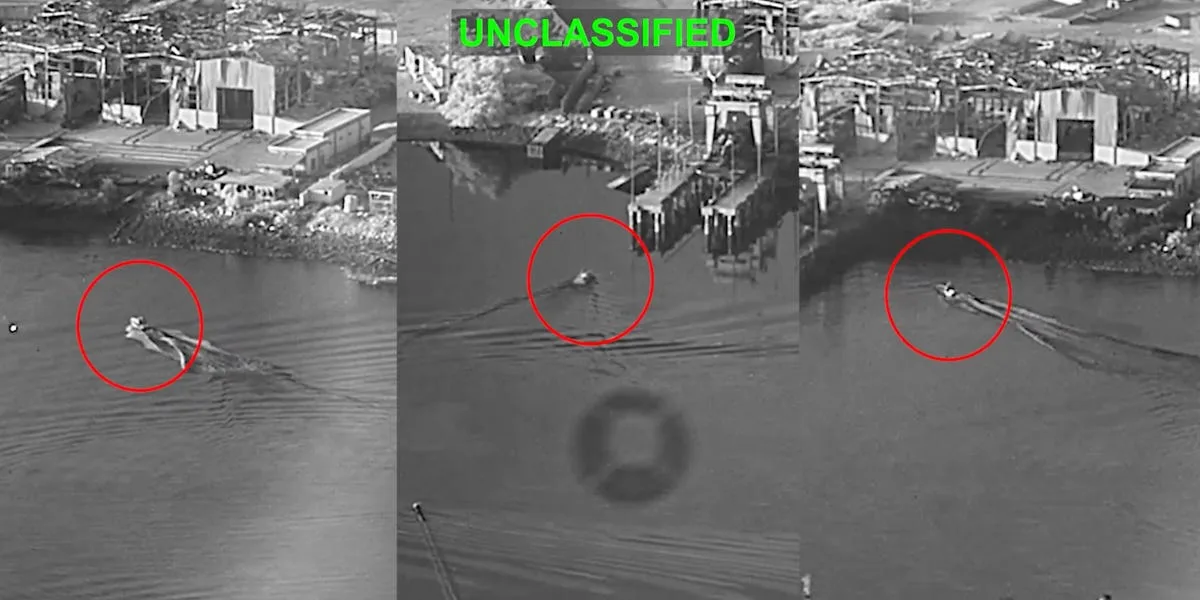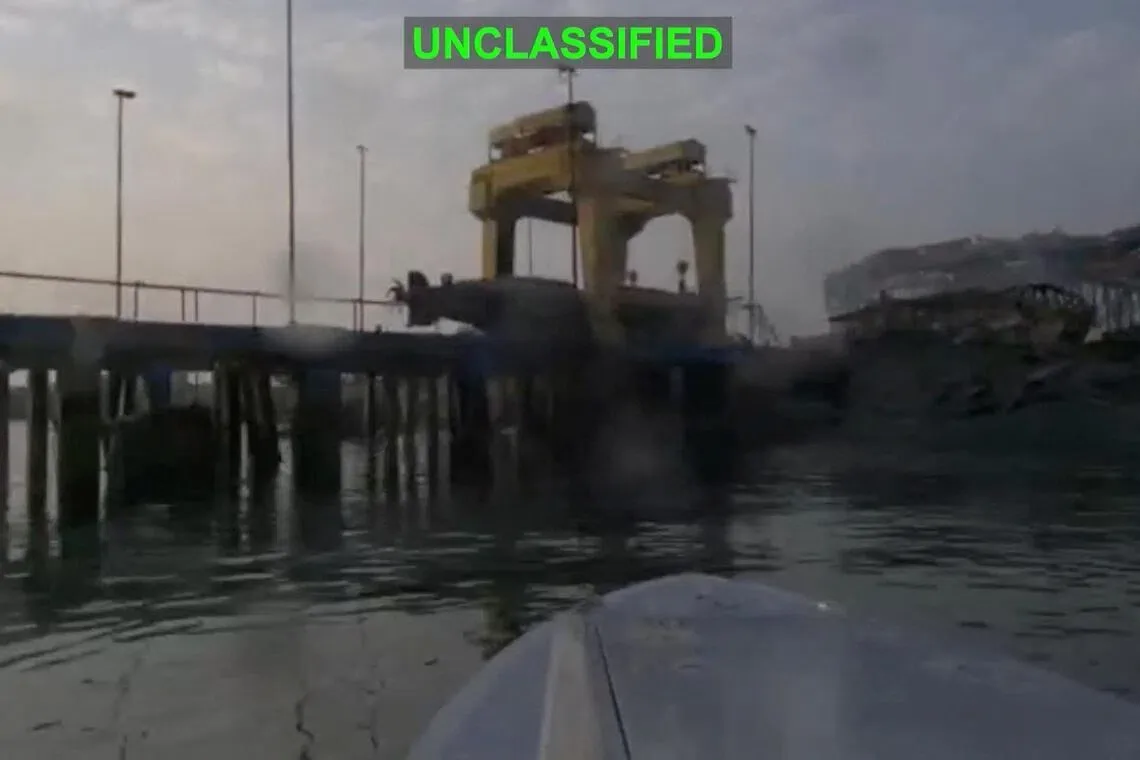
US forces conducted their first offensive strike using unmanned naval drones on July 12, 2026, deploying three Corsair sea drones against Iran’s Bandar Abbas naval base [1, 2, 3]. The drones specifically targeted a submarine and ship maintenance facility in an effort to reduce Iran’s capability to threaten commercial shipping, notably in the Strait of Hormuz [1, 3].
The Corsair sea drone, manufactured by Texas-based Saronic Technologies, measures approximately 7 to 7.3 meters (24 feet) in length [1, 2, 3]. These drones can travel over 1,000 nautical miles, carry payloads of about 1,000 pounds (453 kilograms), and reach speeds exceeding 35 knots [2, 3]. Its modular design enables diverse missions including intelligence gathering, reconnaissance, logistics, and one-way attack operations [2, 3].
A video released by US sources showed the Corsair drones approaching the pier before an explosion occurred, causing visible flames and sparks, confirming the strike’s effect [1, 2]. Capt. Tim Hawkins, a spokesperson for US Central Command, said, "Quickly equipping our warfighters with cutting-edge capabilities enhances combat effectiveness, which is why operationalising these new tools remains a US Central Command priority" [1].
Before this combat mission, Corsair drones were employed in a June 2026 rescue operation near the Strait of Hormuz. There, the drones assisted in recovering downed U.S. Airmen from a crashed Apache helicopter, demonstrating their operational versatility [1, 2]. The drones are currently fielded by Task Force 59, a Middle East-based U.S. unit integrating new maritime autonomous technologies [2].
Saronic Technologies has rapidly scaled production after securing a $392 million U.S. Navy contract in December 2025 to move Corsair from prototype to production in under 12 months [3]. The company expanded its shipbuilding capacity by acquiring Gulf Craft in April 2025 and announced a $300 million investment to grow manufacturing space for autonomous vessels [3].
US forces have introduced multiple new unmanned systems during ongoing conflicts in the Middle East, with the Corsair drone’s combat debut marking a significant tactical advance in naval warfare capabilities [1].