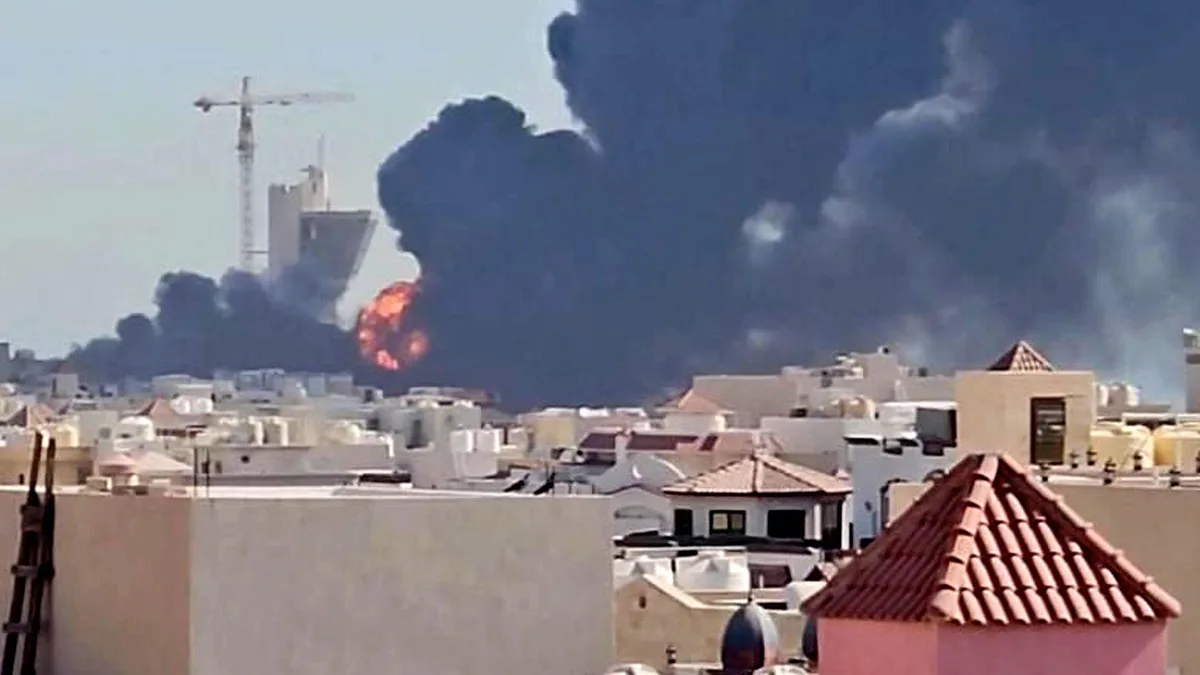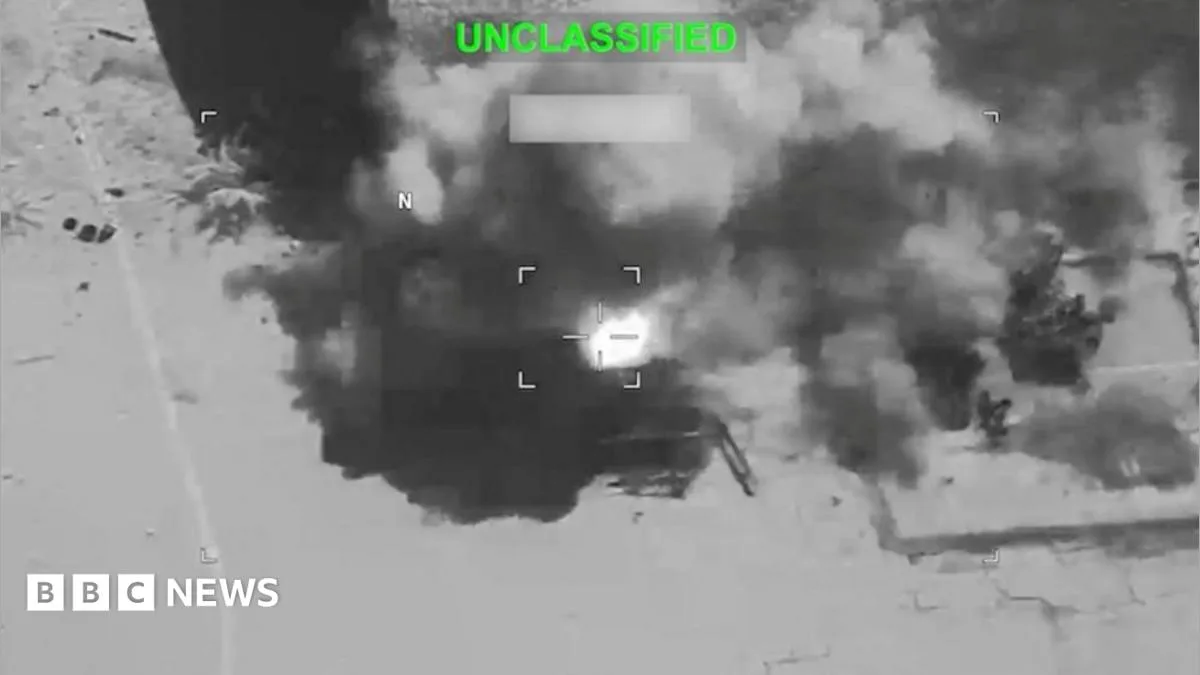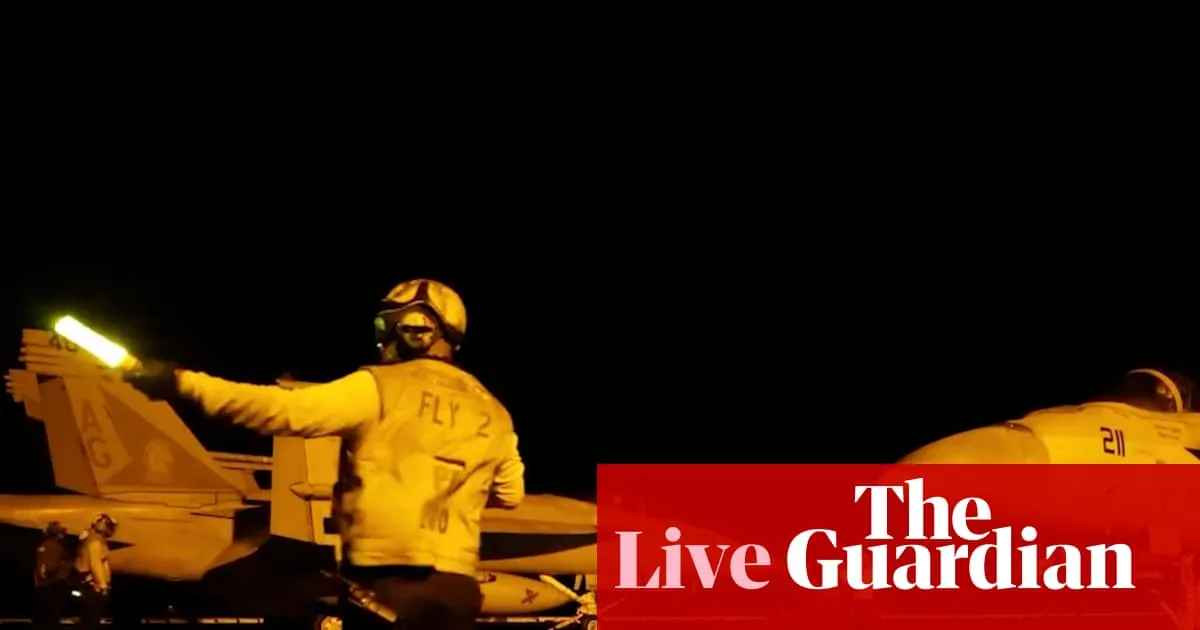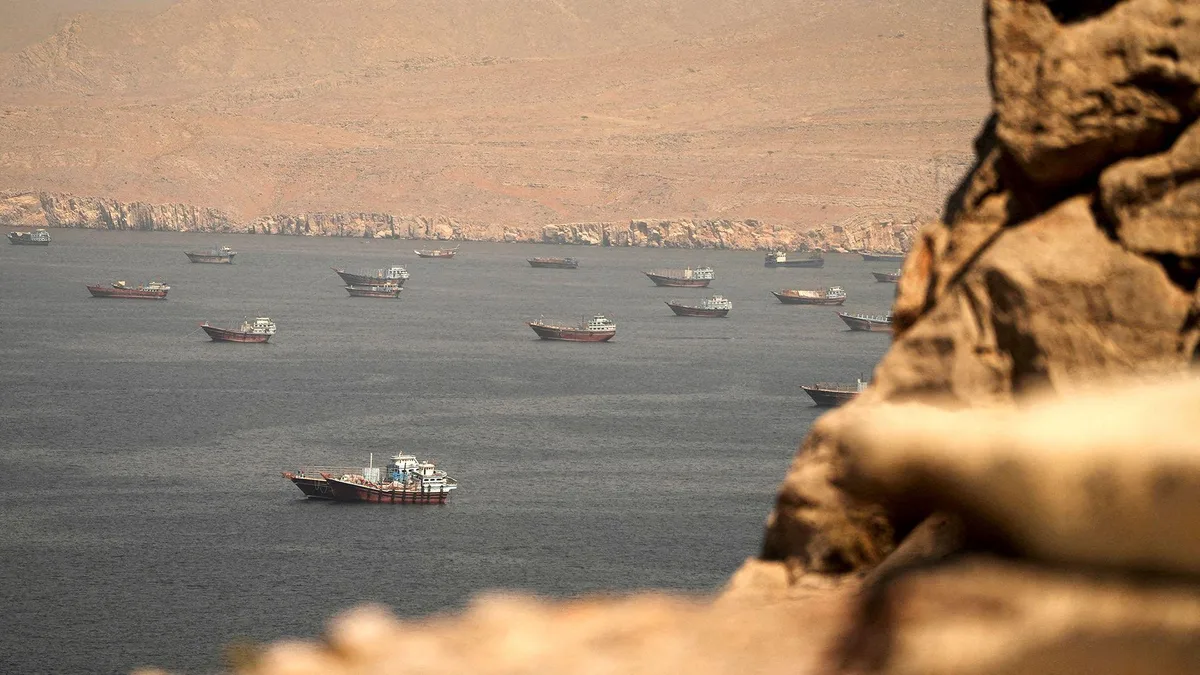
The United States launched airstrikes on Iran for the 11th consecutive night, targeting Iranian military centers, drone storage, and maritime logistics infrastructure, officials said today [1, 2, 3, 4]. The US Central Command stated the operations aim to degrade Iran's ability to threaten commercial shipping in the Strait of Hormuz [1, 3, 4].
Iranian air defenses responded in Tehran, with explosions reported in the cities of Tabriz, Chabahar, Konarak, and near the Bushehr Nuclear Power Plant, according to multiple reports [1, 5, 6]. This marks a significant escalation in hostilities following the collapse of a temporary ceasefire that had paused military actions since June 17 [2, 3, 4].
President Donald Trump reiterated threats to strike Pickaxe Mountain, an underground nuclear site near Natanz. He warned, "We'll be hitting that area pretty soon, and very heavily. There's not a thing they can do about it" [1]. Trump previously described Pickaxe Mountain as "a possible target for a nice big fat shot right near the front door," declaring, "We're going to take out Pickaxe Mountain. Tell the Iranians to be ready" [7].
Pickaxe Mountain is a fortified underground facility believed to house centrifuges and uranium enrichment equipment, although Trump admitted there is no confirmed record that centrifuges currently operate there. "Well, I think that they may have [moved centrifuges to Pickaxe Mountain]. We don't have it on record," he said [8, 6]. Israeli intelligence indicates thousands of centrifuges were moved there last fall to protect enrichment capabilities [8, 6].
Iran's Khatam Al-Anbiya military command warned that any attack on Pickaxe Mountain would constitute an expansion of war and promised retaliations against all US and allied interests [1, 4]. Tehran has threatened reprisals and cautioned against any US attacks on its nuclear facilities [1, 2, 5].
The conflict has already inflicted over 500 US troops wounded and cost roughly $37.5 billion, according to Defense Secretary Pete Hegseth, who stated, "Cost of the war has reached $37.5bn" [2, 5].
Meanwhile, Yemen’s Iran-backed Houthi rebels declared a naval blockade on Saudi Arabia, threatening the Bab al-Mandab Strait, potentially opening a new front in the conflict [1, 2]. Brent crude oil prices rose above $92 per barrel amid the escalating tensions [2].
US Secretary of State Marco Rubio warned that Iran controlling the Strait of Hormuz would set a dangerous precedent. He said, "If we create a precedent in the Middle East, where a nation state can decide that they are going to control an international waterway... we have created a very dangerous precedent" during an ASEAN foreign ministers meeting [2, 3].
The US and Iran had signed an interim ceasefire and memorandum of understanding on June 17, establishing a 60-day negotiation window that temporarily halted military actions but failed to resolve control over the Strait of Hormuz [2, 3, 4]. After the ceasefire collapsed, fighting resumed, triggering the current round of airstrikes [1, 2, 7].