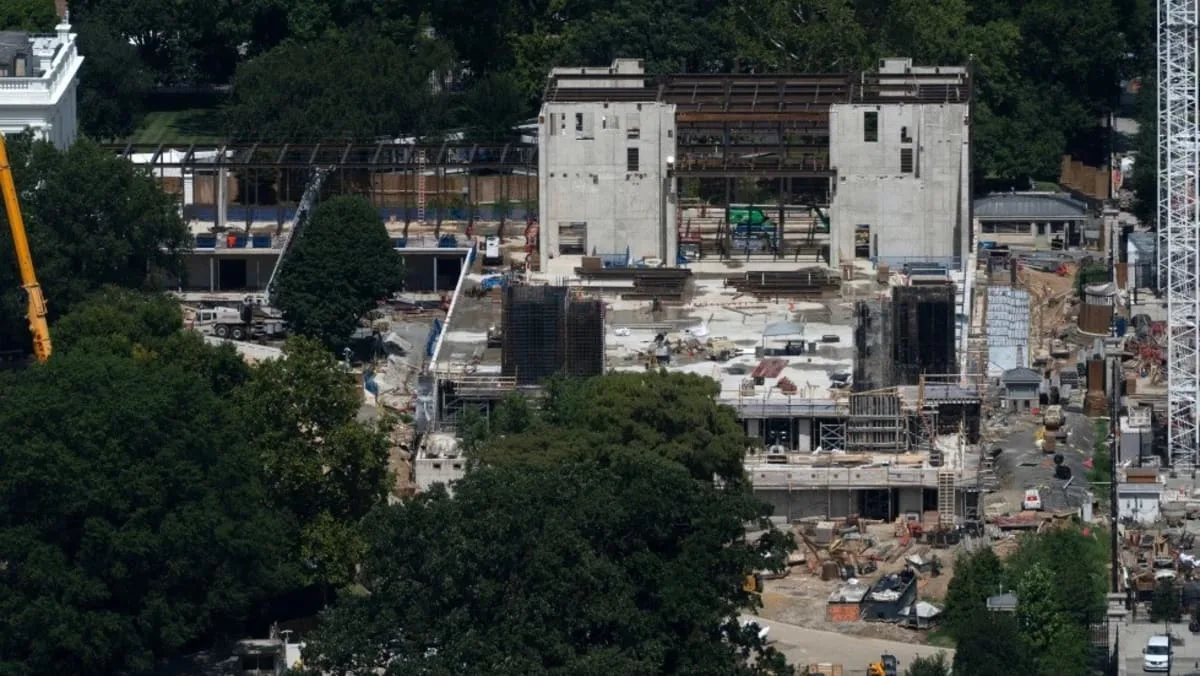
The US Supreme Court on September 1 allowed construction of the White House ballroom to proceed while a lawsuit challenging the project continues. The court voted 5-4 to reverse lower courts that had temporarily halted ballroom construction, permitting work to continue during the legal process [1, 2, 3].
The National Trust for Historic Preservation filed the lawsuit, with member Alison Hoagland as plaintiff, citing aesthetic, cultural, and historical harm from the project [1, 2, 3]. The Supreme Court majority held that the Trust likely lacked legal standing to sue, overruling earlier court orders blocking construction above ground, though construction on an associated military bunker had been permitted to continue [1, 2, 3].
The court did not rule on the ballroom project’s legality. Chief Justice John Roberts, joined by three liberal justices, dissented, arguing the overhaul was "likely unlawful" without explicit congressional authorization [1, 2, 3]. Roberts said the project lacked proper legislative approval and raised concerns over its legality [3].
The 5-justice majority consisted of conservatives who allowed construction to move forward. Trump praised the ruling, stating the ballroom and military bunker would be completed by summer 2028 and that the project could proceed without "any further contingency, doubt, or threat" [1, 2, 3].
The ballroom is part of a wider second-term Trump agenda including renovations to the Reflecting Pool and installation of a triumphal arch [2, 3]. The president claims the ballroom is privately funded by businesses and patriots, with no taxpayer expense. However, some US media report total costs could reach $600 million and suggest taxpayer money may also be involved [1, 2, 3].
National Trust President Brent Leggs expressed deep disappointment in the court ruling, noting the majority did not decide on whether the project was legal [3].
Construction and related renovations began in 2025 with partial demolition of the East Wing [2]. Earlier this month, Chief Justice Roberts allowed the project to continue while the full court reviewed the case [2, 3].
The Supreme Court’s decision enables the ballroom work to continue pending the full resolution of the lawsuit. Completion is targeted for summer 2028, according to Trump [1].