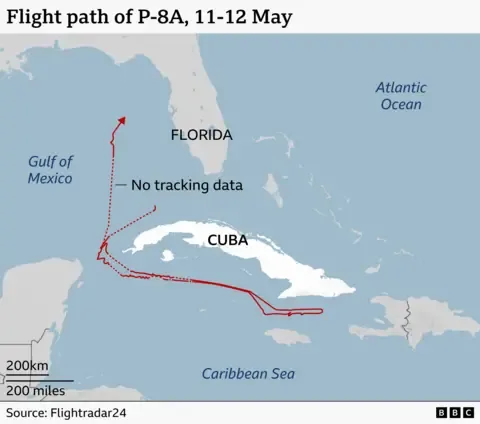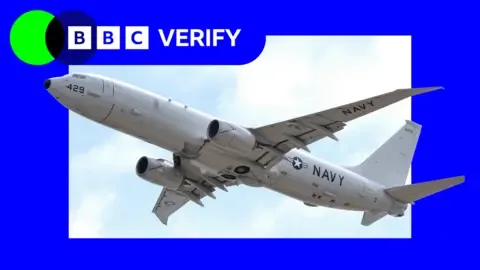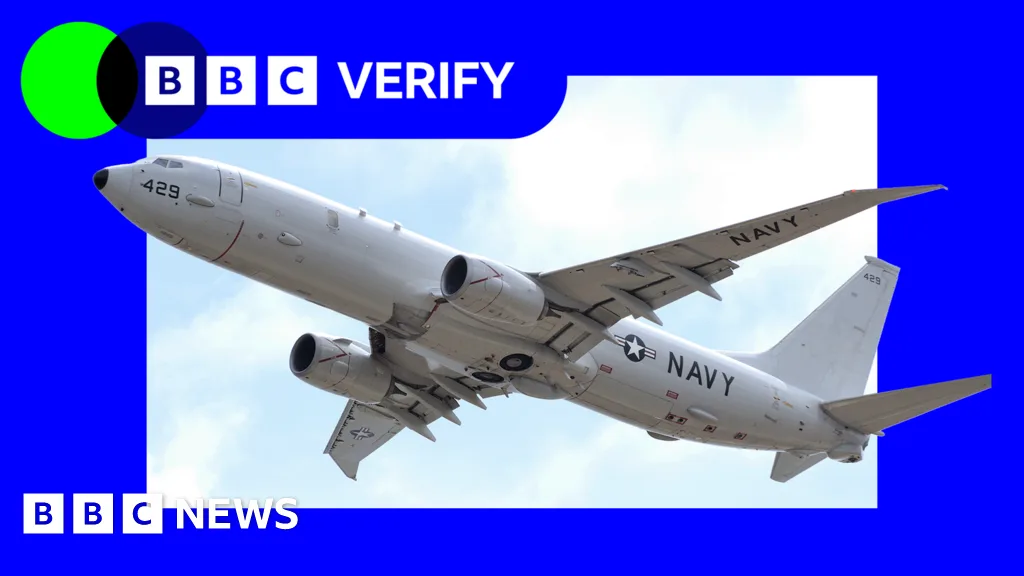
US military surveillance flights involving P-8A Poseidon planes and MQ-4C Triton drones have operated near Cuba since May 11, 2026, with at least five P-8A and three Triton flights tracked publicly to send a deterrence message to Cuba and its allies [1].
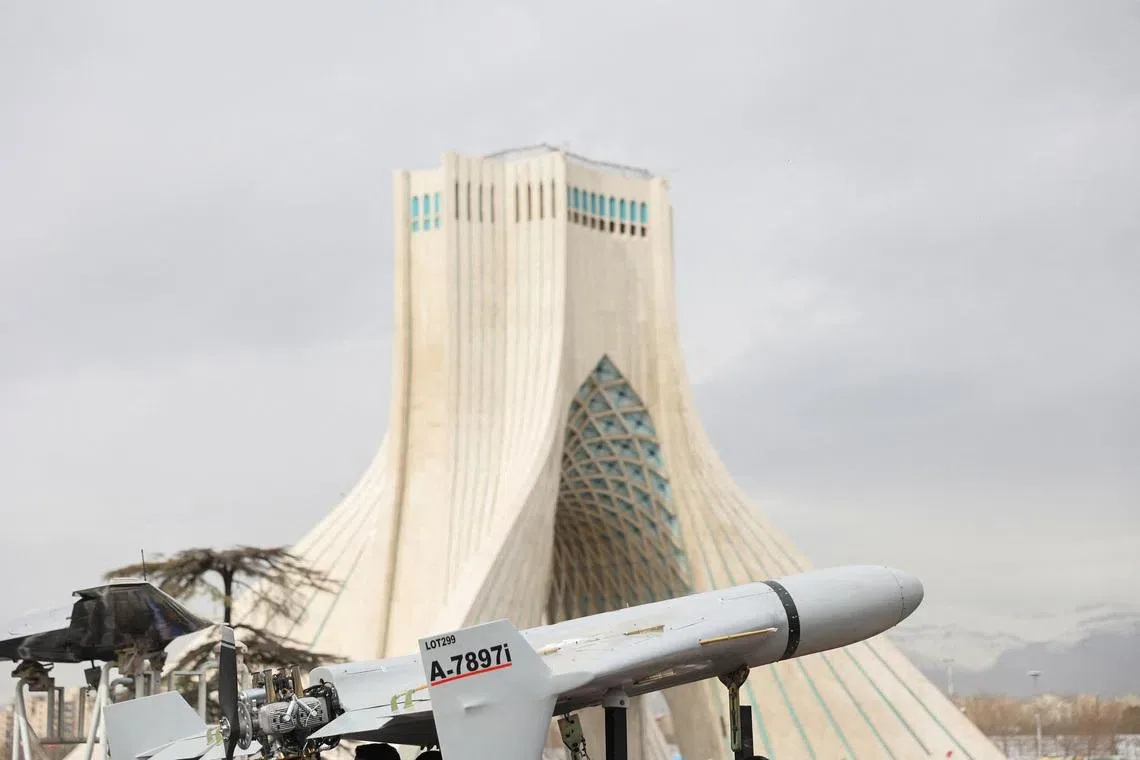
US intelligence reports reveal that Cuba obtained more than 300 military attack drones from Russia and Iran since 2023. Officials have discussed possible drone attacks on US targets including the Guantanamo Bay naval base, military vessels, and areas in Florida such as Key West, located roughly 90 to 145 kilometers from Cuba [2, 3, 4, 5, 6]. A senior US official described the situation as "a growing threat" [2].
CIA Director John Ratcliffe visited Havana in mid-May to warn Cuban officials against hostile actions and pushed for regime change. A US official noted Ratcliffe stated that "Cuba can no longer serve as a platform for adversaries to advance hostile agendas in our hemisphere" [2, 5, 6].
The US government imposed new sanctions around May 18-19 on Cuba’s main intelligence agency and 11 senior Cuban officials [3, 4, 7]. The US also announced plans to indict former Cuban leader Raúl Castro, age 94, over the 1996 shooting down of humanitarian planes, further escalating tensions [2, 8, 5, 6].
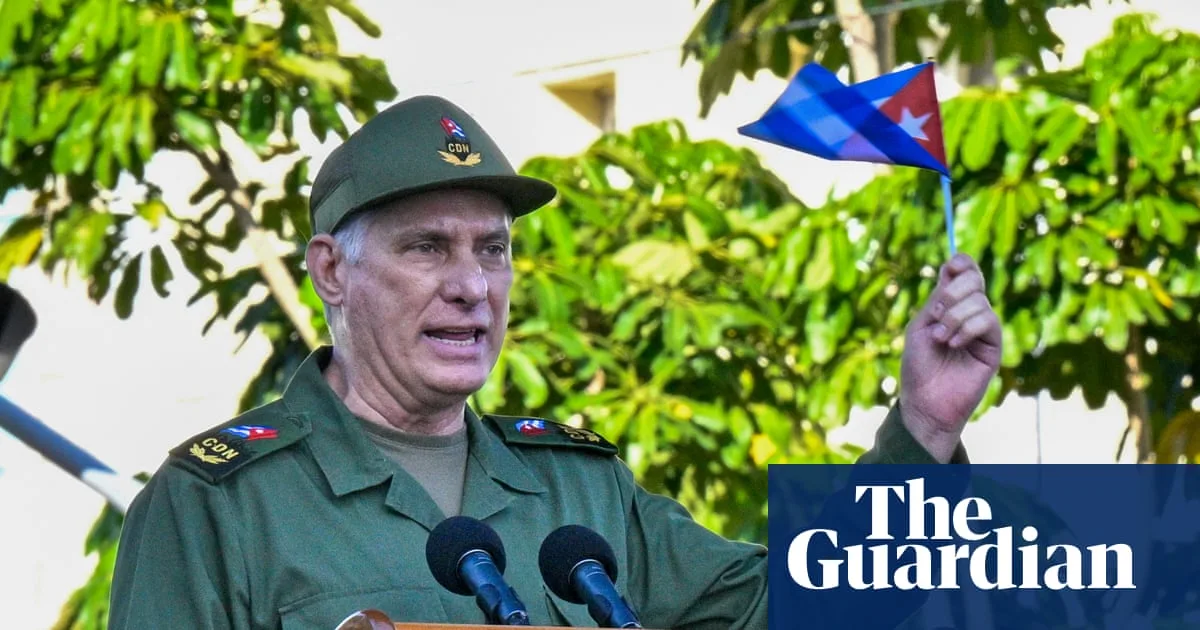
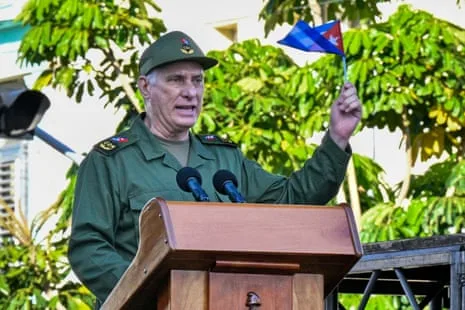
Cuba faces a severe energy blockade since January 2026 that has caused fuel shortages, power blackouts, and civil unrest [1, 2, 8, 9]. In response to the drone threat allegations and rising hostility, Cuba’s president Miguel Díaz-Canel said, "Cuba does not represent a threat," but warned that any US military action "would trigger a bloodbath with incalculable consequences" [8, 3, 4, 7]. Meanwhile, Cuban Foreign Minister Bruno Rodríguez called the US case for military intervention "fraudulent" and said, "Cuba neither threatens nor desires war" [1, 8, 7, 6].
Some analysts caution that while acquiring over 300 drones is strategically significant symbolically, Cuba’s overall military capacity remains limited compared to the US [9]. Cuba’s ambassador to the UN, Ernesto Soberon Guzman, said, "If someone tried to invade Cuba, Cuba will fight back, no doubt about it" [4].
US Secretary of State Marco Rubio addressed the Cuban people criticizing the communist leadership and offering a "new relationship" [1, 10]. Meanwhile, Cuba released civil defense guidelines preparing citizens for a possible US military attack, raising public unease [9]. The energy blockade remains in place as of today.
The situation is likely to remain tense with US intelligence and diplomatic activity ongoing. The upcoming months may see further sanctions or indictments related to Cuba’s military capabilities and regional threats.