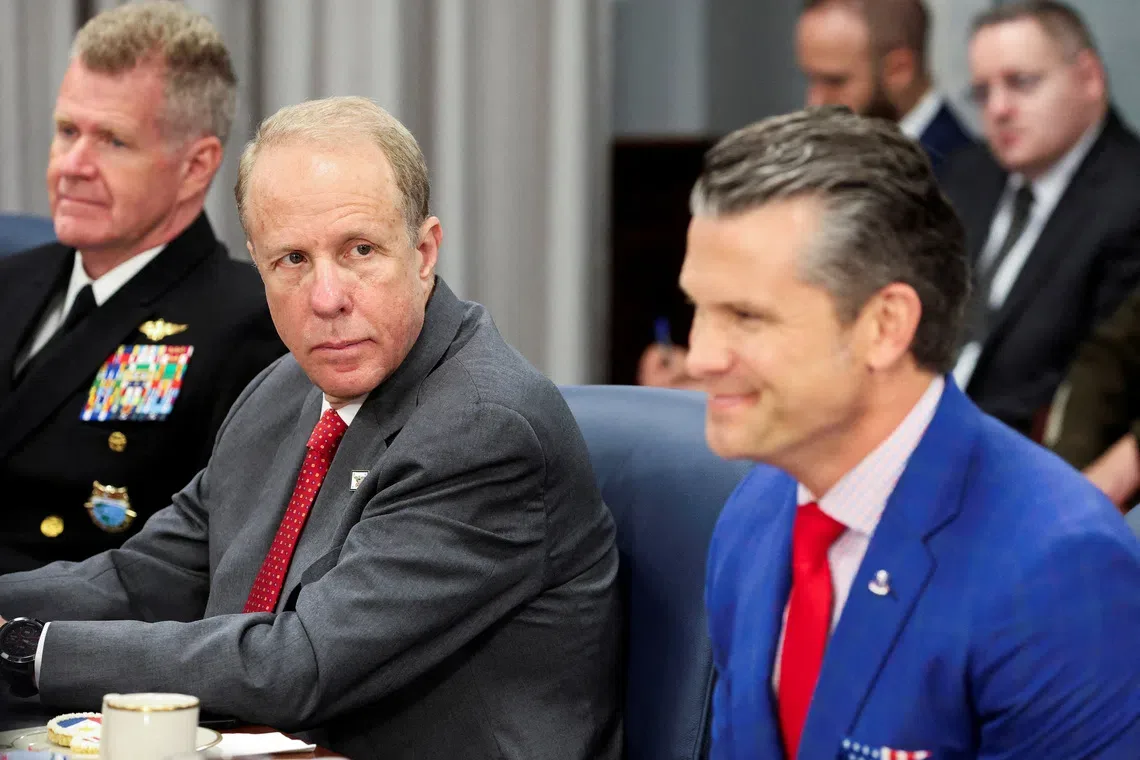
The White House began reviewing candidates to potentially replace Deputy Secretary of Defense Steve Feinberg in June 2026, a process that remained ongoing as of late August 2026 [1, 2, 3, 4, 5, 6]. Senior Senate lawmakers have been consulted to gauge if potential administration picks would secure enough support for confirmation [1, 7, 2, 3, 4, 5, 6].
Despite widespread reports, no final decision has been made to remove Feinberg from his post [1, 7, 2, 3, 4, 5, 6]. White House spokesperson Anna Kelly dismissed anonymous claims about a pending replacement. She told reporters, "These so-called anonymous ‘sources’ have no idea what they are talking about. President Trump appreciates the work of Secretary Hegseth, Deputy Secretary Feinberg, and the entire Department of War, whose record of success in Operation Epic Fury, Operation Absolute Resolve, and Operation Midnight Hammer speaks for itself" [1].
Secretary of Defense Pete Hegseth has echoed this stance, denying any process is underway to replace Feinberg and stating, "Feinberg has my full support and isn’t going anywhere" [1]. Feinberg is the billionaire co-founder of Cerberus Capital Management and a major donor to President Trump’s campaign [1, 2, 3, 4, 5, 6].
The Pentagon has faced unusually high leadership turnover under Hegseth’s tenure, including the recent resignation of Army Secretary Dan Driscoll earlier this week following months of tension [1, 2, 3, 4, 5, 6]. Navy Secretary John Phelan and several senior Army leaders also resigned amid the upheaval [1, 2, 3, 4, 5, 6].
Feinberg had pledged to accelerate U.S. munitions production but has yet to meet these goals, citing industrial base limitations [1].
Army Secretary Dan Driscoll resigned during the week of September 5, 2026, marking the most recent high-profile departure in the Pentagon leadership shuffle [1, 2, 3, 4, 5, 6]. The White House review of candidates to succeed Feinberg is expected to continue.