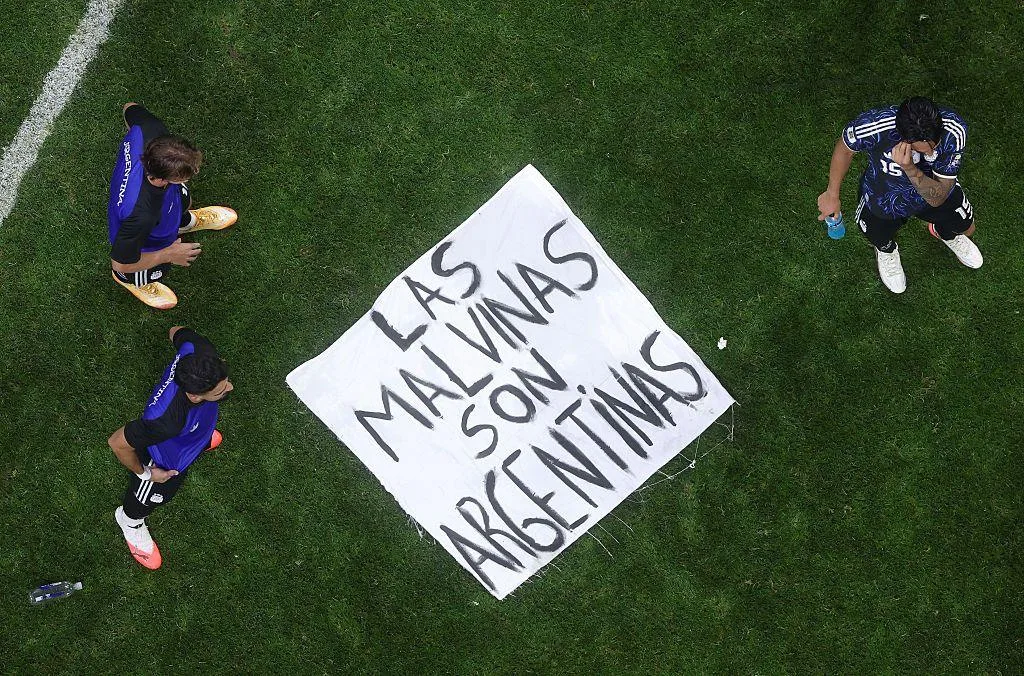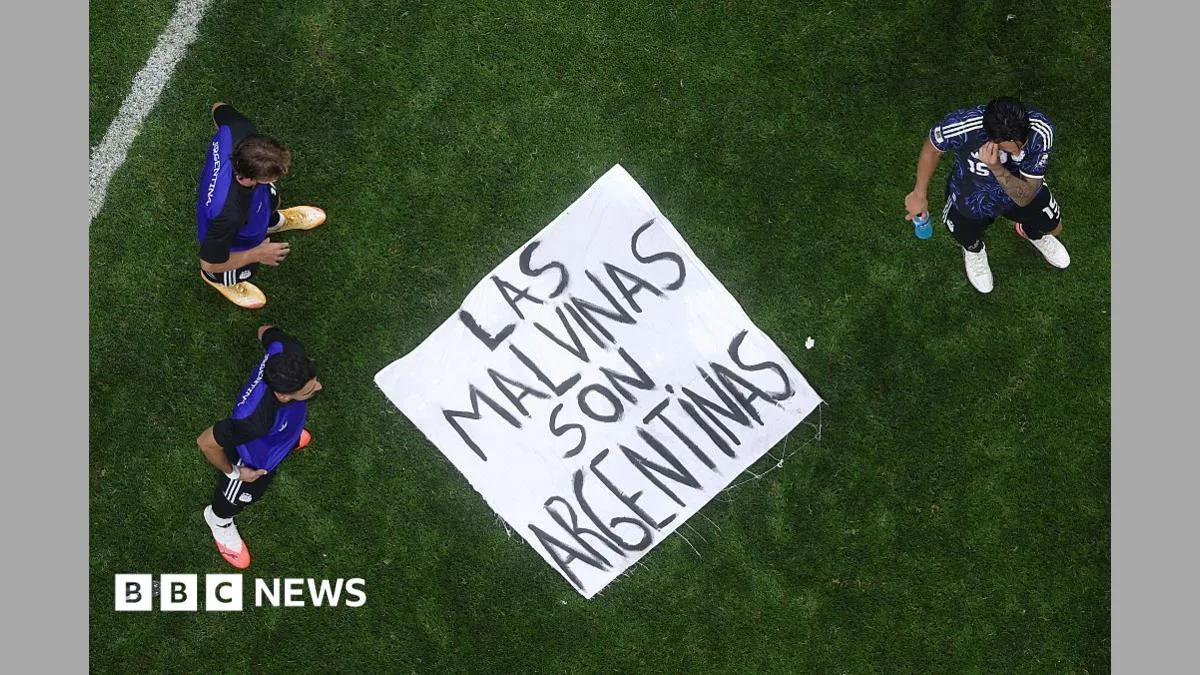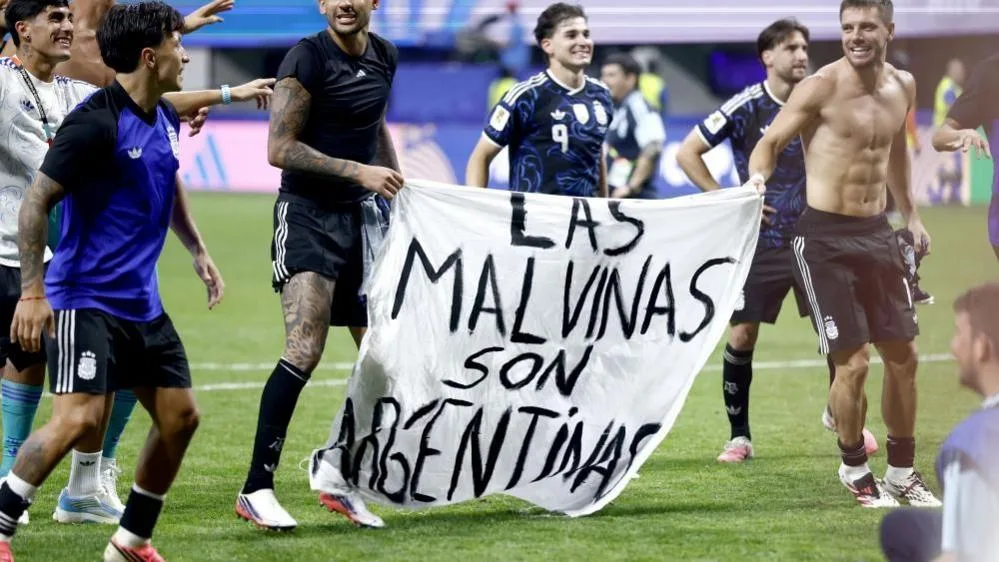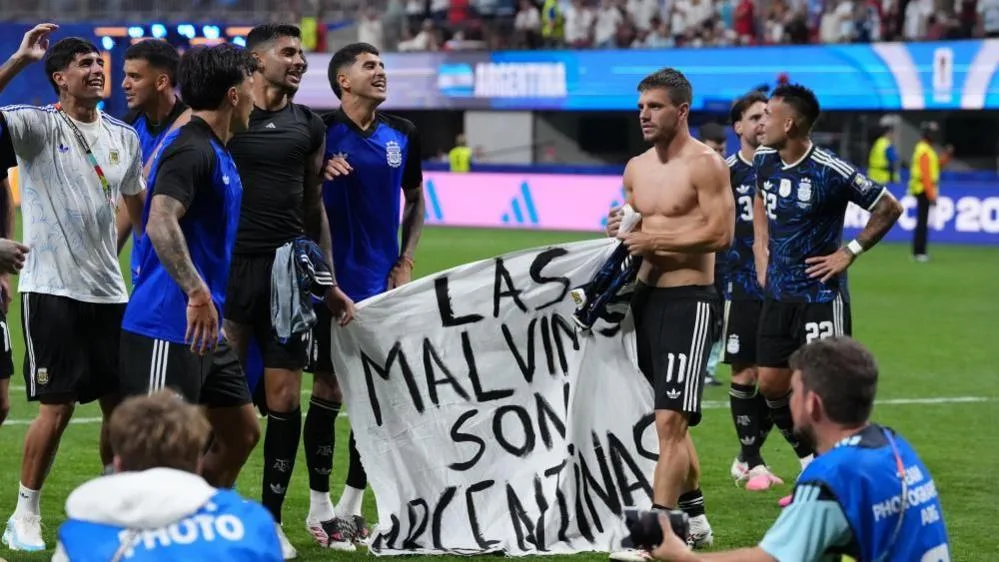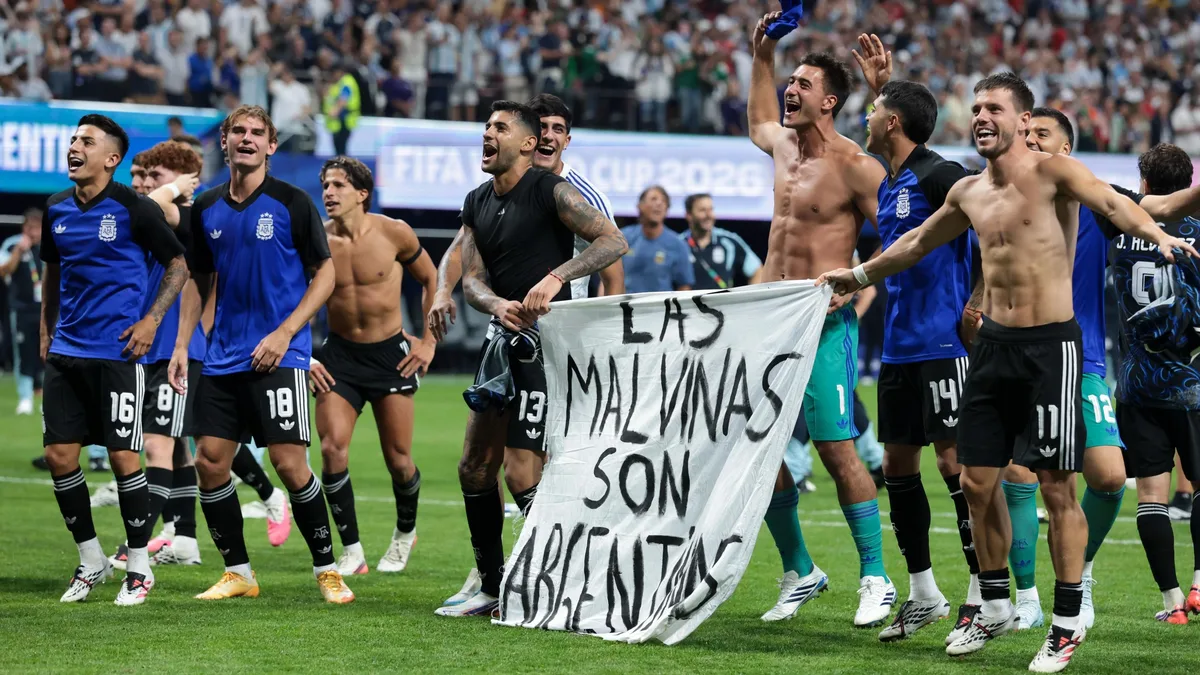
Argentina defeated England 2-1 on July 15, 2026, in Atlanta during the World Cup semi-final, scoring twice late in the match to secure their win [1, 2, 3, 4, 5, 6]. Following the victory, players Lisandro Martinez and Giovani Lo Celso held a banner stating "Las Malvinas son Argentinas" ("The Falklands are Argentine") and waved it to fans in the stadium [7, 8, 9, 6, 10].
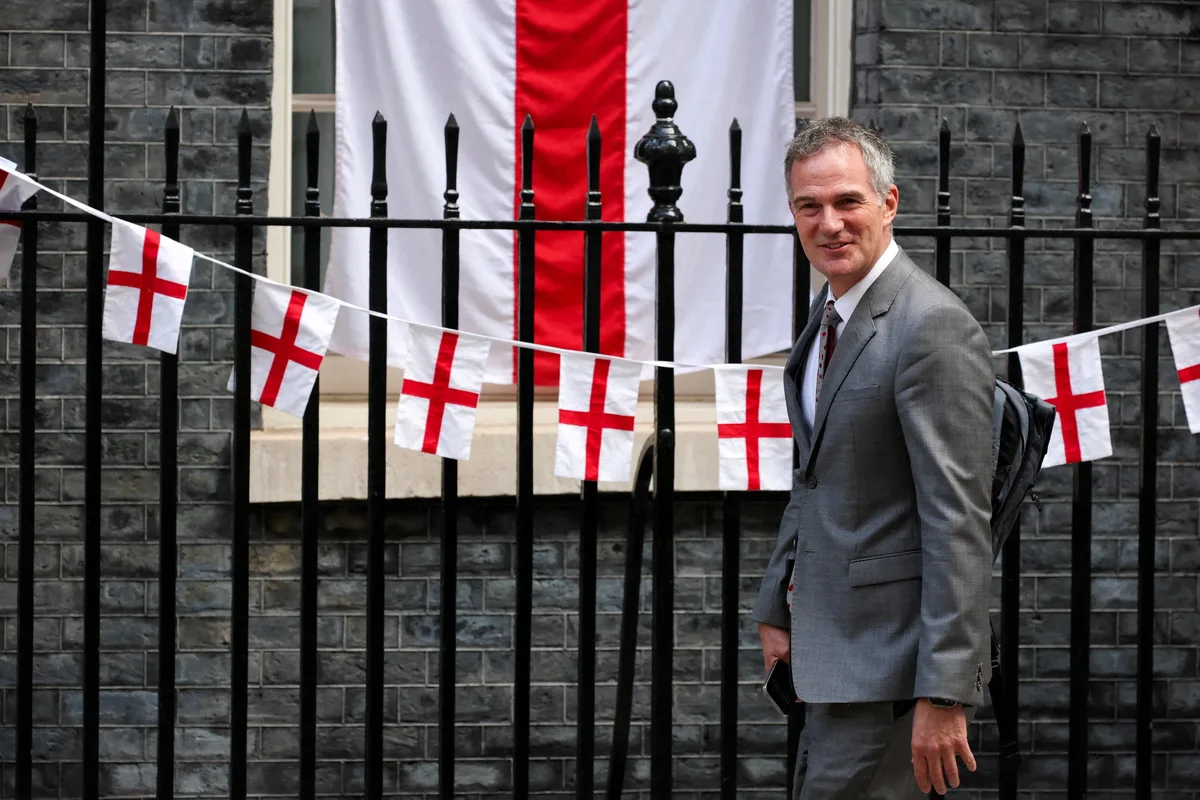
The banner asserts Argentina's long-standing claim of sovereignty over the Falkland Islands, which remain a British overseas territory subject to a territorial dispute between the UK and Argentina [1, 7, 2, 3, 11, 4, 5, 8, 9, 6, 10, 12]. The UK government condemned the banner as violating the democratic rights of the islanders and reaffirmed its sovereignty over the islands [1, 3, 11, 4, 12]. UK Prime Minister Keir Starmer and Business Secretary Peter Kyle called for a thorough FIFA investigation, with Kyle describing the banner as an "egregious violation" of rules that ban political messages in football [1, 3, 11, 4, 12]. Kyle said, "The World Cup has one of its central tenets that politics is separate from football. That is now a matter for FIFA. I expect FIFA to do its investigation thoroughly." [3]
FIFA's independent disciplinary committee is reviewing match reports to determine if Argentina faces sanctions, including fines or other disciplinary action, over the incident [5, 12]. Argentina was fined £20,000 by FIFA in 2014 for a similar banner incident supporting their Falklands claim [2, 5].
The Falklands conflict has deep historical roots. The 1982 Falklands War resulted in approximately 649 Argentine and 255 British military deaths, with over 900 total fatalities including islanders [1, 7, 2, 3, 11, 4, 5, 8, 9, 6, 10, 12]. In 2013, the Falkland Islands held a referendum where over 99% of voters chose to remain a British overseas territory, affirming their preference with a participation rate over 90% [1, 4].
Public reaction split along national lines. In Argentina and Buenos Aires, many locals and some officials voiced support for the players and banner. Argentina's Vice-President Victoria Villarruel called the match "not just another match" and described English players as "usurping pirates" before kickoff [11, 1, 8, 10]. Argentina's President Javier Milei said the players’ actions were "understandable and valid," emphasizing that on-pitch actions are separate from diplomacy [5]. The Argentine Foreign Minister Pablo Quirno had lodged a formal protest on July 13 against Britain over a warship HMS Medway passing near the Falklands ahead of the match [11].
The White House defended the Argentine players' right to free speech in the United States under First Amendment protections. Andrew Giuliani, head of the White House FIFA task force, said, "We believe in our First Amendment rights here in the United States of America." [1, 12]
Argentina will face Spain in the World Cup final on July 19, 2026, in New Jersey [2, 3, 5, 6, 12]. FIFA's disciplinary committee is expected to announce any decision related to the banner before the final match.