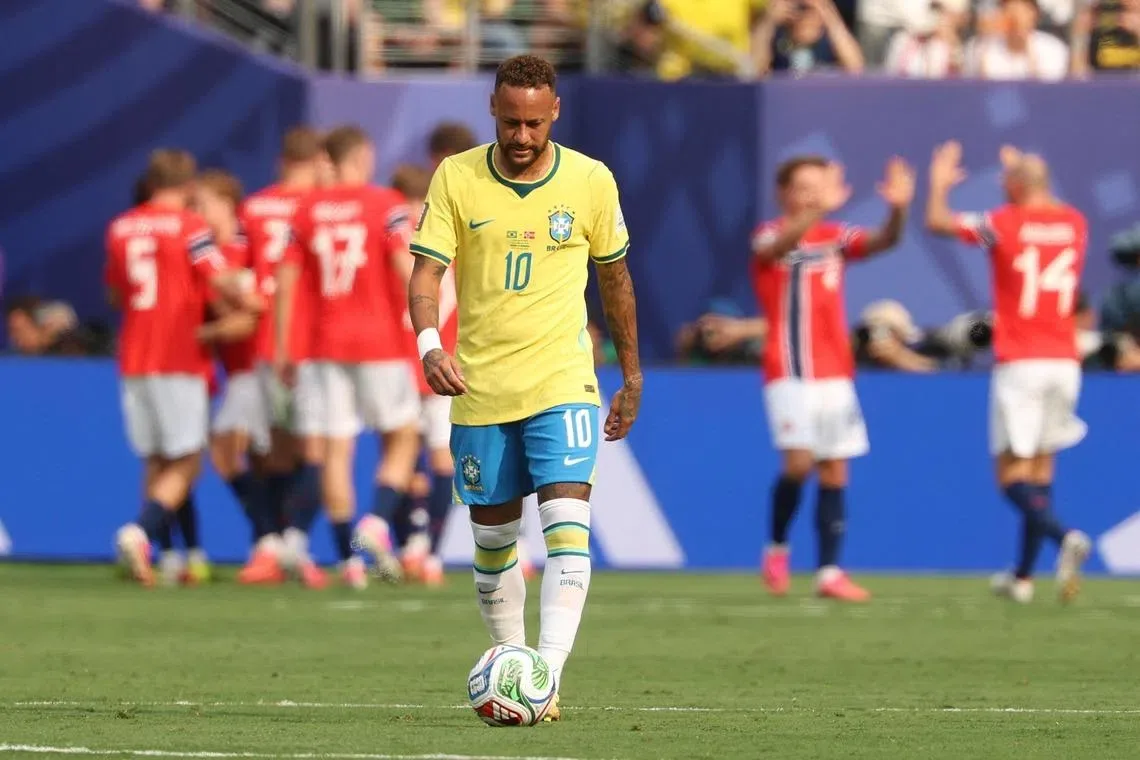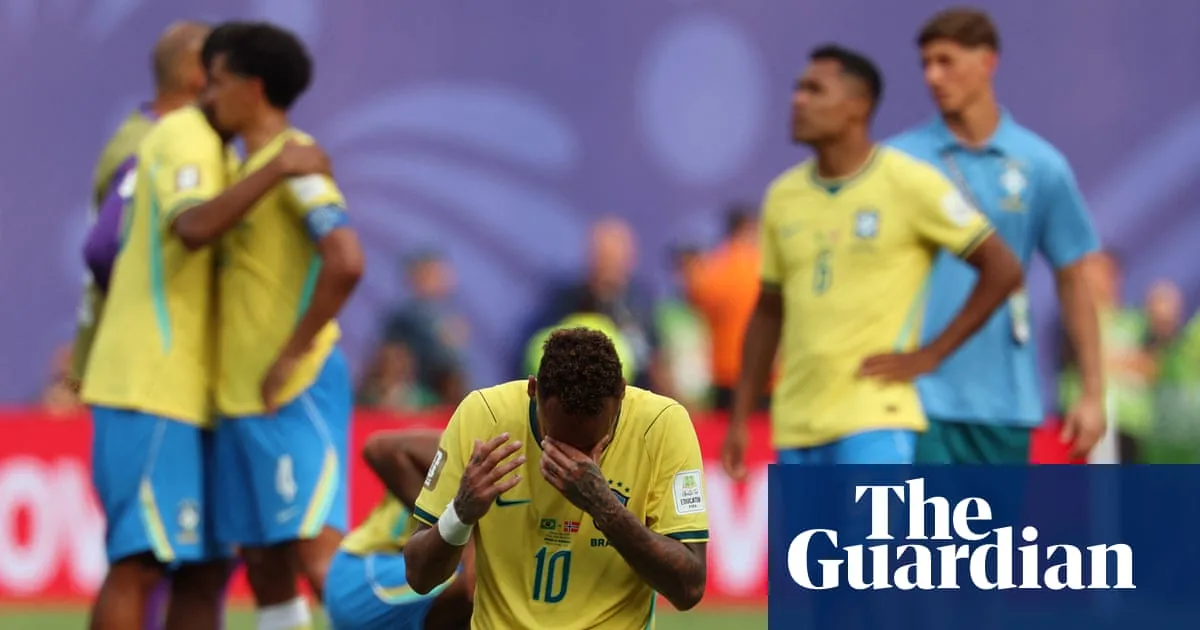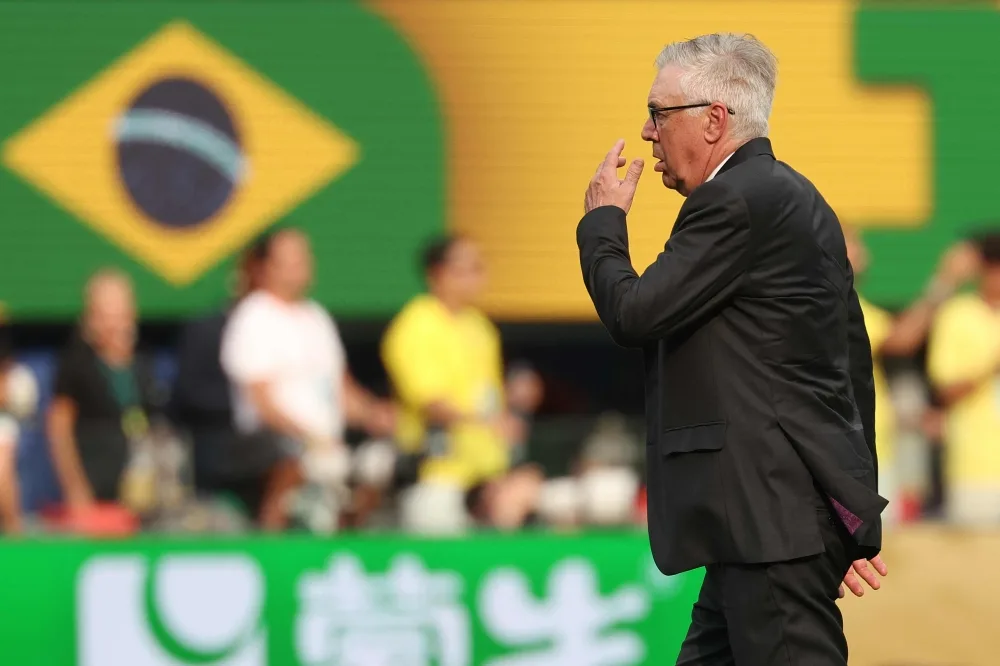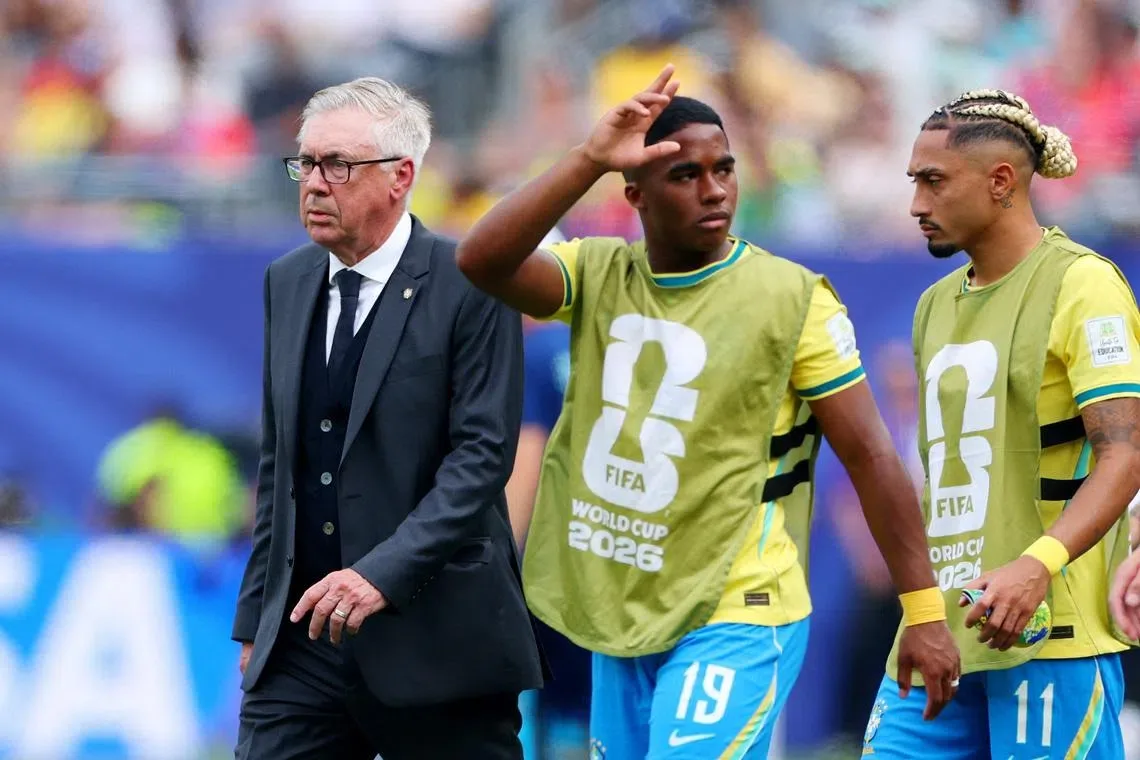
Brazil was knocked out of the 2026 World Cup after a 2-1 loss to Norway on July 5 in the round of 16 match held in the New York/New Jersey area [1, 2, 3, 4, 5, 6, 7, 8]. Norway’s Erling Haaland scored both goals, securing his side’s victory [1, 2, 3, 9, 6, 7]. Neymar scored a late penalty deep in stoppage time for Brazil, but it only served as consolation [1, 2, 3, 4, 5, 7].
Brazil’s performances throughout the tournament drew widespread criticism for being heavy-legged and slow, particularly from ageing key players Casemiro and Danilo, both 34 years old [1, 2, 4, 5, 7]. Danilo was notably played out of position at right-back, a role he had not regularly held in years [1, 2, 4, 5]. Analysts noted Brazil avoided applying strong pressure, resulting in a slow-paced game with missed chances [10, 11]. Coach Carlo Ancelotti explained the penalty taker order was chosen based on statistical analysis, with Bruno Guimaraes taking the penalty ahead of Neymar and Raphinha [10, 11].
Ancelotti’s tactics marked a shift from traditional Brazilian football style, emphasizing defensive solidity and pragmatism in an attempt to "win ugly" [12, 8]. The team’s possession was only 34 percent against Norway, Brazil’s lowest World Cup possession since records began in 1966 [6]. Brazil also struggled with injuries to key players Estêvão, Éder Militão, Rodrygo, and Raphinha before and during the tournament [12, 8].
The team faced sharp backlash from former players and pundits who branded Brazil’s style as slow, lacking creativity, and relying on nostalgia. SporTV host Andre Rizek said, "Brazilian football has hit rock bottom. Brazil have gotten used to losing" [3]. Pundit Mauro Cezar Pereira called the approach "shameful," while another former player described the campaign as "embarrassing" and labeled the squad "losers" [6]. Social media views were mixed on Neymar, with some believing he should have started and that he might have changed the outcome [6].
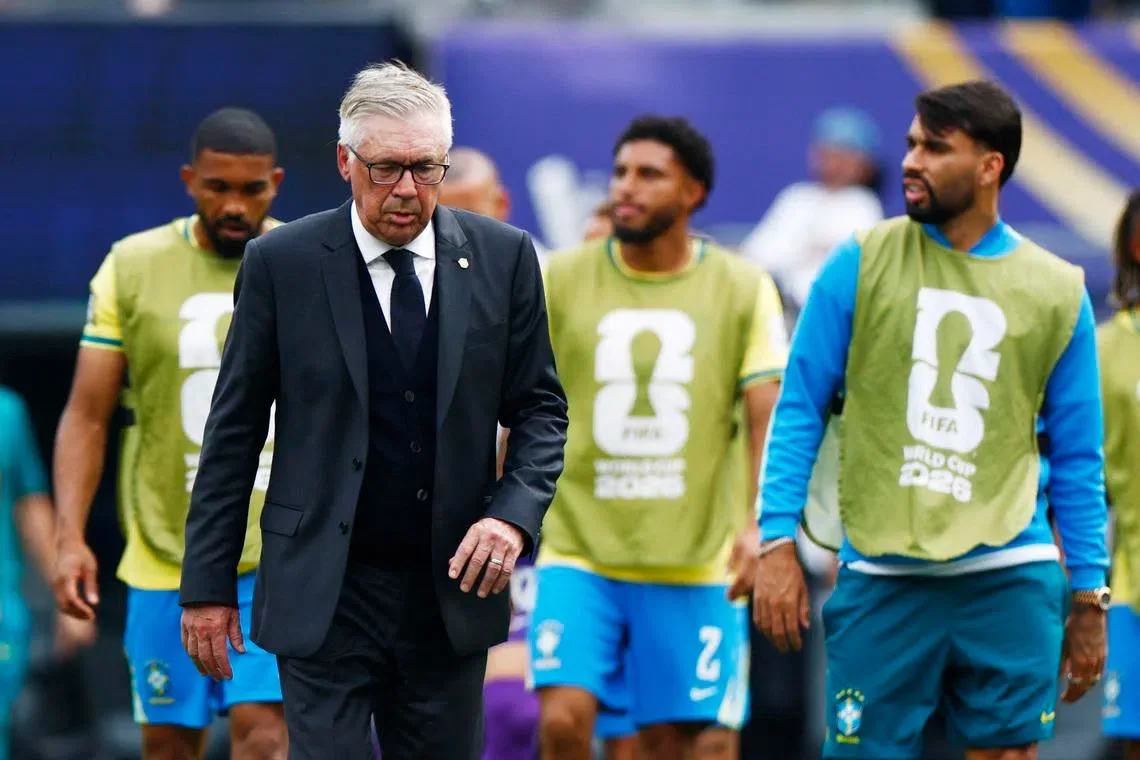
Despite the loss, the Brazilian Football Confederation confirmed Ancelotti will remain as head coach through the 2030 World Cup cycle. Director Rodrigo Caetano said, "He is our manager and will be throughout this cycle. One of the main reasons we failed in this World Cup was not to have proper, stable guidance long term... and we cannot make the same mistake again" [3, 7]. Ancelotti called for a new generation of young talent to revitalize Brazilian football [10, 11].
Ancelotti was officially appointed Brazil coach in May 2025 after finishing his tenure at Real Madrid, following three years under caretaker coaches [1, 2, 3, 7, 12, 8]. Brazil’s wait for a sixth World Cup title will now extend to at least 28 years [3, 9, 6, 7].