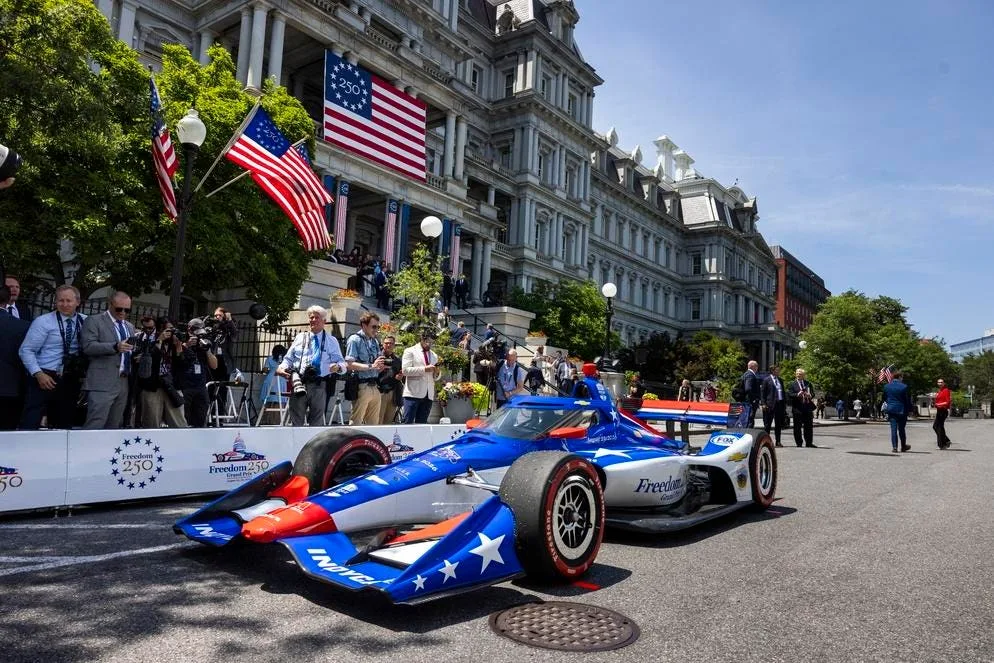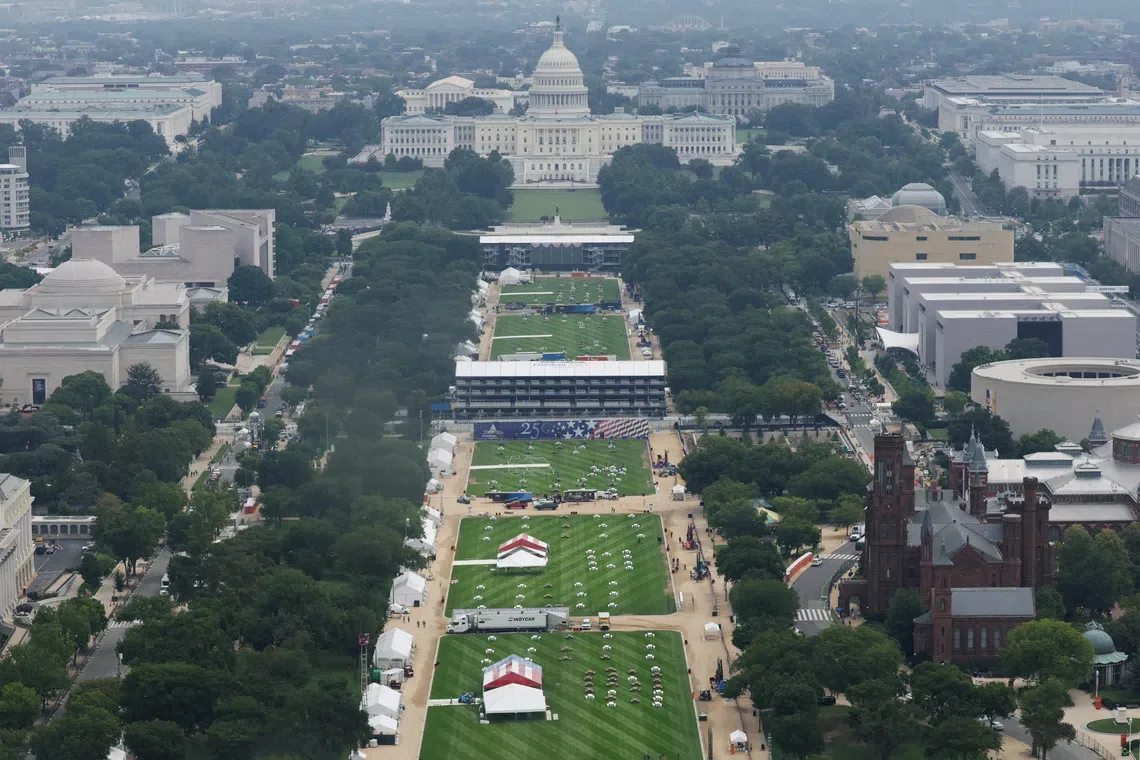
The inaugural Freedom 250 Grand Prix took place on August 20 on the streets of Washington, D.C., marking the first IndyCar race held around the National Mall and Pennsylvania Avenue near the U.S. Capitol [1, 2, 3].
The race stretched 147 laps on a 1.7-mile, seven-turn circuit, covering 250 miles to honor America's 250th anniversary. Organizers initially planned 125 laps but extended it to 147 to reach the 250-mile distance [1, 2, 3].
The course passed key landmarks including the Washington Monument, National Archives, the Smithsonian National Air and Space Museum, and ran near Capitol Hill. Speeds reached up to 185 mph on Pennsylvania Avenue [1, 2, 3].
More than 200 manhole covers on the circuit were welded shut to prevent the aerodynamic suction from dislodging them during the race [3].
The trophy for the winner is a crystal pyramid enclosing a 3D model of the U.S. Capitol dome, reflecting the race’s unique setting [1, 2].
Attendance was free with a required general admission ticket, although ticket requests closed on June 7 and no more passes were available on race day [1, 2, 3].
The race is the longest street event for IndyCar since the mid-1980s, expected to last close to three hours. Drivers highlighted the added strategic challenge due to the extended distance, including fuel management, tire wear, pit stop timing, and caution periods [1, 2, 3].
Top series contenders raced included points leader Alex Palou, who holds 542 points, and Pato O'Ward, fifth in the standings with 385 points and trailing by 157 in the championship [1, 2, 3]. O'Ward described the event as "an IndyCar street fight" and said, "I really think there are going to be a lot of new fans who may want to get into watching IndyCar. I feel like after they watch this weekend, they might be hooked for a lifetime" [1, 2].
Graham Rahal commented on the event's significance saying, "To be able to come race in the U.S. capital, right in front of Capitol Hill, to drive down Pennsylvania Avenue - these are all things that, as a young kid growing up in this country, some of the first things you learn are the value of those names." [1]
Due to concerns about vibrations damaging nearby artworks, some outdoor sculptures at the National Gallery of Art were boarded up before the race [3].
Rain showers and possible thunderstorms were forecast for race afternoon, potentially impacting conditions [3].
There are no confirmed plans yet to make the Freedom 250 a permanent fixture on the IndyCar calendar after this first running [1, 2].