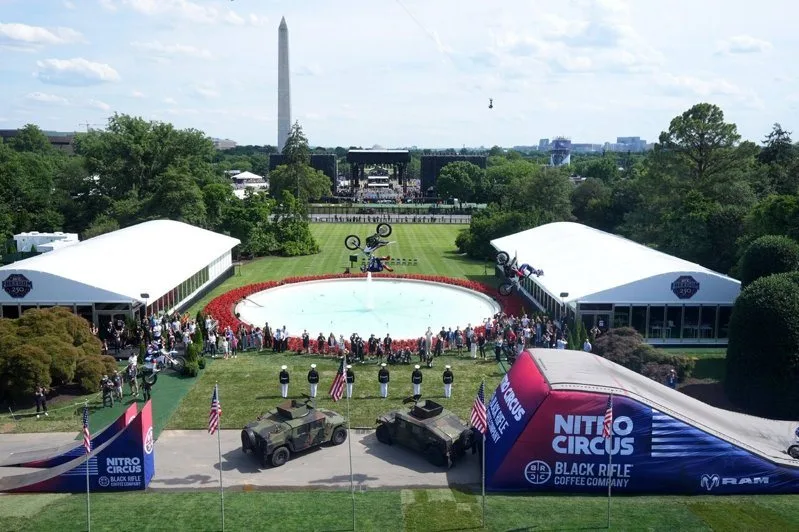
The White House South Lawn hosted a UFC event on June 14, 2026, featuring seven mixed martial arts fights with 14 fighters, marking the first professional fight event held at the White House [1, 2, 3, 4, 5, 6, 7, 8]. The event celebrated the 250th anniversary of US independence alongside President Donald Trump's 80th birthday [1, 2, 3, 9, 10, 4, 5, 6, 11, 12, 7, 8].
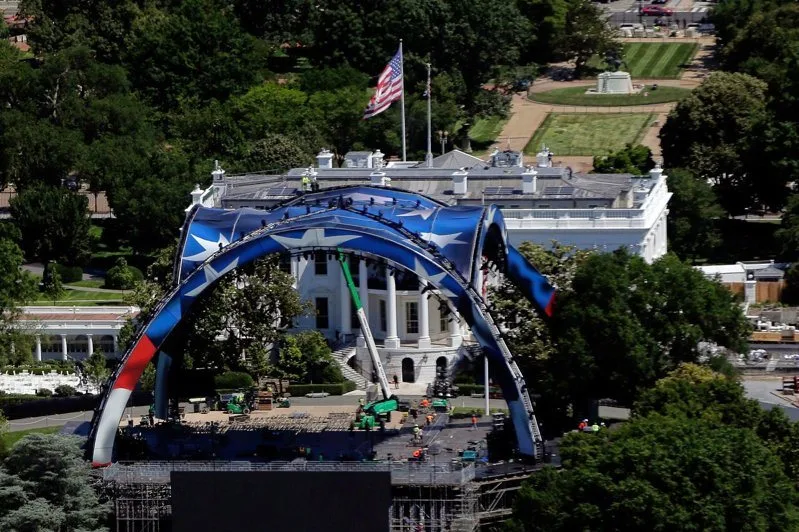
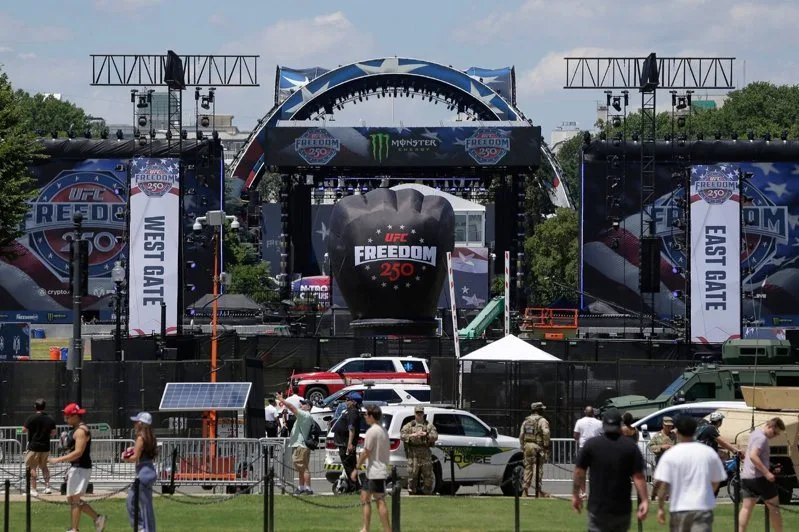
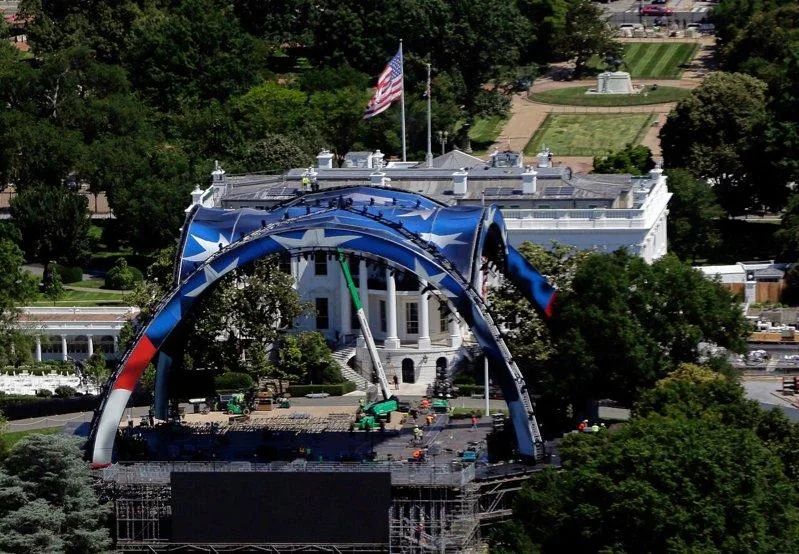
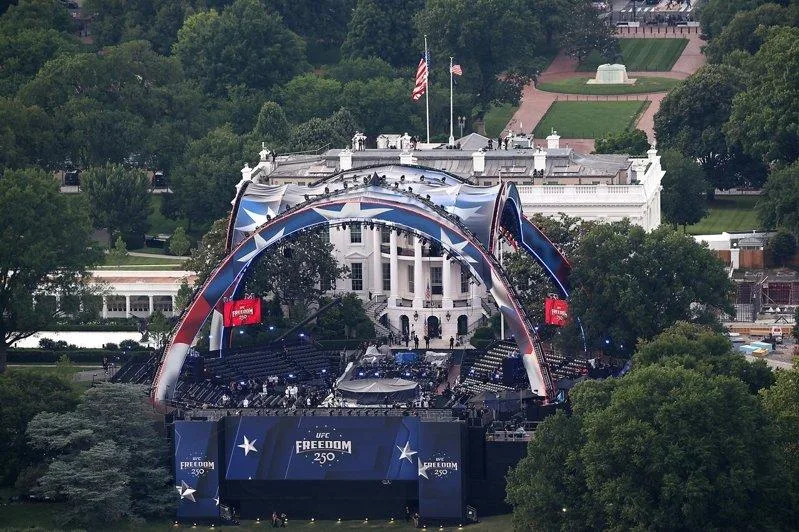
A temporary, futuristic octagonal cage arena shaped like a UFO was constructed on the South Lawn. The cage measured 9 meters in diameter and was topped by a 27-meter tall overhead metal arch known as "The Claw," equipped with lights, speakers, and four large screens [1, 2, 3, 5, 6, 7]. The arena seated over 4,000 invited spectators, while approximately 120,000 people watched remotely on large screens in nearby areas through a lottery system, though some estimates place remote viewers around 85,000 [1, 2, 3, 5, 6, 7, 8].
The event reportedly cost more than $60 million and required tens of thousands of work hours. Seven federal agencies, including the National Park Service, Department of Homeland Security, and FAA, coordinated security and logistics, deploying hundreds of federal law enforcement personnel [1, 2, 3, 5, 6, 7, 8]. However, UFC and its partners covered the expenses, not taxpayer funds [1, 2, 3].
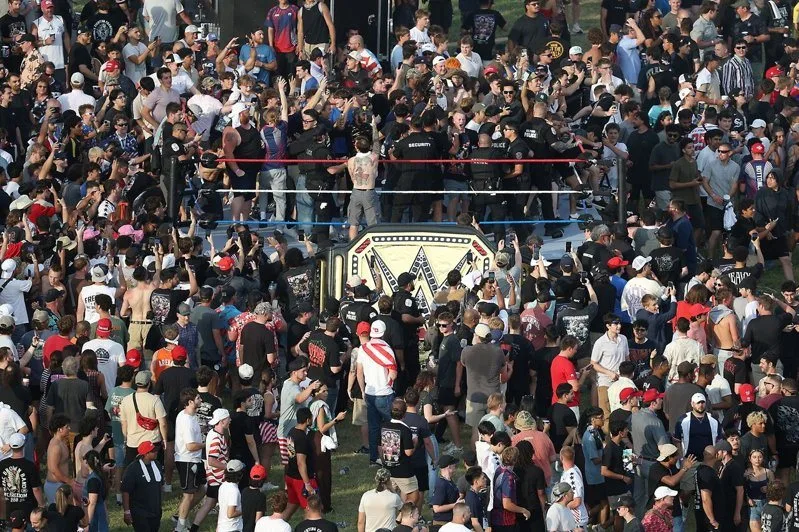
The night before, on June 13, fighters took part in official weigh-ins at the White House, accompanied by a live performance from the Zac Brown Band [1, 2, 3, 7]. Thousands of fans from across the US and abroad traveled to Washington, DC, to attend or watch the events [4, 11, 12, 7]. Some guests reportedly paid over $1 million for tickets distributed by the government and UFC, which were not publicly sold [8].
The card culminated with a lightweight title fight featuring Justin Gaethje against a Georgian opponent [11, 12]. President Trump attended the event and personally greeted fighters such as Bo Nickal after their bouts, with Bo calling the occasion "incredible" and requiring "extraordinary courage" [8]. Trump said, "Some people can take hits, some can't. It's always good in life to be able to take hits" [4].
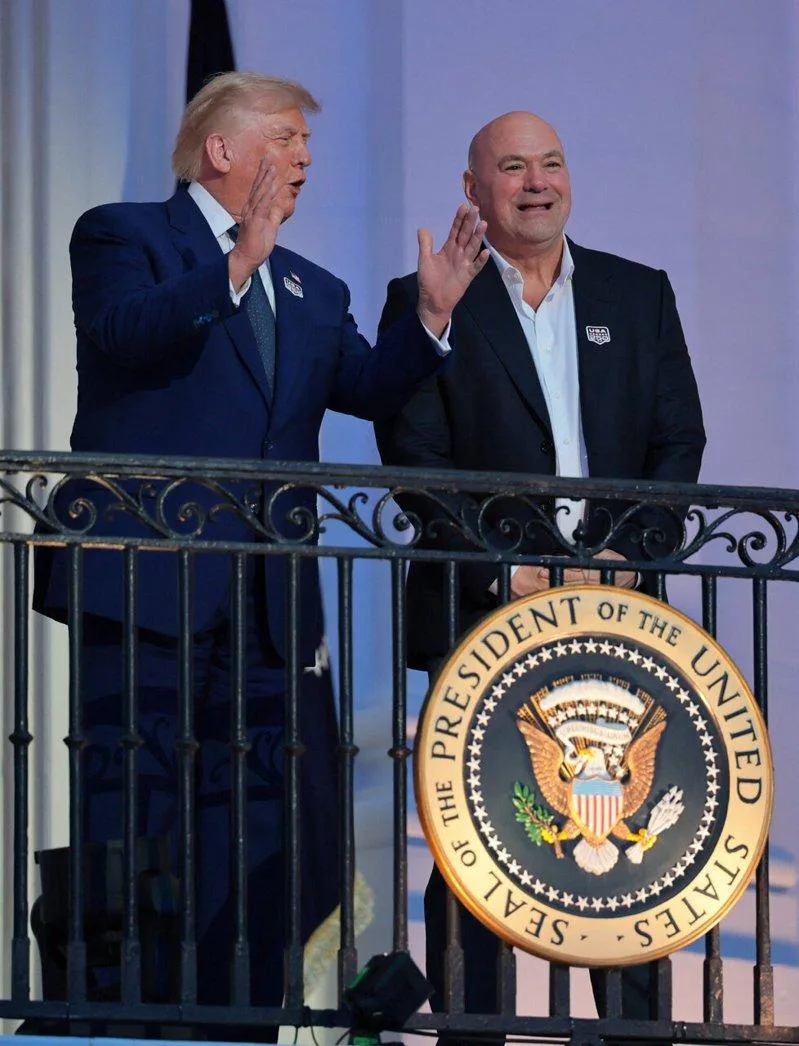
Trump announced a peace deal with Iran just hours before the UFC event began [8]. Trump and UFC CEO Dana White are close allies, and Trump owns stock in UFC’s parent company, TKO Group Holdings [9, 10, 8]. The event drew criticism for politicizing sport and alleged misuse of federal parkland for private gain. Protesters gathered at national monuments to denounce what they called a desecration of sacred sites and misuse of taxpayer resources for Trump’s personal celebration [9, 10, 7, 8]. Karen Francis, a protester, said, "This is our land, not his—it's disgusting" [7].
A June 3-8 Reuters/Ipsos poll of 4,531 US adults showed only 16% supported the UFC event at the White House, with 46% opposed and just 31% of Republican voters backing it [9, 10, 8]. Multiple artists canceled performances fearing the event would be used to promote Trump's image [9, 10]. Cornell University professor Mike Fontaine described the event as "a very typical strategy," comparing it to ancient Roman "bread and circuses" used to entertain and distract the population [5].
Sponsorships from companies including Bud Light, Jose Cuervo, Dodge, and Monster Energy helped UFC recoup about half of the event's costs [7]. On June 20, construction of the octagonal cage arena began on the South Lawn [1, 2, 3]. UFC fighters held a warm-up event at the Lincoln Memorial on June 12, drawing fans from around the country [11, 12].
The US State Department announced plans to use UFC and MMA for sports diplomacy to promote American values abroad, per a June 11 agreement [4].