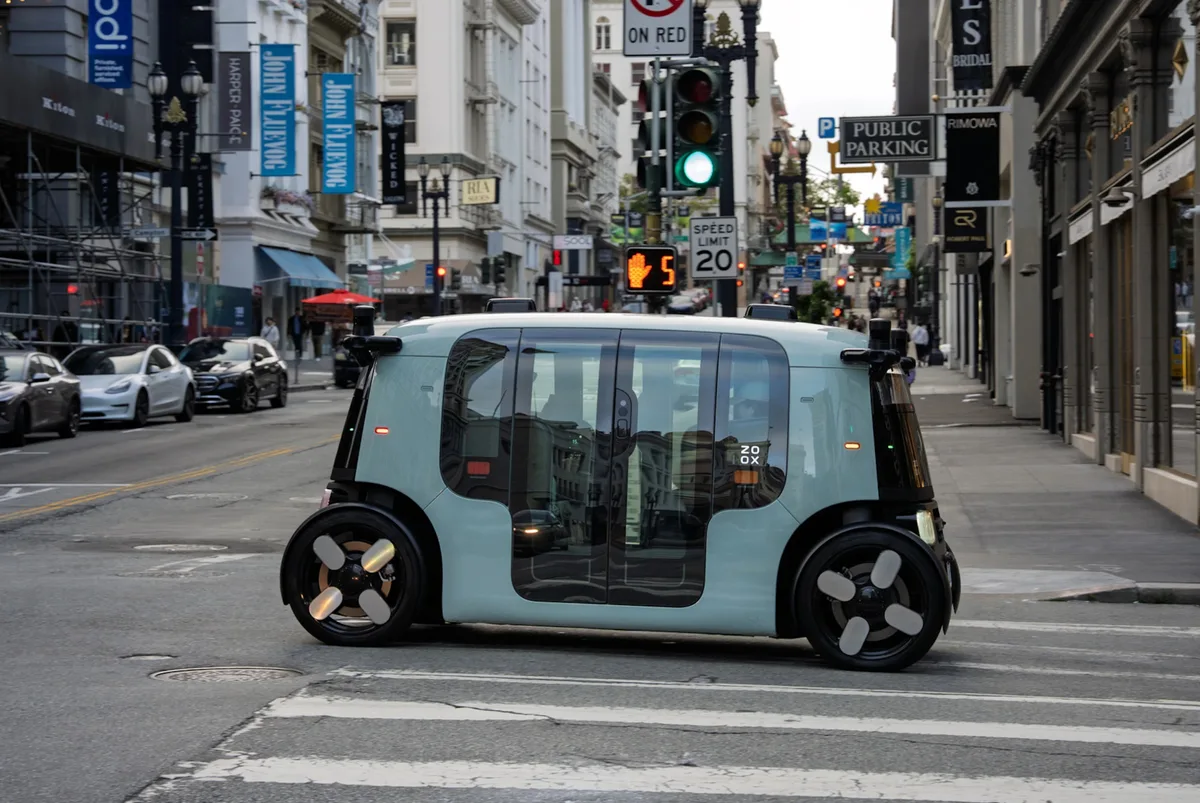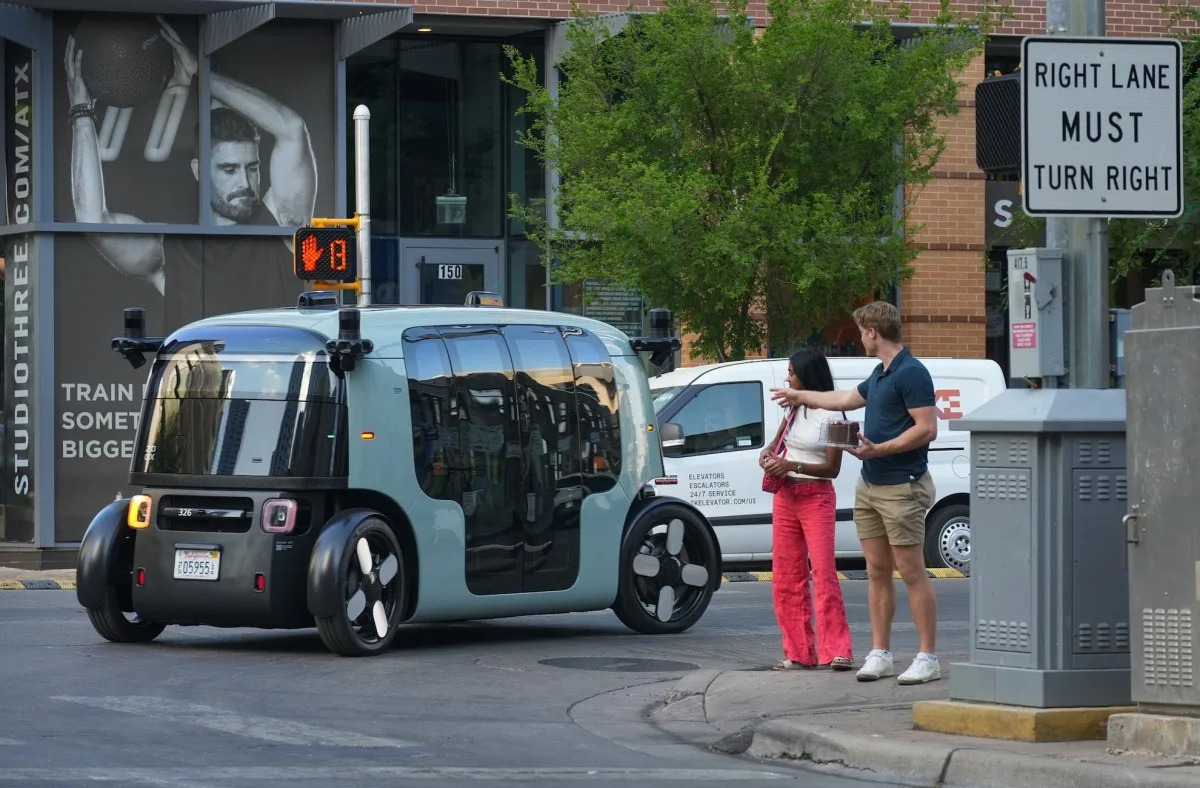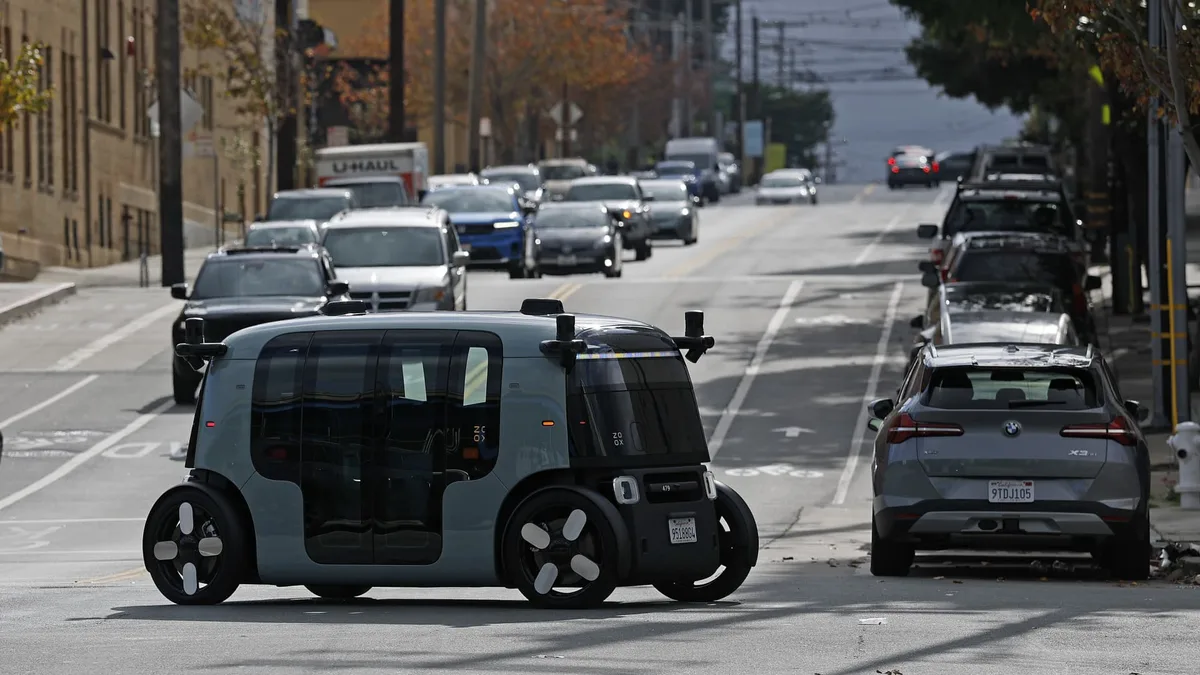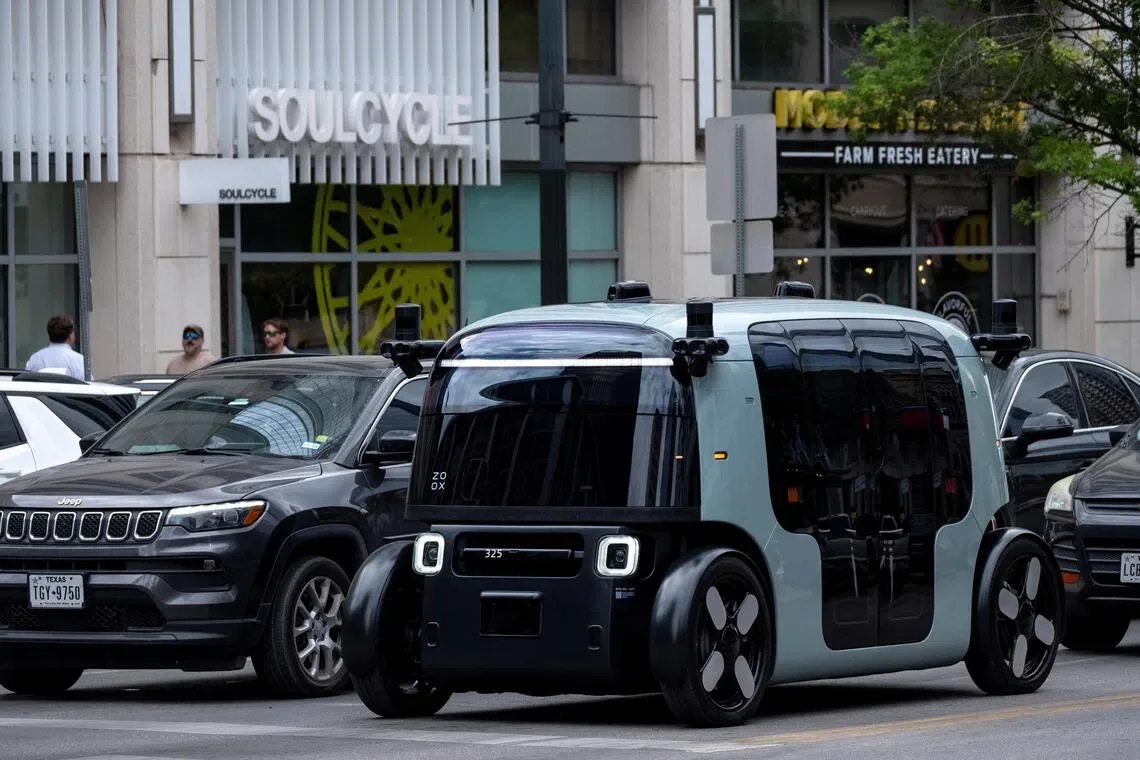
Amazon-owned Zoox won a temporary exemption from the US National Highway Traffic Safety Administration (NHTSA) on July 29 or 30, 2026. The exemption allows commercial deployment of up to 2,500 robotaxis each year for two years. These vehicles feature no steering wheels or pedals, departing from federal motor vehicle safety standards that normally require such controls [1, 2, 3, 4, 5, 6, 7, 8].
The waived regulations include eight safety standards covering steering, braking, mirrors, and windshield defrosting systems. The purpose-built Zoox robotaxi is electric, shaped like a carriage with two rows of inward-facing seats, and can reach speeds up to 120 km/h (75 mph) [1, 3, 4, 6, 8].
Zoox has previously tested free rides in parts of Las Vegas and San Francisco since 2025 under demonstration exemptions. The company plans to start charging fares for its robotaxi rides in Las Vegas beginning in August 2026. Additional cities targeted for rollout include Miami, Austin, and potentially Dallas and Phoenix as regulatory approvals proceed [1, 3, 4, 5, 6, 7, 8].
NHTSA issued the exemption with enhanced oversight measures. Zoox must report vehicle incidents such as crashes or unsafe stops, and the agency can revoke the exemption if safety problems emerge. Jonathan Morrison, NHTSA's Administrator, said Zoox's systems “exceed the equivalent performance requirements of a compliant vehicle” but warned, "If we see an unreasonable risk to safety, you're going to hear from us" [1, 3, 4, 5, 6, 7, 8].
Earlier in July 2026, Zoox recalled 105 vehicles due to software issues with detecting heavy smoke after NHTSA raised concerns about autonomous vehicles interfering with emergency responders. Morrison stated, "An AV that cannot safely interact with first responders is a danger to the general public" [5, 7].
Zoox CEO Aicha Evans said the company is "honored to receive the first-ever commercial exemption for a purpose-built robotaxi from NHTSA," which enables charging customers and expanding autonomous ride-hailing [3].
The exemption does not permit Zoox to sell the vehicles to the public; it only applies to limited commercial ride-hailing service deployments. Federal safety regulations are expected to be updated soon to better fit autonomous vehicle designs like Zoox’s robotaxis [1, 5].
Zoox’s commercial deployment under this exemption is capped at a total of 5,000 vehicles over two years. The company will begin paid robotaxi services in Las Vegas this August as the first step.