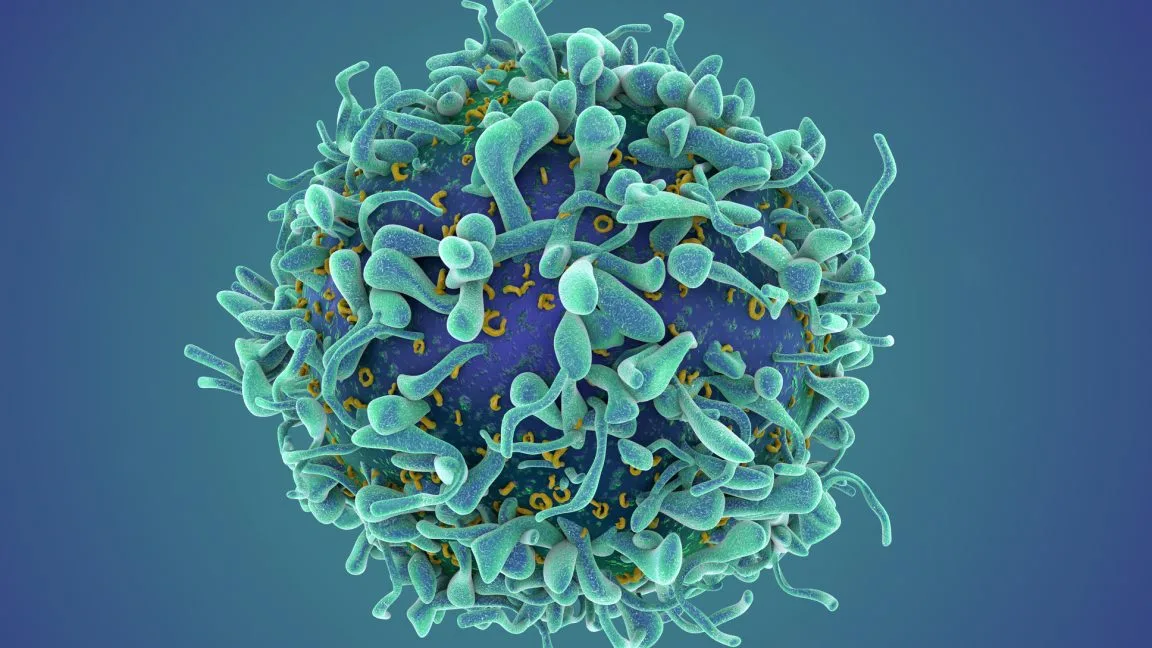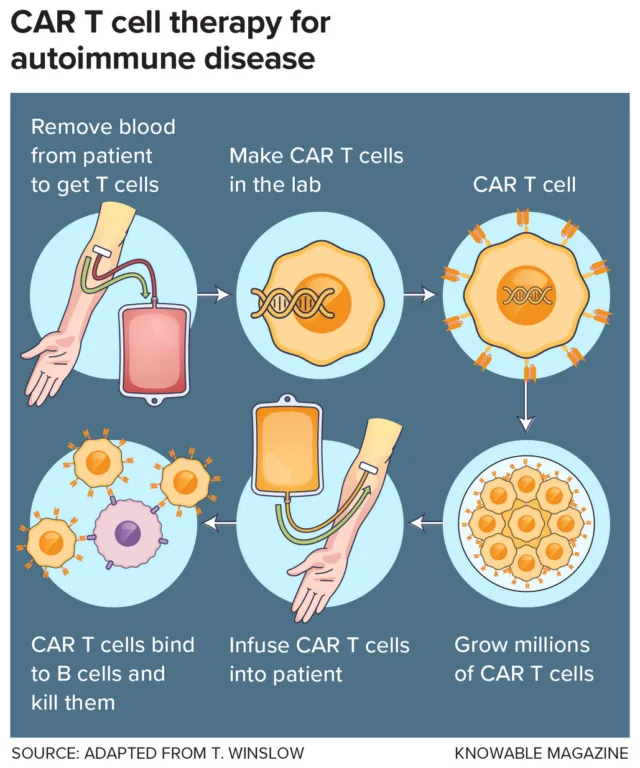
CAR T cell therapy, originally developed for cancer treatment, is undergoing clinical trials targeting autoimmune diseases such as multiple sclerosis, lupus, Graves' disease, and vasculitis [1]. The treatment aims to 'reset' the immune system by eliminating the immune cells that mistakenly attack the body in autoimmune disorders [1].
On June 9, 2025, Jan Janisch-Hanzlik, a 49-year-old multiple sclerosis patient from near Blair, Nebraska, became the first participant in a CAR T cell therapy trial at the University of Nebraska Medical Center [1]. The trials are testing the safety and effectiveness of the therapy, but uncertainties remain over how well CAR T will control autoimmune symptoms, the duration of its benefits, and potential long-term side effects such as dangerous inflammation [1].
Simultaneously, a separate clinical trial for HIV treatment has used CAR T cells reprogrammed to recognize and target HIV-infected cells [2]. Two HIV-positive participants in the trial have maintained undetectable virus levels for nearly two years and almost one year, respectively, after a single CAR T infusion, allowing them to stop lifelong antiretroviral therapy [2]. HIV drugs currently require continuous use, so this approach could change treatment paradigms [2].
Steven Deeks, a professor and HIV expert who led the trial, called the results "early days" but described them as a critical proof-of-concept demonstrating that CAR T therapy can be safe and effective [2]. He added, "If we can provide the proof-of-concept that this approach is both safe and effective, then there are lots of ways in which it can be optimized, to make it more affordable and scalable." [2]
Andrea Gramatica, another researcher involved in the study, said the findings "give the HIV field a real, clinical clue that teaching the immune system to control the virus without antiretroviral therapy is achievable." [2]
CAR T therapies have already been used successfully in tens of thousands of cancer patients, with several approved drugs on the market [1, 2]. Their recent success in severe autoimmune diseases and HIV represent promising new applications.
Initial results from the HIV CAR T trial were announced in late May 2026 at the American Society of Gene and Cell Therapy meeting in Boston [2]. Further data from ongoing trials are expected as researchers continue to evaluate long-term safety and effectiveness.