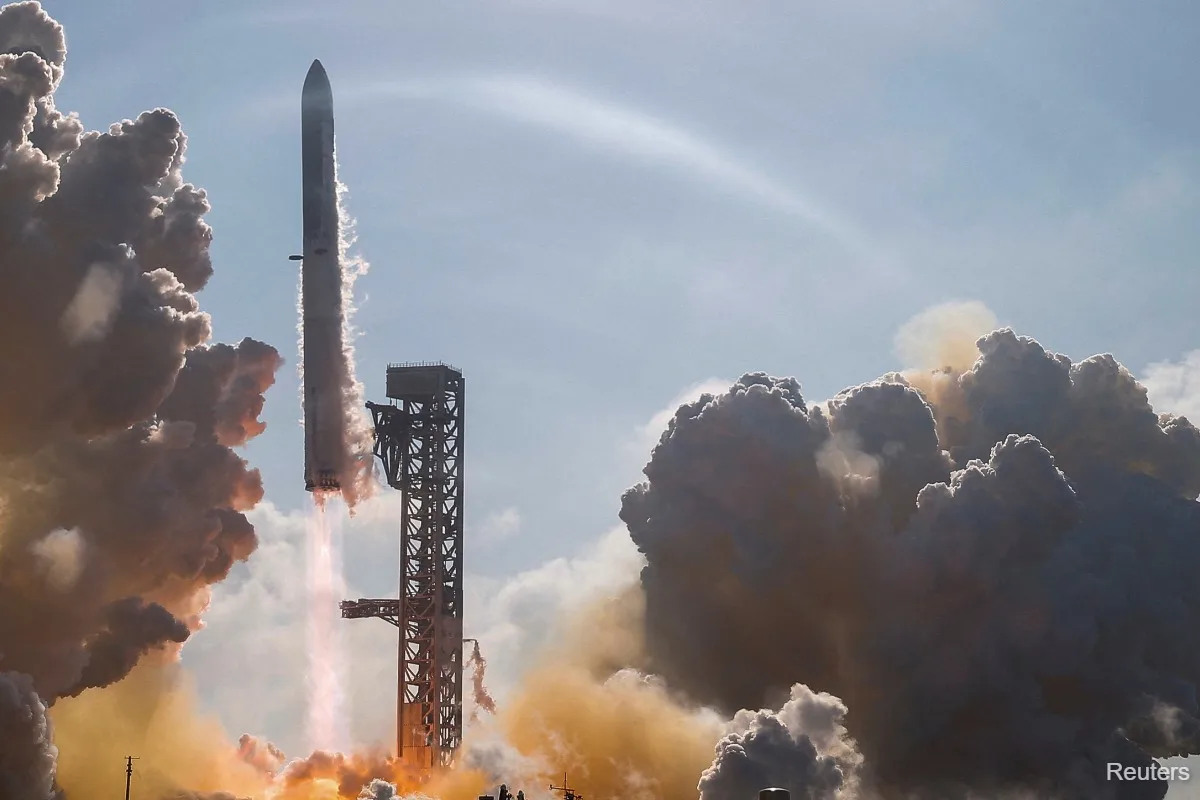
The Federal Aviation Administration (FAA) determined that the May 22, 2026 test launch of SpaceX’s Starship Flight 12 resulted in a mishap involving the Super Heavy booster during its return to the Gulf of Mexico after separating from the second stage [1, 2]. The booster tumbled and crashed into the Gulf, likely exploding on impact, but there were no reported injuries to the public or damage to property [1, 2].
The booster failure occurred during an engine burn intended to return the rocket to the launch site, when an apparent engine failure caused loss of control [2]. This flight was the first using the upgraded "V3" version of the Super Heavy booster, which featured new third-generation Raptor engines and design changes [2]. Despite the booster mishap, the Starship spacecraft successfully separated and deployed mock satellites, though it lost one of six Raptor engines, affecting some mission objectives [2].
The FAA has ordered SpaceX to investigate the cause of the booster failure thoroughly, oversee the entire probe, and approve any corrective actions and the investigation’s final report [1, 2]. Until the FAA approves the findings and fixes, SpaceX must pause further Starship test flights [2].
The Starship program, developed with more than US$15 billion in funding, aims to create a fully reusable rocket with greater payload than current systems [1]. This latest test flight setback adds to the challenges faced by SpaceX as it seeks FAA approval to resume launches.
The FAA publicly announced the investigation order on May 27 and reiterated on May 28 that the mishap caused no harm to the public or property while emphasizing its role in ensuring safety and SpaceX’s cooperation [1, 2].