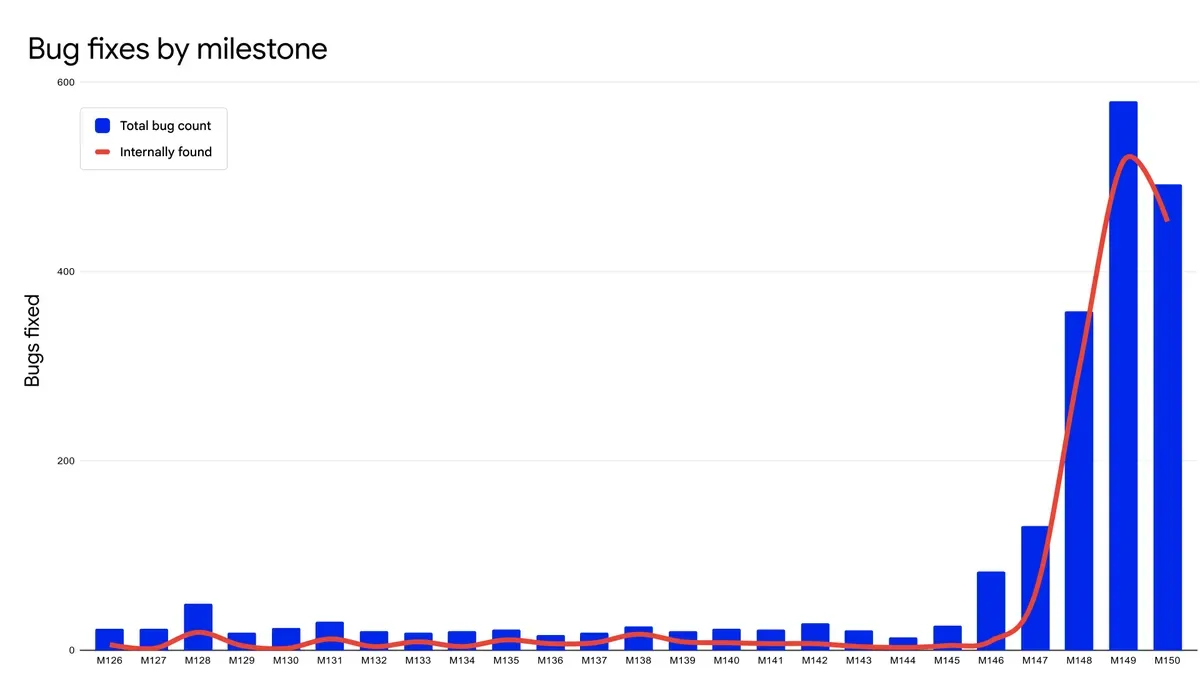
Google Chrome fixed 1,072 security bugs in the last two releases, versions 149 and 150, issued in June 2026. This exceeds the total fixes made in the previous 23 versions combined, which numbered 1,036 [1, 2, 3]. The surge in bug fixes results largely from deploying AI tools, including large language models like Gemini and specialized agents such as Big Sleep, to detect vulnerabilities faster and at scale [4, 2, 3].
Chrome Director of Engineering Doug Turner said, "LLMs have fundamentally shifted the economics of cybersecurity, transforming vulnerability discovery into an automated, industrial-scale operation." He added that by using models like Gemini, Google is "preemptively fixing vulnerabilities, outpacing our adversaries and making Chrome safer with every update" [2]. Vice President Parisa Tabriz described 2026 as "an inflection point both for offense and defense" in Chrome’s security approach [3].
Google started experimenting with AI and machine learning for security fuzz testing in 2012. In 2023, they advanced the approach by improving fuzz coverage with large language models. Partnerships with DeepMind and Project Zero in 2024 and 2025 produced agents like Big Sleep, which successfully uncovered bugs in Chrome’s V8 JavaScript engine and graphics stack [4]. Earlier in 2026, a Gemini-powered agent discovered a 13-year-old sandbox escape vulnerability [4].
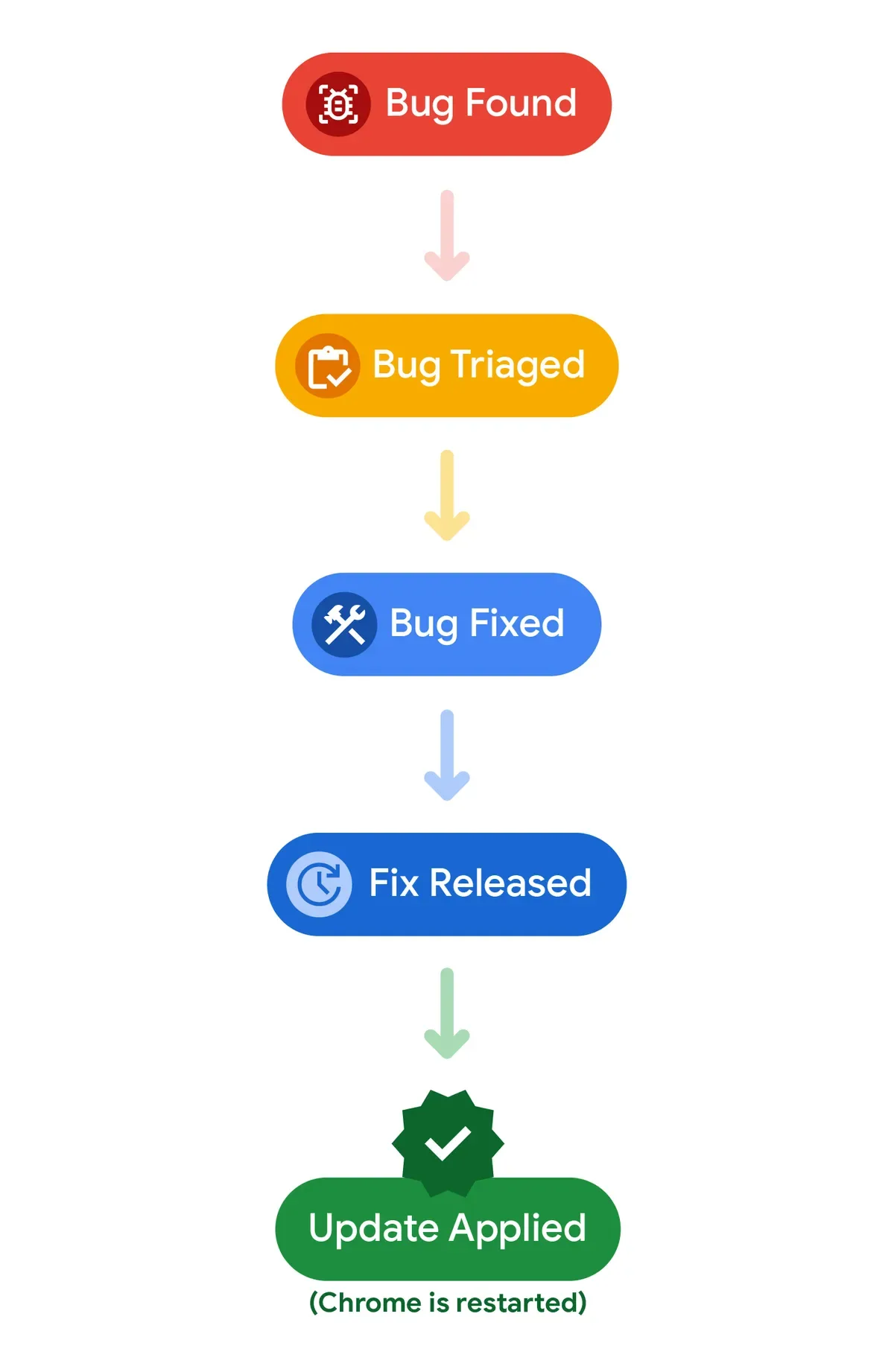
Alongside AI-driven security gains, Google plans to increase Chrome’s major release frequency to every two weeks starting September 2026. They will also deliver additional weekly, or even twice-weekly, security updates [1, 3]. The updates will be supported by a new "dynamic patching" system allowing Chrome to apply security fixes without restarting the browser. This method sequentially replaces background child processes, such as Renderer and GPU processes, running updated binaries on the fly utilizing Chrome’s multi-process architecture [1, 5].
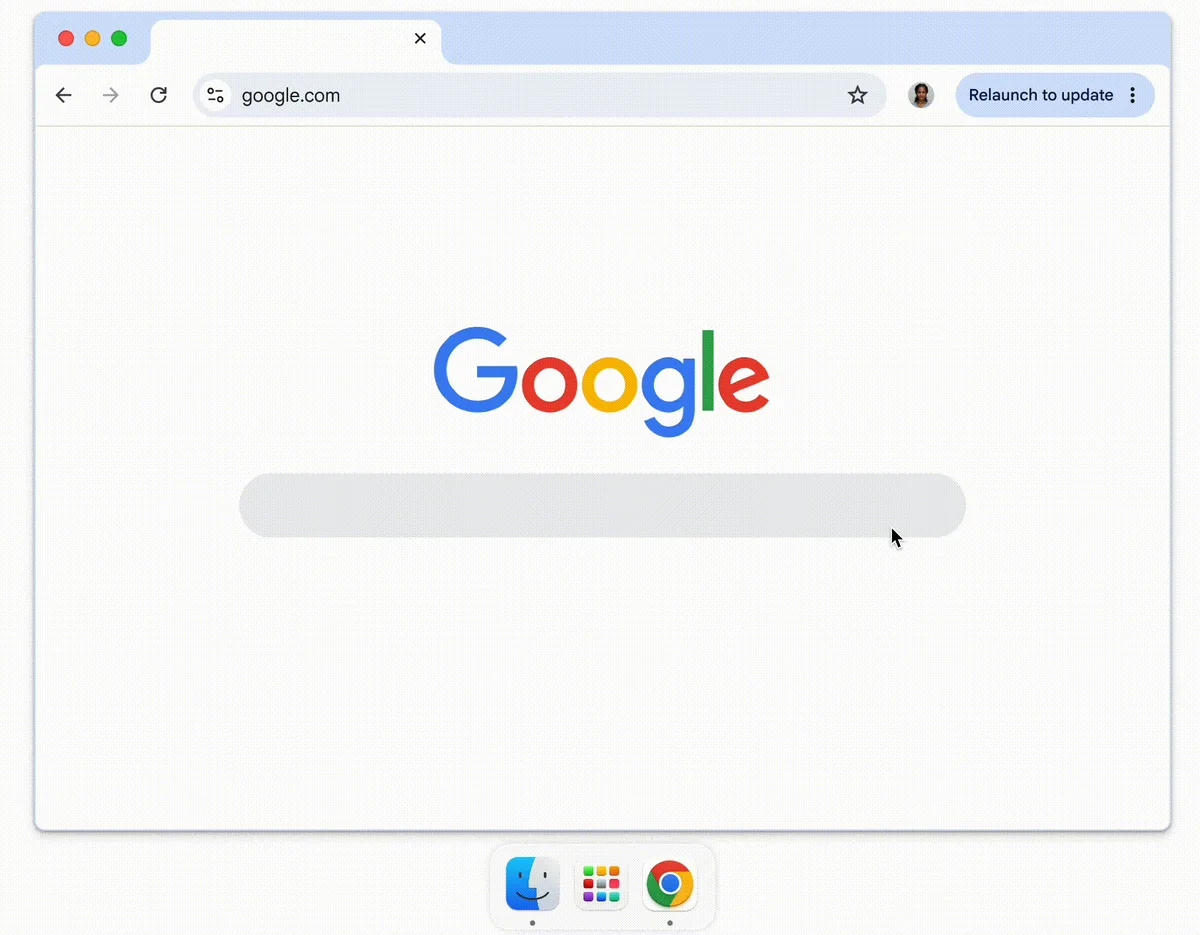
Currently, Chrome 150 on macOS features an automatic restart mechanism that triggers when it detects updates while no browser windows are open, minimizing disruption [1].
Other tech firms have also increased security patches through AI, with Microsoft fixing 570 bugs recently, while Apple’s bug fixes numbers remained lower at about 482 in 2026 [2].
Google’s planned biweekly major releases and dynamic, restart-free patching will come into effect from September 2026, marking a new phase in Chrome’s security lifecycle [1, 3].