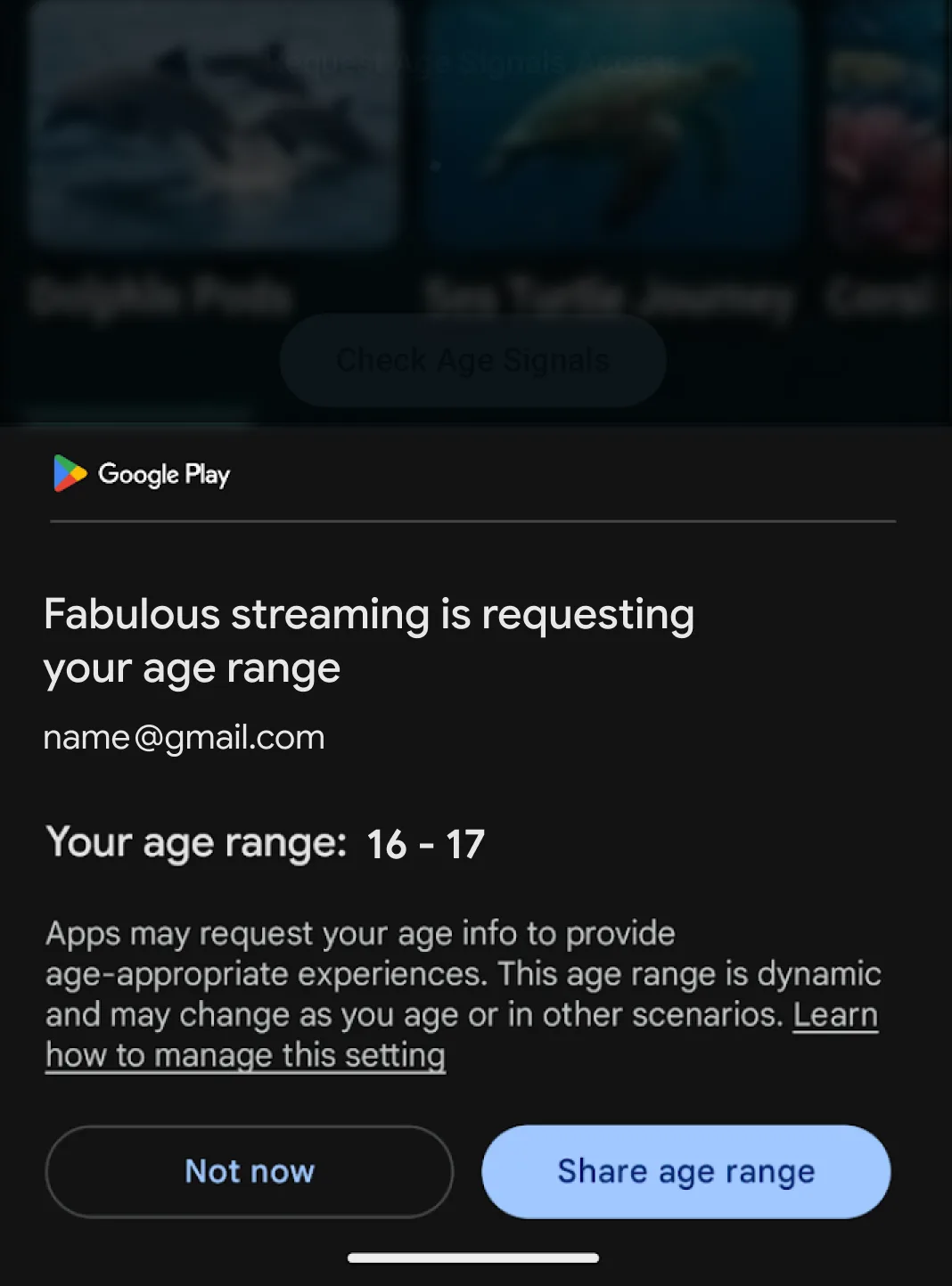
Google is expanding its Play Age Signals API globally to enable developers to verify user age ranges while protecting privacy. The API lets parents share age ranges of their children through Google's Family Link app, allowing apps to serve age-appropriate content without requiring precise age data or sensitive identity verification [1, 2, 3].
Unlike many age verification systems, Play Age Signals does not require ID documents or selfies. Sharing age information is strictly opt-in and users can revoke consent at any time, ensuring control remains with families [1, 2, 3]. The system centralizes parental controls within the Family Link dashboard, simplifying management of age information across apps [2, 3].
The API initially launched as a test in Brazil in late 2025. Google began broadening access with rollouts in Australia and Canada starting mid-August 2026, ahead of a global rollout scheduled by the end of this year [2, 3].
This service responds to new legal requirements in several US states and countries that mandate reliable age verification for app store content access [1, 2, 3]. By offering age range signals rather than exact ages, Google balances compliance with privacy concerns.
Google’s blog post explains, "Rather than enforcing one-size-fits-all rules, we give developers the flexibility to choose how they integrate safety signals. With this reliable signal, you retain complete agency to tailor your app's content, features, and settings to match your audience." This approach provides flexibility for app developers in how they use the age verification data to adapt user experiences and settings [3].
The next major milestone will be completing the full global rollout of the Play Age Signals API by the end of 2026, making age verification tools available to developers and parents worldwide [2, 3].