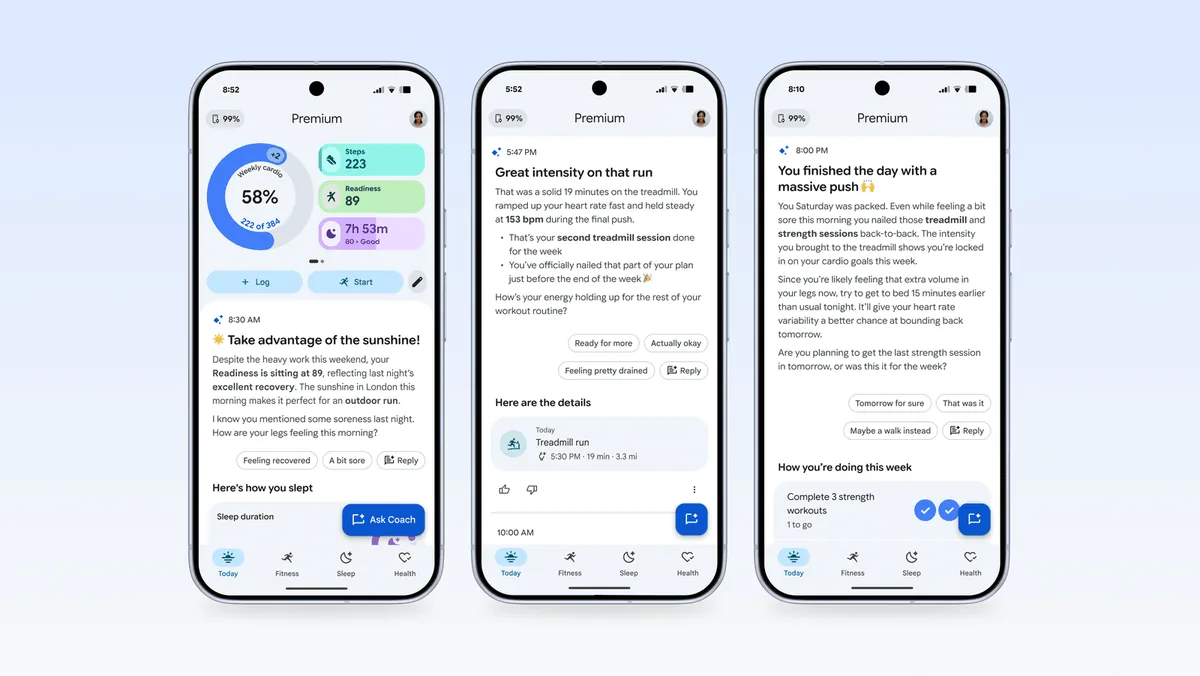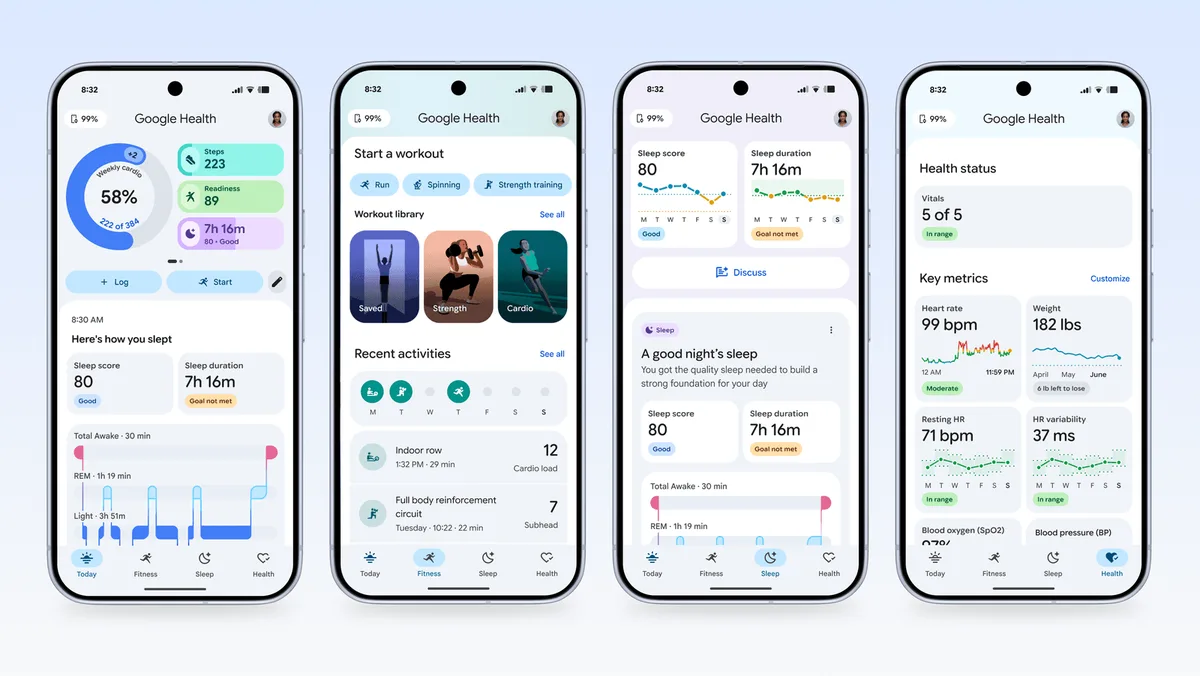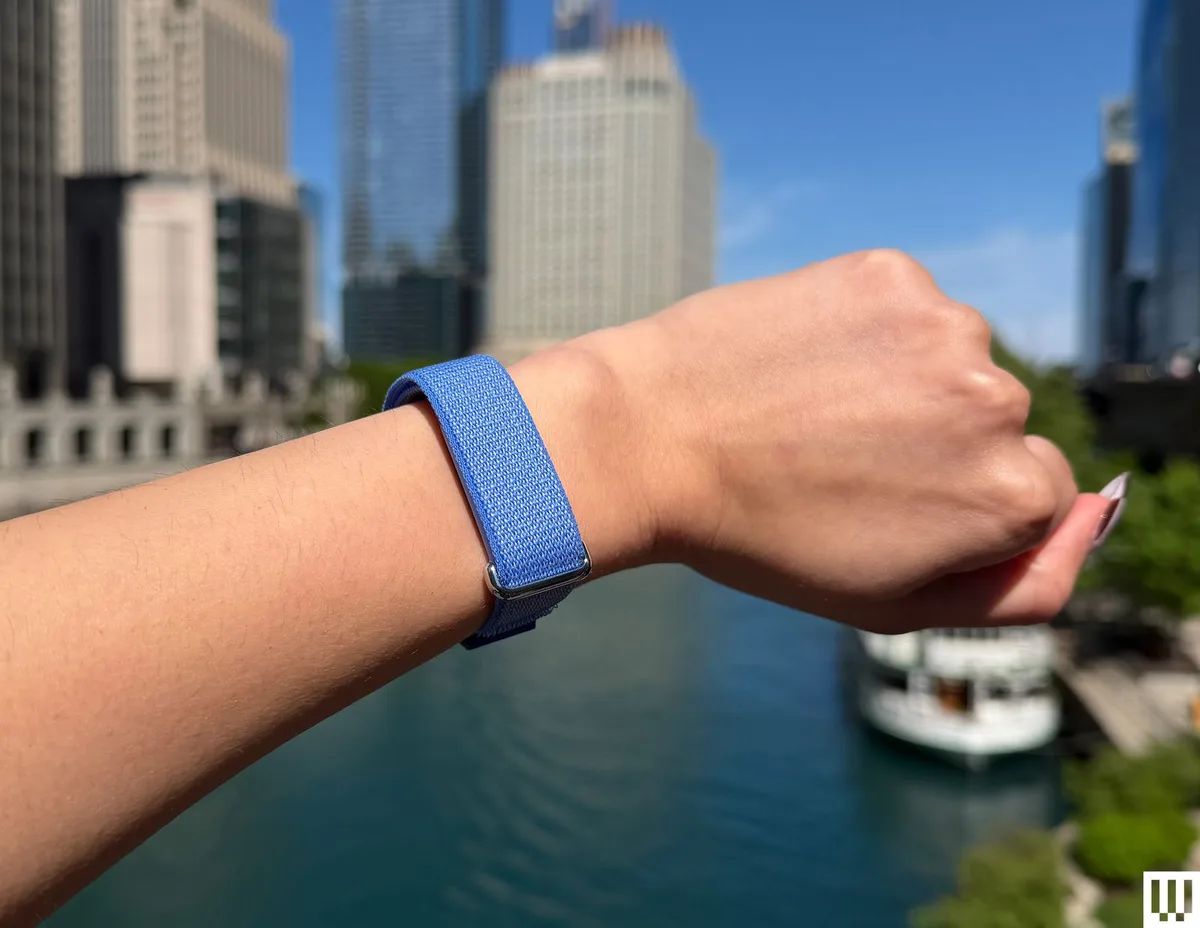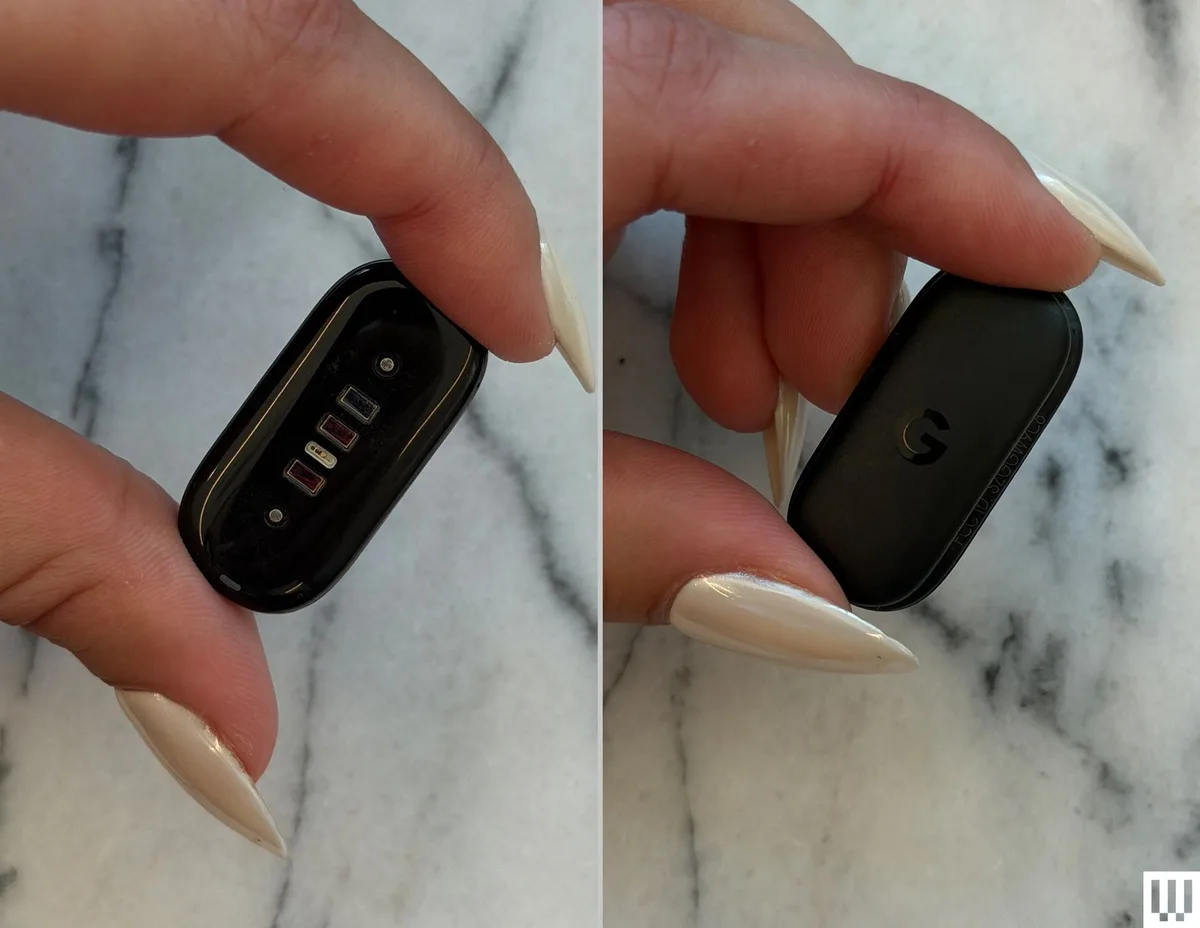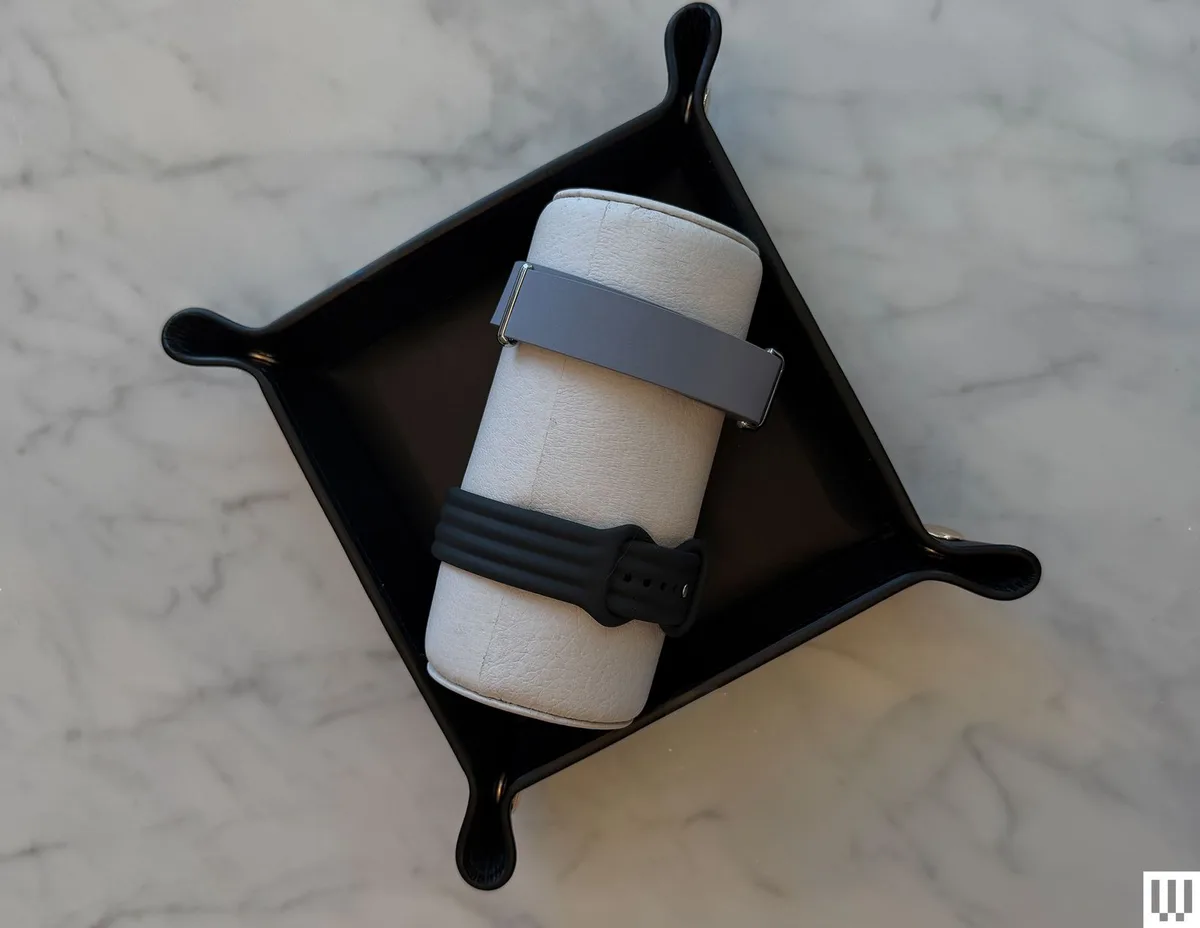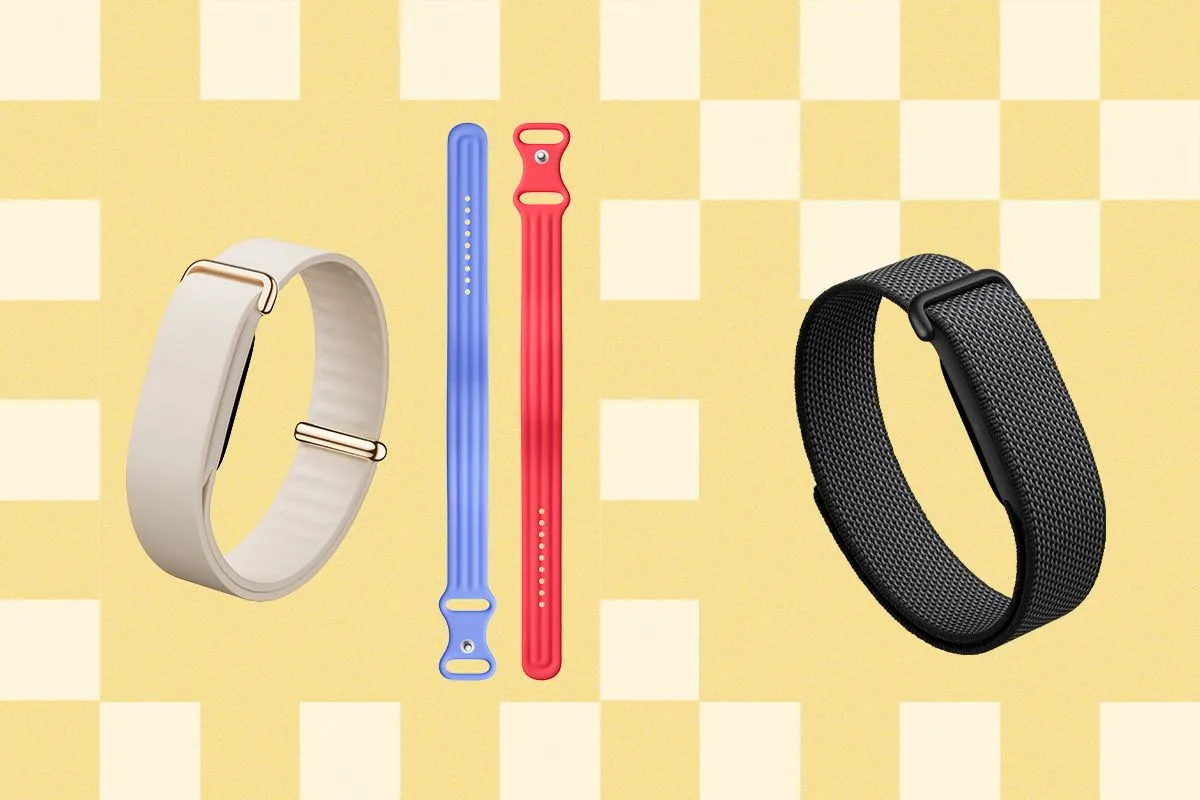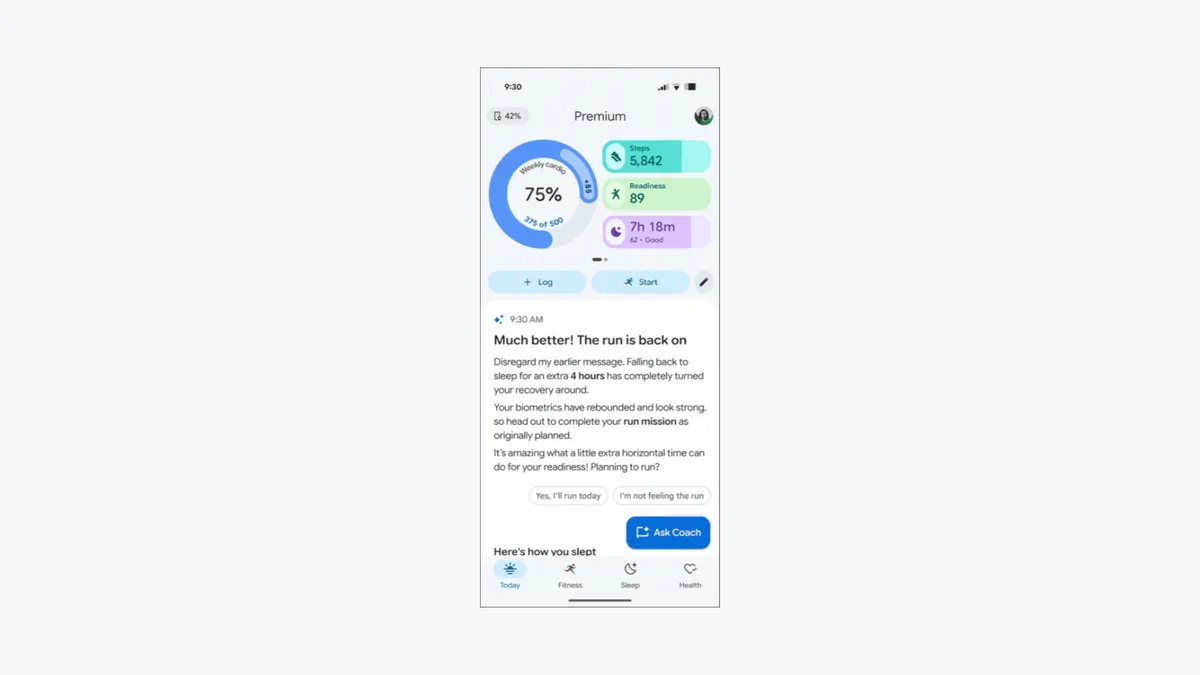
Google launched the Fitbit Air in August 2026, a screenless health tracker weighing only 12 grams, making it the lightest Fitbit device to date [1, 2]. The device provides continuous, always-on tracking of fitness, sleep, and wellness metrics [1, 2]. It pairs with the Google Health app, which features an AI Health Coach delivering motivational prompts and personalized feedback [1, 2].
Fitbit Air competes directly with Whoop's screenless bands, which weigh 27 grams, by offering a lighter, more comfortable fit and a more reliable attachment system [1]. Users have reported that the AI Coach provides readiness scores and workout feedback, sometimes issuing blunt motivational prompts, such as "You clearly didn't get the memo about taking it easy today" or notes on workout intensity like "my Fitbit yelled at me." While occasionally shallow, the AI coach adds motivational value to the experience [2].
The device retails at $99, matching the launch price of Fitbit's original screenless band, the Fitbit Flex from 2013 [1]. One user session example shared involved a 54-minute high-intensity interval training session reaching a peak heart rate of 169 beats per minute [2].
Whoop, Fitbit Air's direct competitor, recently raised $575 million in funding and holds a valuation of about $10 billion [2]. Fitbit Air seeks to take market share with its lighter weight, integrated AI coaching, and streamlined health tracking.
The Fitbit Air and its Google Health app with AI coaching have been available since early August 2026 [1, 2]. User feedback on the day of August 16 includes real-world reports on the AI Coach’s readiness scores and workout analysis [2].