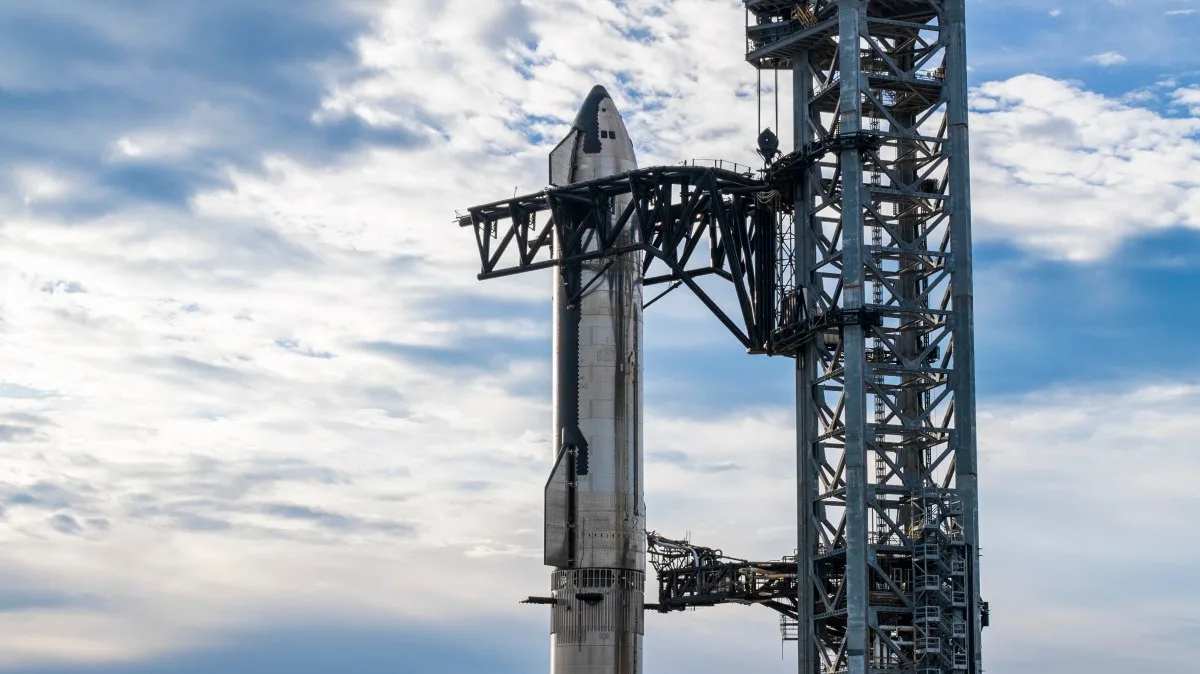
Google is in talks with SpaceX to launch prototype orbital data centers under a program called Project Suncatcher. The goal is to deploy solar-powered satellites to run machine learning tests in orbit by 2027, according to multiple sources [1, 2, 3].
Project Suncatcher aims to leverage space's natural cooling and solar energy to reduce Earth's data center energy and cooling demands [4, 5, 6]. Google CEO Sundar Pichai said the company will first send small rack-scale computing devices to satellites for testing before scaling up over roughly a decade. He stated, “There’s no doubt to me that a decade or so away, we’ll be viewing it as a more normal way to build data centers” [3, 7].
SpaceX plans to use these orbital data centers prominently in its upcoming $1.75 trillion initial public offering targeted for mid-2026 [1, 8, 9]. Elon Musk has claimed that “within three years satellites would be the cheapest way to generate AI compute power” as solar-powered space computing bypasses terrestrial energy limitations [1, 7].
Google holds roughly 6.1% of SpaceX shares, having invested about $900 million since 2015, which deepens their collaboration on space infrastructure [1, 9, 4]. Beyond SpaceX, Google is also working with Planet Labs and has approached other rocket launch companies to support the satellite launches [1, 2, 3].
Meanwhile, SpaceX recently acquired AI startup xAI in February 2026 to strengthen its AI computing capabilities as it develops this orbital data center technology [1]. Other companies such as Starcloud and NVIDIA are developing solar-powered, radiation-cooled data center technologies for use in space [5].
Industry experts warn of challenges including cosmic radiation damage to GPUs, heat dissipation in vacuum, risks from space debris, and high launch costs [7, 5, 6]. Taiwanese solar and cooling equipment suppliers like 元晶, 聯合再生, 盟立, and 建準 are expected to benefit from the growing demand for components used in space-based AI data centers [10, 11].
Google and SpaceX plan to launch the first Project Suncatcher prototype satellites by 2027 to conduct initial machine learning tests in orbit [2, 3, 7]. SpaceX’s $1.75 trillion IPO is scheduled for summer 2026, in which orbital data center technology will be a core part of the company’s growth narrative [1, 8, 9].