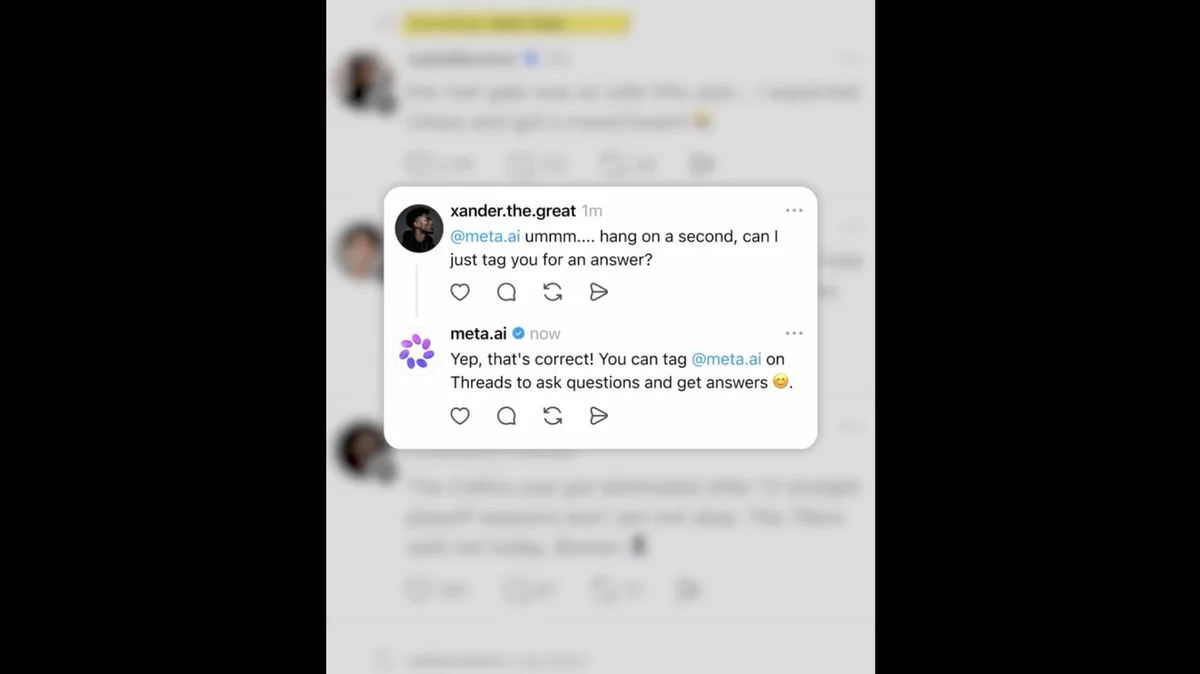
Meta began testing a new AI chatbot account named Meta AI on its social app Threads in select countries including Argentina, Malaysia, Mexico, Saudi Arabia, and Singapore as of early May 2026 [1, 2]. The account allows users to tag Meta AI to get answers or context within conversations, aiming to enhance user interaction [1, 2].
Unlike other accounts, users do not have the option to block Meta AI through normal blocking features. Attempts to report Meta AI as spam or to block it have failed, as the option to block either never appears or the block does not take effect [2]. This inability to block or fully control the AI account quickly became a hot topic on Threads, generating over one million posts expressing user frustration and anger [1, 2].
Meta spokesperson Christine Pai explained users can mute or hide Meta AI replies or mark posts as "Not interested" to reduce exposure to its content. "We want to give people a way to quickly gather context before jumping into the conversation," Pai said, emphasizing alternative controls besides blocking [1].
The Meta AI account is visible publicly on Threads even to users outside the initial test countries, further widening exposure [2]. The company has invested billions in AI talent and recently introduced a new AI model called Muse Spark as part of its AI push [1].
Previously, Meta tested AI-generated Instagram profiles that could not be blocked due to a bug and later discontinued that effort [2]. The current Meta AI account rollout appears to rely on different moderation and control mechanisms, but users continue to call for the option to block it outright.
Meta began rolling out the Meta AI account on Threads around May 12, 2026. The trending discussion over blocking restrictions followed quickly, dominating the platform within days and drawing widespread attention [1, 2].
Meta’s next assessment of the AI chatbot test and potential updates to user controls are expected as the company gathers feedback from the ongoing Threads rollout.