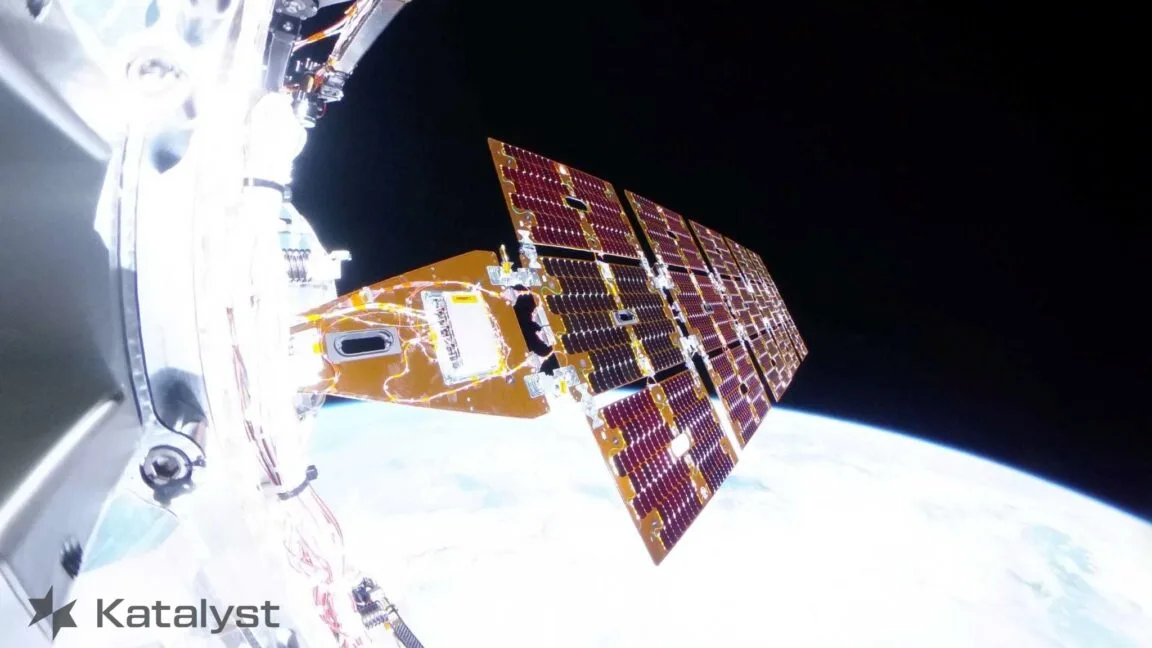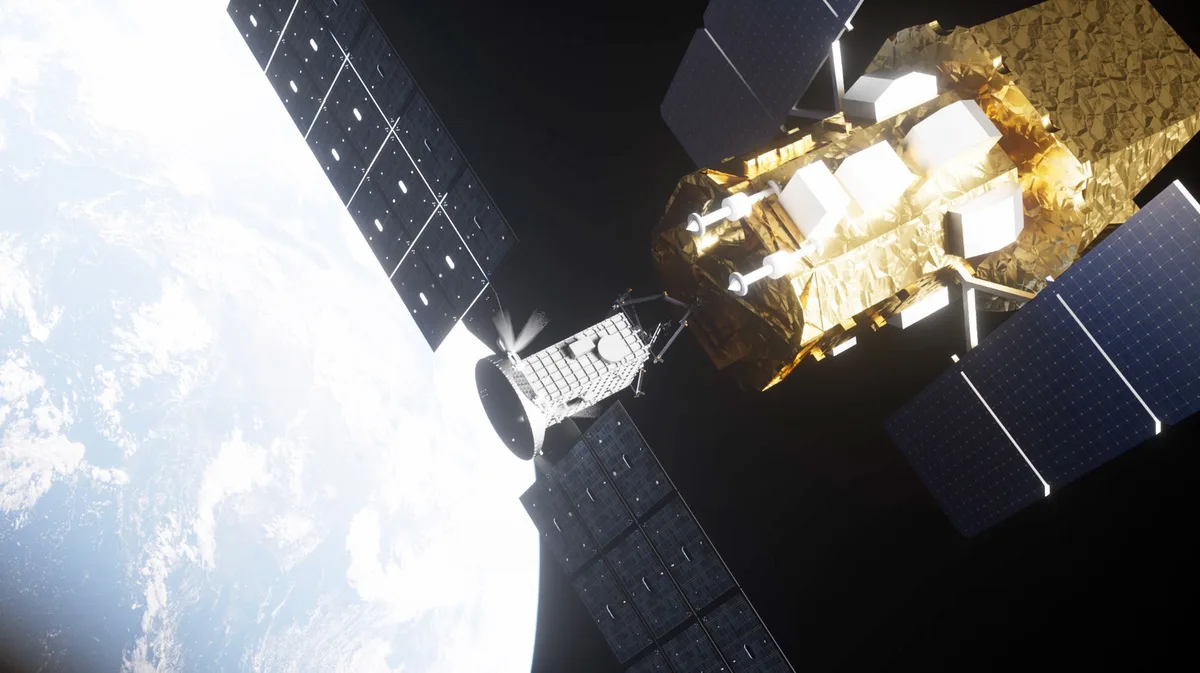
NASA and Katalyst Space Technologies announced the cancellation of their mission to rescue the Swift gamma-ray observatory by raising its orbit, citing control system failures on the rescue satellite Link [1, 2].
The Link spacecraft was launched on July 3, 2026, with the goal of rendezvousing with Swift and boosting its decaying orbit to prevent reentry into Earth’s atmosphere [1, 2, 3]. Swift, launched in 2004 originally for a two-year mission, has operated far beyond its planned lifetime, but increased solar activity in 2024 accelerated its orbital decay, making atmospheric reentry likely later in 2026 [4, 2, 3].
By late July 2026, Link began experiencing attitude control difficulties, losing reaction wheel functionality and facing thruster problems that disabled its ability to raise Swift's orbit [1, 4, 2, 3]. As a result, Link will no longer attempt orbit boosting but will continue close approach and proximity operations around Swift to gather data useful for future missions [1, 4, 2, 3].
NASA awarded Katalyst Space Technologies a $30 million contract in September 2025 to develop and fly the rescue mission on a tight nine-month schedule [1, 4]. NASA Administrator Jared Isaacman applauded the mission team’s speed and willingness to take risks, saying, "NASA should be willing to move quickly and take smart risks when the potential return is worth it, and that is exactly what we did with this mission. This is not the outcome we were working toward, but it does not change why this mission was worth attempting" [1, 3].
NASA Astrophysics Director Shawn Domagal-Goldman added that the mission was a first-of-its-kind high-risk effort driven by solar activity, noting, "We were all hoping for more science from Swift. But we knew the takeaways from this mission would be worthwhile either way, and we have gained so much through the series of accomplishments up to this point" [4].
The Swift observatory’s rapid orbital decay due to solar activity in 2024 prompted the fast-tracked rescue plan, but the recent technical challenges aboard Link forced a reevaluation. The team will use upcoming close proximity operations to gather crucial data ahead of future efforts to extend operational lifetimes of aging satellites [1, 4, 2, 3].