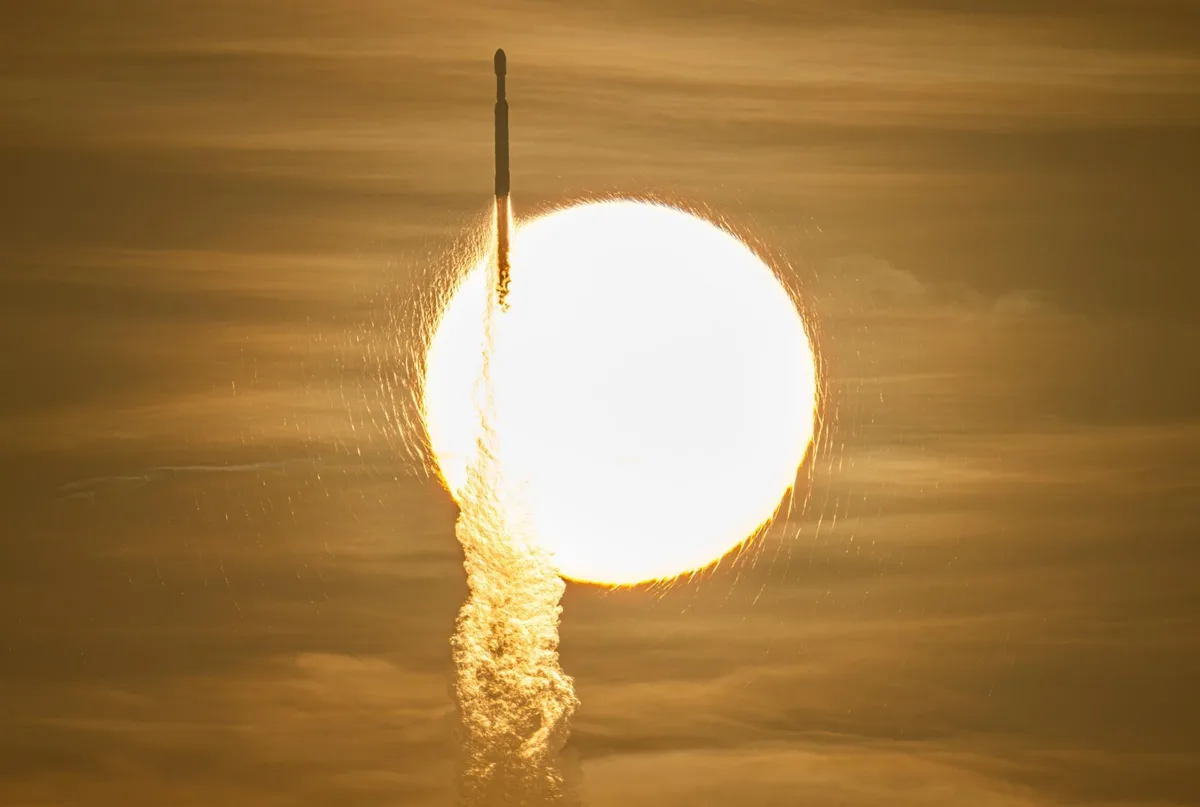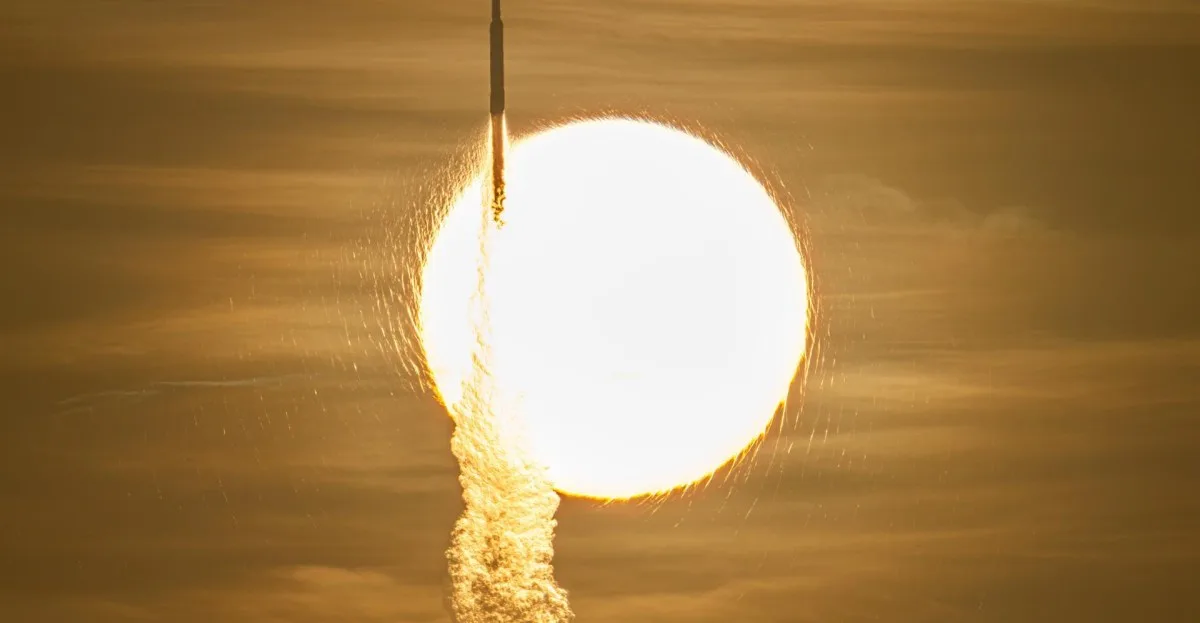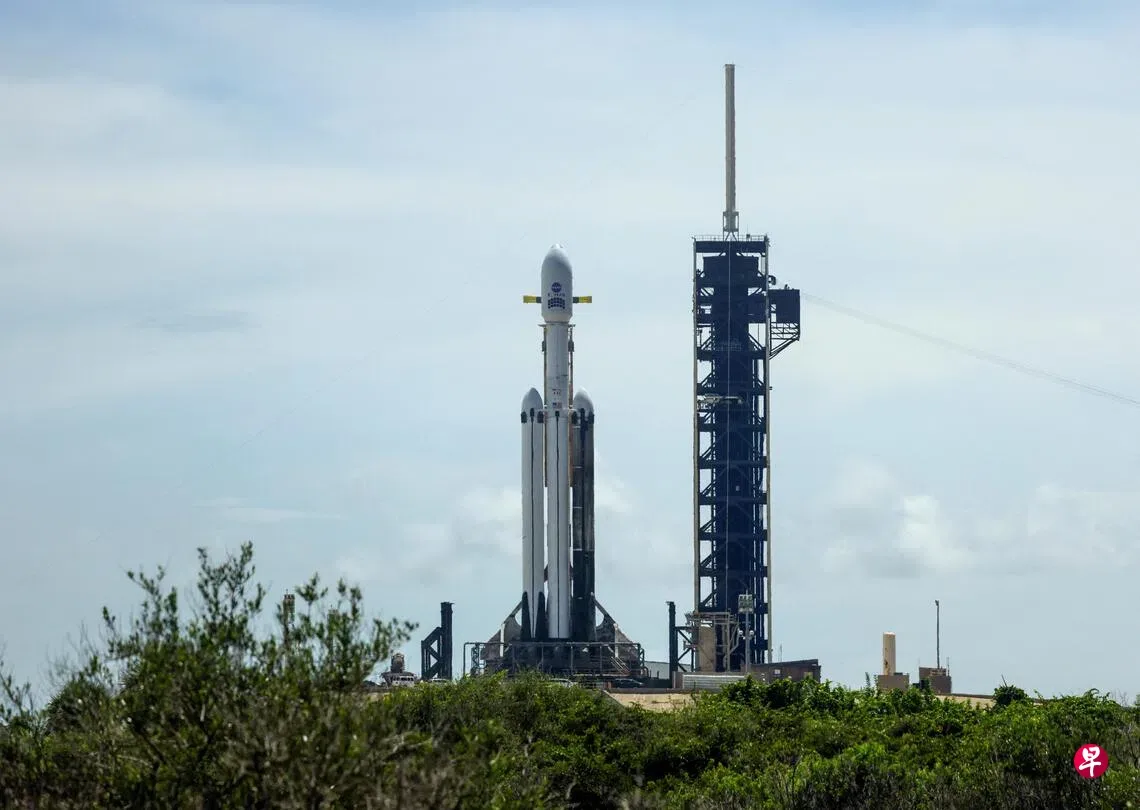
NASA launched the Nancy Grace Roman Space Telescope on August 30, 2026, from Kennedy Space Center in Florida aboard a SpaceX Falcon Heavy rocket [1, 2, 3, 4, 5, 6]. The telescope is named after Nancy Grace Roman, NASA’s first chief astronomer and a pioneer behind the Hubble Space Telescope [1, 3, 6].
The telescope’s primary scientific goals include studying dark matter, dark energy, mapping the universe, and searching for exoplanets beyond our solar system [1, 2, 3, 4, 5, 6]. It features a 300-megapixel infrared camera and a coronagraph to block starlight, allowing it to directly image smaller and colder exoplanets [2, 4, 5].
The spacecraft is headed to an orbit at the Sun-Earth L2 Lagrange point, roughly between 1 million and 1.6 million kilometers from Earth, taking approximately three months to reach the spot [1, 2, 3, 4, 6]. Once operational, it will survey the sky about 1,000 times faster than the Hubble Space Telescope and has a field of view 100 times larger than Hubble’s [1, 2, 4, 5, 6]. NASA Director Bill Nelson said the Roman Telescope is "expected to discover over 100,000 new exoplanets" while scanning the cosmos at unprecedented speed and scale [6].
Nicky Fox, NASA Science Mission Directorate associate administrator, described Roman as "a discovery machine" poised to bring humanity closer to answering fundamental cosmic questions. She said, "Roman is going to discover tens of thousands, maybe even 100,000 new exoplanets," and that "With its large field of view and fast survey speeds, Roman will usher us into a new era of discovery and make the invisible visible" [2, 4, 5].
The mission’s duration is expected to last between five and ten years, with most sources citing five years [1, 3, 6]. NASA expects the telescope to transmit about 1.4 terabytes of data daily once fully operational [5].
Early science observations may begin in December 2026, with the first images expected to return to Earth by early 2027 [1, 3, 5, 6]. The next major milestone is the telescope reaching its orbital position at the Sun-Earth L2 point around late November 2026 following its three-month journey [2, 4, 6].