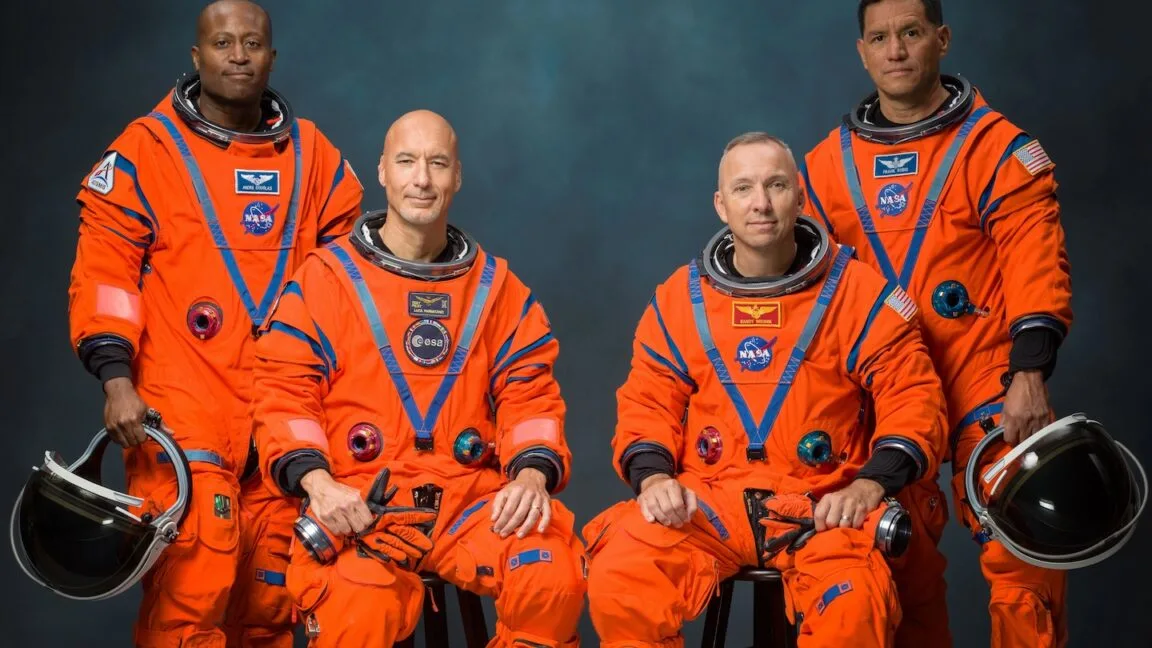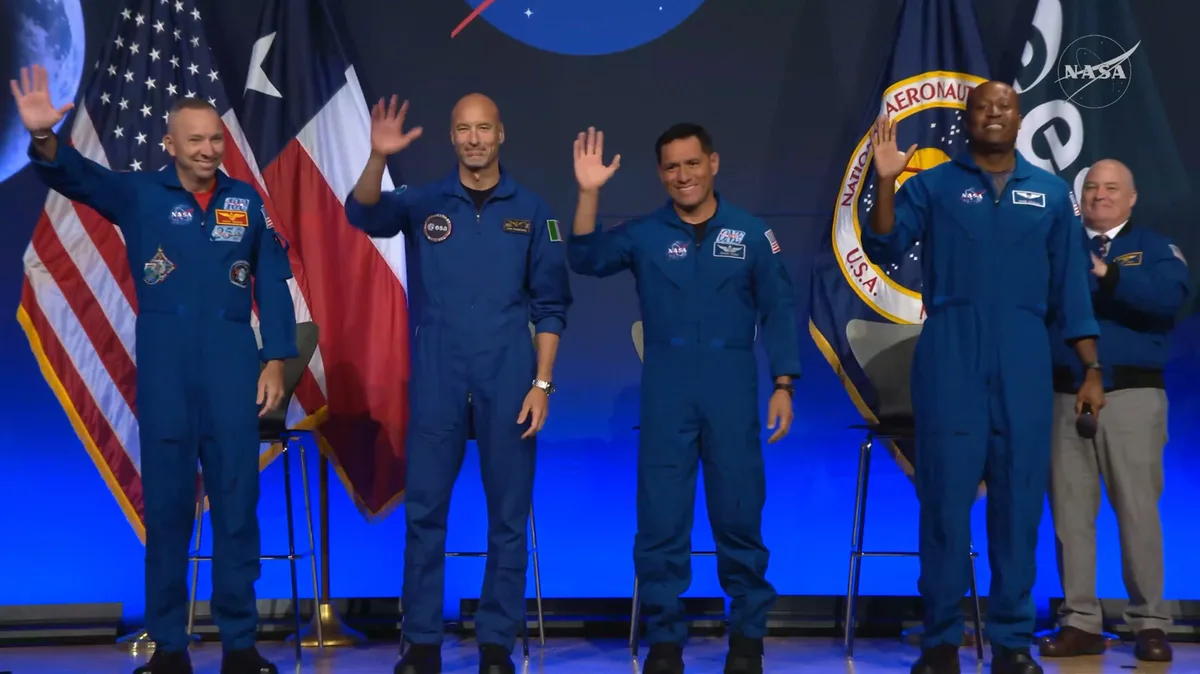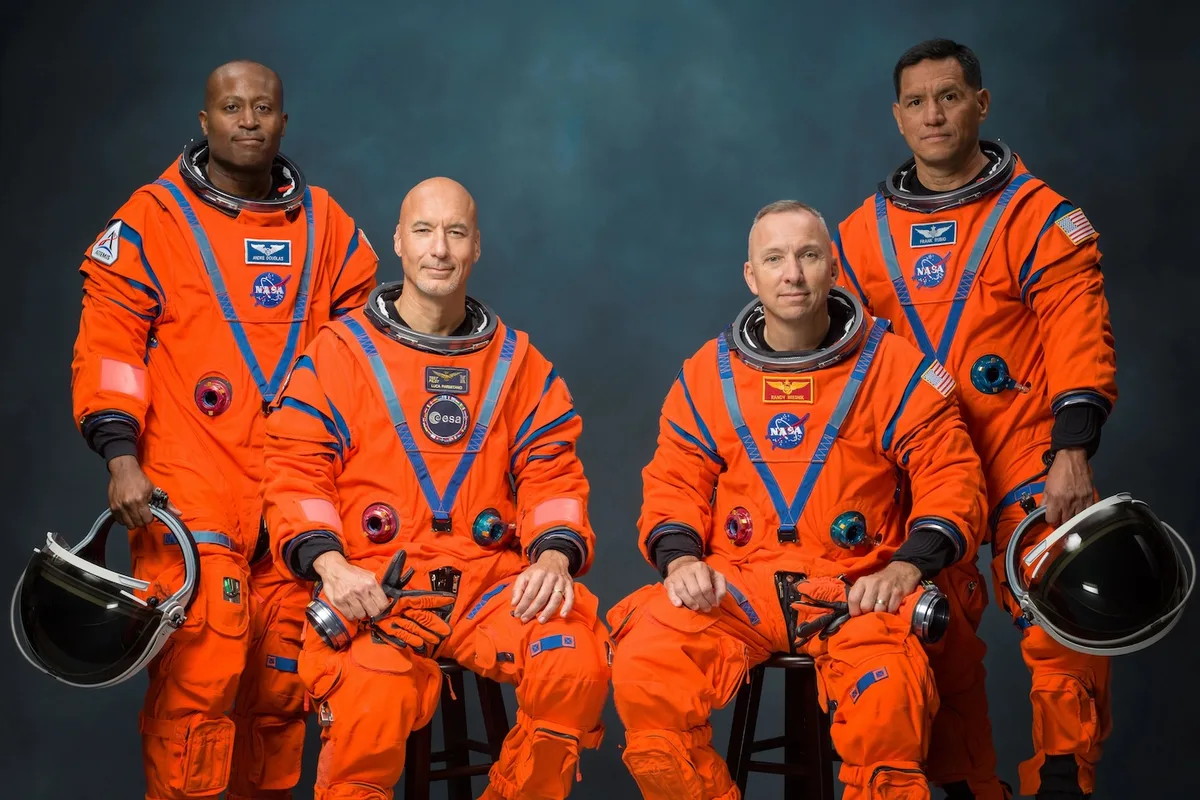
NASA unveiled the Artemis III crew on June 30, 2026, naming four men to the mission: Commander Randy Bresnik, pilot Luca Parmitano of ESA, and mission specialists Andre Douglas and Frank Rubio [1, 2]. Artemis III will serve as a low-Earth orbit test flight to reduce risks for upcoming lunar landing missions [1, 2].
The mission plan includes three separate launches and two dockings in low-Earth orbit involving the Orion spacecraft and Blue Origin’s Blue Moon lunar lander prototype [1, 2]. John Couluris, Blue Origin senior vice president, said, "Blue Origin's prototype Moon lander would be ready to fly in time for Artemis III in 2027" [2]. The lander is capable of loitering in lunar orbit for up to 90 days [1].
Scheduled to last approximately two weeks, Artemis III acts as the operational bridge between Artemis II, a lunar flyby mission, and the planned Artemis IV lunar landing mission, with Bresnik calling the crew "the unifying link between Artemis II and Artemis IV" [1].
NASA plans to begin a critical wet dress rehearsal fueling test—an essential prelaunch procedure—late in 2026. Jared Isaacman, NASA Administrator, stated, "NASA's aim is to start wet dressing — a critical fueling test all rockets must complete before flying — Artemis III as soon as later this year" [2].
NASA scheduled stacking of the Space Launch System rocket for Artemis III in summer 2026 [2]. Blue Origin continues to repair its launch facilities following a recent hotfire test incident with its New Glenn rocket [2].
Jeremy Parsons, NASA’s acting assistant deputy administrator, described Artemis III as "designed to take calculated risks to make future missions safer" [2]. The launch is set for no earlier than summer 2027 [1, 2].