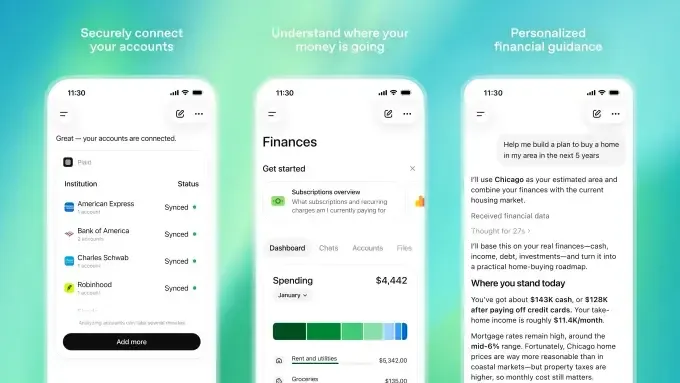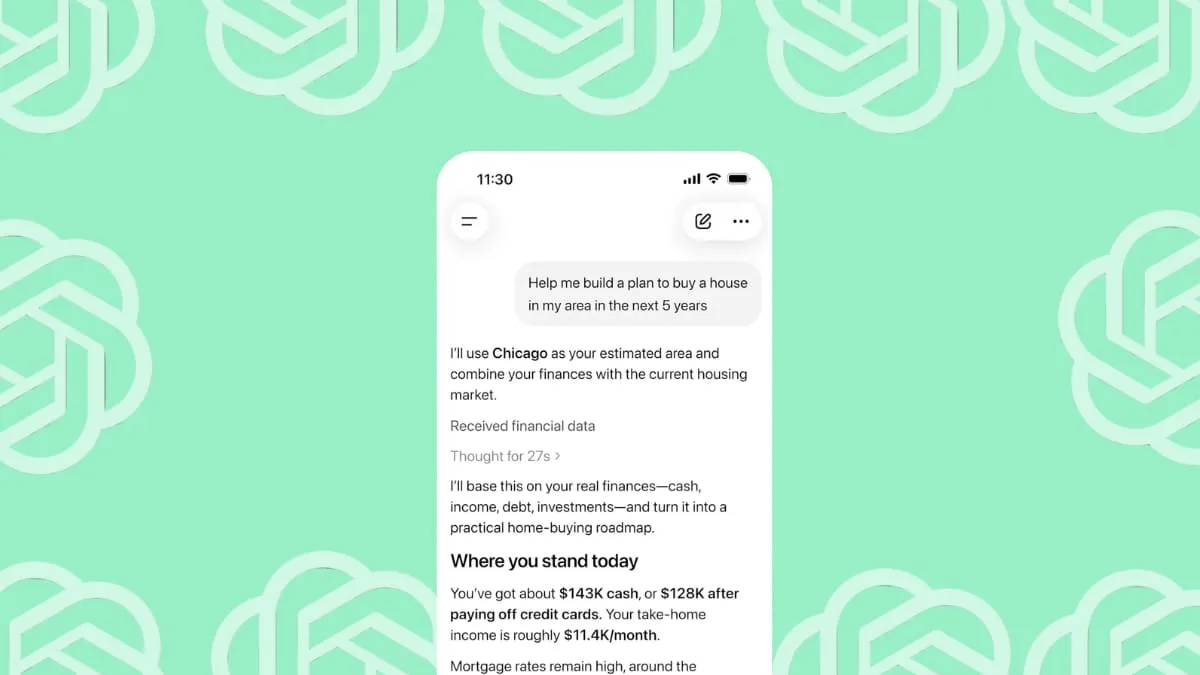
OpenAI announced a new ChatGPT feature on May 30 that lets users link their bank accounts through Plaid to receive personalized financial advice and spending dashboards [1, 2]. The feature supports connections to over 12,000 financial institutions including major banks and investment firms such as Chase, Fidelity, Capital One, Schwab, Citi, Affirm, and Robinhood [1, 2].
Users who link their accounts allow ChatGPT access to balances, transaction histories, investment portfolios, and liabilities like mortgages and credit card debts. However, ChatGPT cannot view full account numbers or make changes to accounts, preserving essential security measures [1, 2].
This capability launched in preview exclusively for ChatGPT Pro subscribers, who pay $200 per month. OpenAI plans to expand access to users on Plus and free tiers later [1]. The company reports that around 200 million monthly ChatGPT users seek financial advice, indicating strong demand [2].
Users have full control over their data. An OpenAI spokesperson said, "Users can disconnect their financial accounts from ChatGPT at any time, and any memories the chatbot saves about your financial situation can be seen or deleted directly from the Finances section of the app" [2]. After disconnecting, data deletion may take up to 30 days [1, 2].
OpenAI disclosed that user financial data may be used to improve its AI training models by default, but users have options to opt out [1, 2]. This personal finance feature follows OpenAI’s January introduction of ChatGPT Health, which allowed users to link medical records for health-related AI queries, raising similar privacy considerations [1].
The preview rollout for ChatGPT Pro subscribers began on May 30, with broader availability expected in coming months [1, 2].