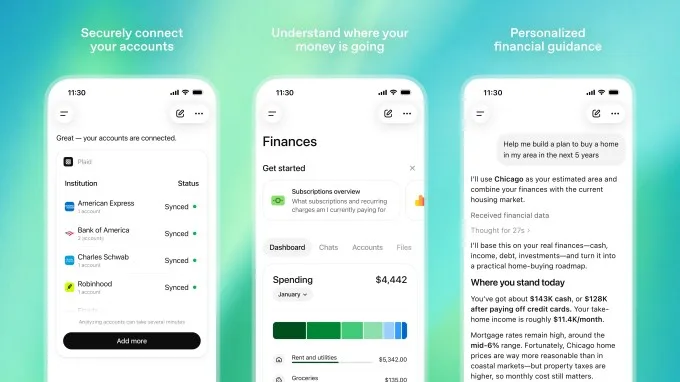
OpenAI introduced a new set of personal finance tools on Friday, available in preview to ChatGPT Pro subscribers in the United States. The tools allow users to link their bank accounts and ask financial questions directly within ChatGPT [1, 2].
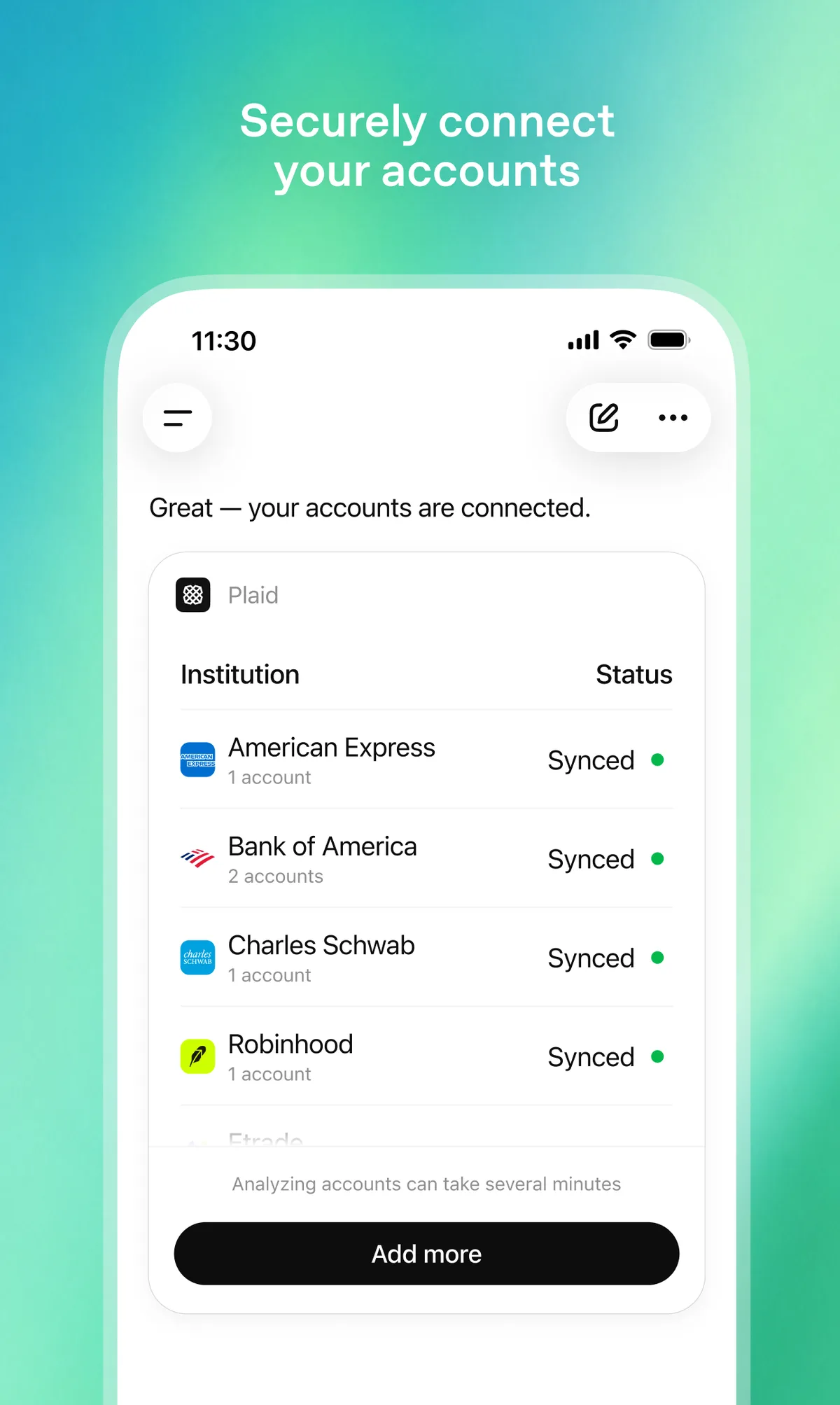
The bank connections are enabled through a partnership with Plaid, giving access to more than 12,000 financial institutions including Schwab, Fidelity, Chase, Robinhood, American Express, and Capital One [1, 2]. Once connected, users can view a dashboard showing portfolio performance, spending habits, subscriptions, and upcoming payments [1, 2].
OpenAI highlighted that more than 200 million ChatGPT users ask financial questions each month, ranging from budgeting advice to tips for reducing expenses. The company said, "Now, users can securely connect their financial accounts with Plaid to get the full view of their financial picture in the context of their personal goals, lifestyle, and priorities that they’ve shared with ChatGPT, powered by OpenAI’s advanced reasoning capabilities" [2].
The new tools run on OpenAI's GPT-5.5 model, which the company says offers stronger reasoning for finance questions [1]. The product also benefited from expertise gained when OpenAI acquired the personal finance startup Hiro in April 2026 [1].
Users can connect accounts by typing '@Finances, connect my accounts' or by selecting the Finances option in the ChatGPT sidebar [1]. OpenAI clarified that ChatGPT cannot make changes to users' bank accounts or view full account numbers—it can only access balances and transactions [2]. Users can disconnect accounts and request deletion of their financial data, which OpenAI removes within 30 days of disconnection [1, 2].
The financial tools are initially offered to U.S. ChatGPT Pro subscribers at a cost of $200 per month. OpenAI plans to expand access to Plus subscribers and eventually all users, saying, "We’ll learn and improve from early use before rolling it out to Plus, with the goal of making it available to everyone" [2].
Looking ahead, OpenAI intends to add support for Intuit to enable advanced financial analysis features such as understanding tax implications of stock sales and credit card approvals [1].