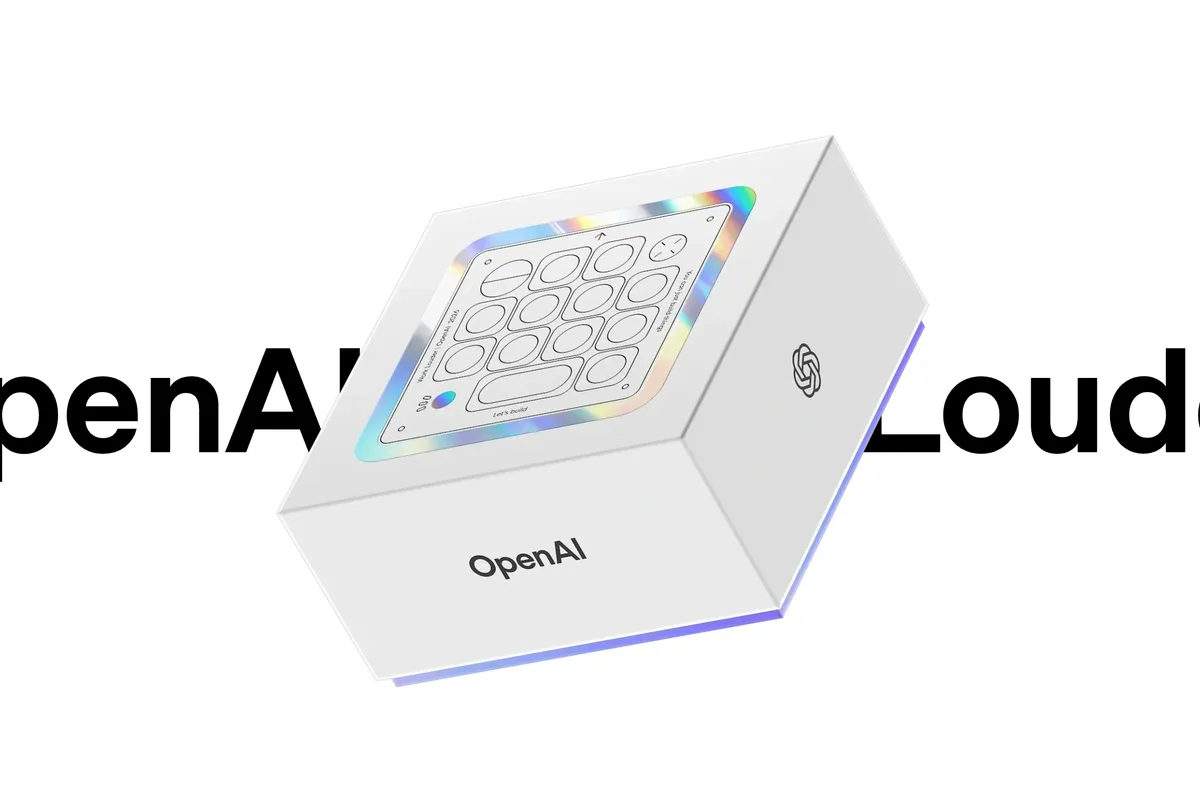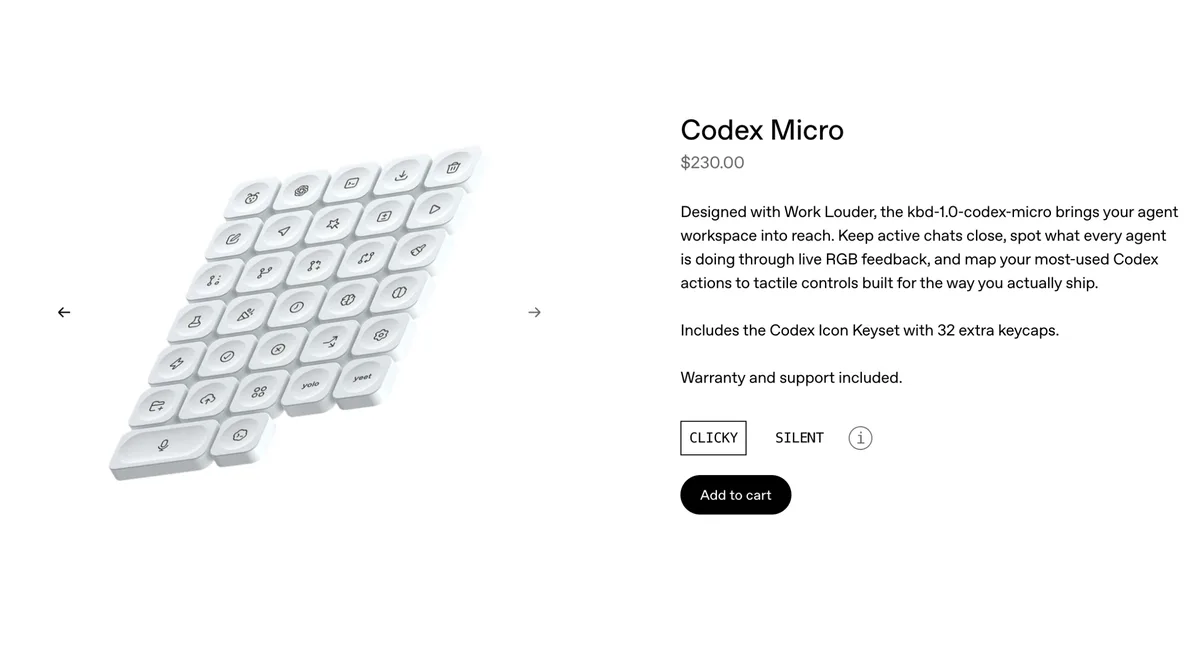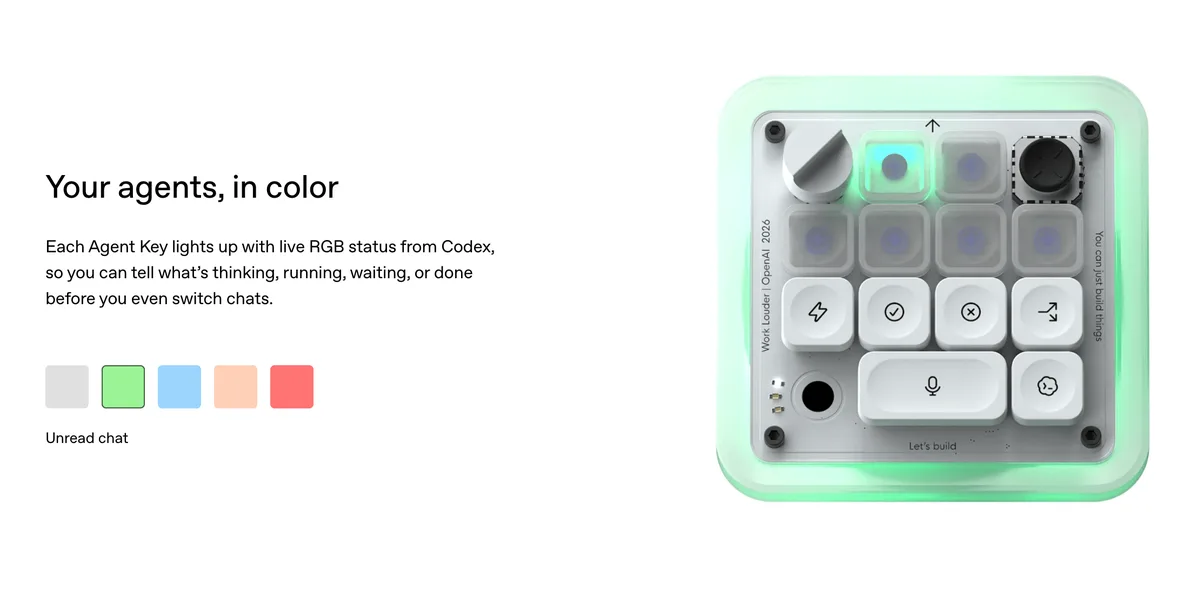
OpenAI launched its first piece of hardware, the Codex Micro keypad, on July 15, 2026. The device is designed to control OpenAI's Codex coding platform and was developed in partnership with keyboard maker Work Louder [1, 2]. The keypad has six frosted keys with LEDs that display agent task status in real time. Mike Di Genova, Work Louder’s cofounder, said the keys use different colors to show whether a task is complete, needs feedback, is running, or has an error [1]. The Codex Micro also features a joystick, a dial to adjust reasoning level, and customizable keys [1, 2]. It sells for $230 and is available in a limited run while supplies last [1, 2, 3].
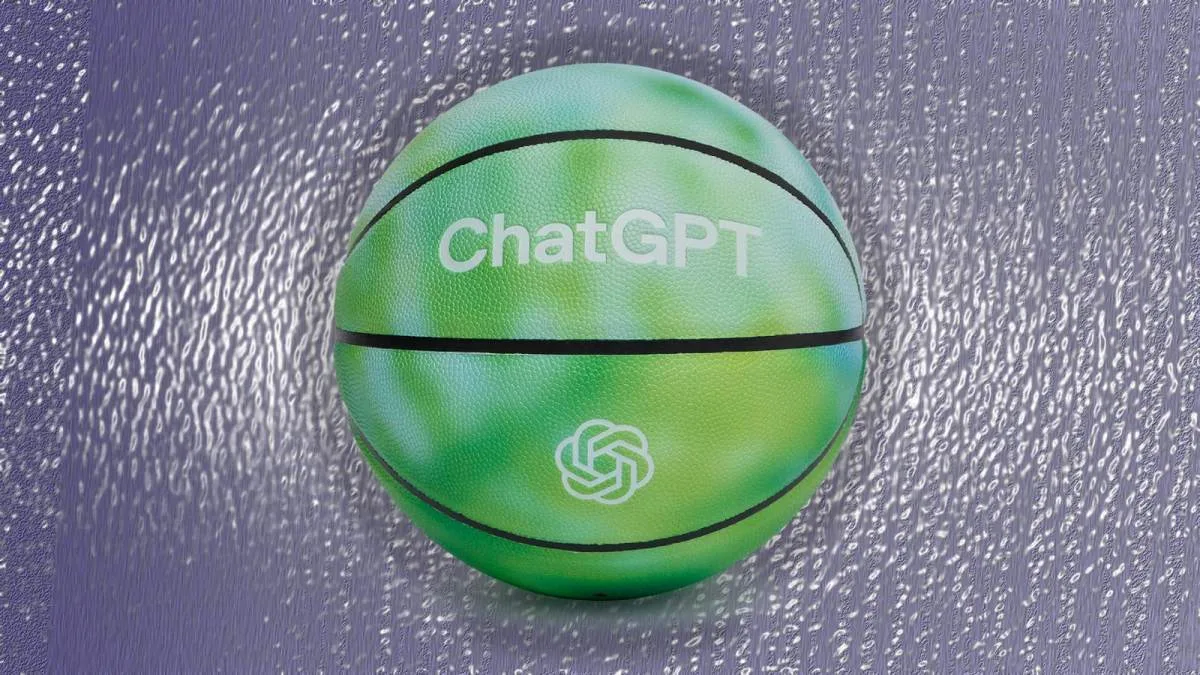
Alongside the Codex Micro, OpenAI released a ChatGPT basketball as part of a "Pause. Play. Prompt." campaign, priced at $70 [3].
Looking ahead, OpenAI is developing a ChatGPT smart speaker device with former Apple designer Jony Ive, targeting a 2027 release [4, 1]. The speaker will not have a screen but is expected to include a camera and sensors to understand its environment and interact in a humanlike way, using OpenAI’s upgraded voice model, GPT-Live [4]. The smart speaker is reportedly one in a planned hardware lineup of about five devices [4].
OpenAI is currently facing a lawsuit from Apple accusing it of stealing hardware trade secrets related to the smart speaker project. OpenAI denies the claim, stating it is "not aware of any evidence that this complaint has merit" [4, 1, 2].
The launch of Codex Micro and plans for the smart speaker come after OpenAI’s $6.5 billion acquisition of the design company io Products, reflecting its push into hardware design [4]. The next major event is the anticipated release of the ChatGPT smart speaker in 2027 [4, 1].