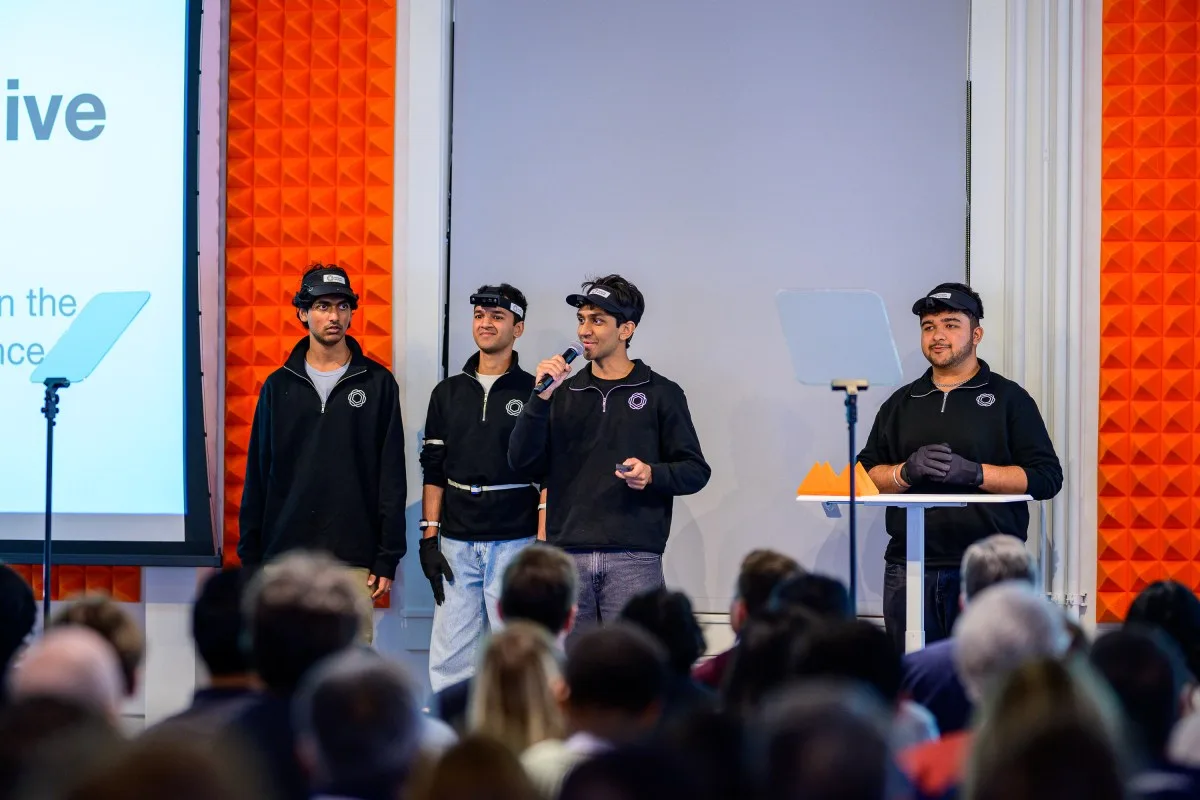
Human Archive, a Silicon Valley startup founded by Berkeley and Stanford students, collects first-person video data of workers performing everyday tasks to train robots and AI systems [1, 2]. The startup has deployed over 1,000 active headsets across multiple locations in India, targeting home services, hostels, and restaurants for data capture [1, 2].
The company announced on May 26 that it had raised $8.2 million in funding from Wing Venture Capital, NVP Capital, Y Combinator, and angel investors from OpenAI, Nvidia, Google, Meta, and others to expand its data collection efforts [1]. Human Archive’s co-founders are Samay Mani, Rushil Agarwal, Shloke Patel, and Raj Patel [1, 2].
The startup aims to address a shortage of real-world physical task data faced by AI and robotics labs. By capturing egocentric video and sensor data, Human Archive hopes to improve robot training for everyday human activities [1, 2]. It claims over 100,000 contributors and more than 500 industry partners supporting its mission, though those figures remain unverified [2].
Human Archive partners with companies in India’s gig economy, using caps equipped with cameras to record workers’ perspectives as they perform tasks [1, 2]. However, some major platforms including Urban Company and Pronto have rejected partnership offers. Urban Company CEO Abhiraj Singh Bhal stated, "We would not engage in such arrangements" [1]. In response, Human Archive founder Raj Patel implied Urban Company risks falling behind, saying it would "soon be forced to reconsider or risk losing relevance to customers" [1].
Labor pay for data collection has become a point of contention. Human Archive reportedly pays workers $1 per hour, while other companies pay between 250-400 INR (roughly $3 to $5 USD) hourly for similar roles [2].
The Indian Ministry of Electronics and Information Technology is reviewing Human Archive’s consent and data collection practices involving gig workers. The startup says it complies with India’s Digital Personal Data Protection Act, providing privacy notices, obtaining informed consent, and blurring faces in videos to protect participant privacy [2].
Human Archive’s next step will be scaling its headset deployments and data collection in India using the new funding raised in May, as it continues to build its training datasets for robotic applications [1].