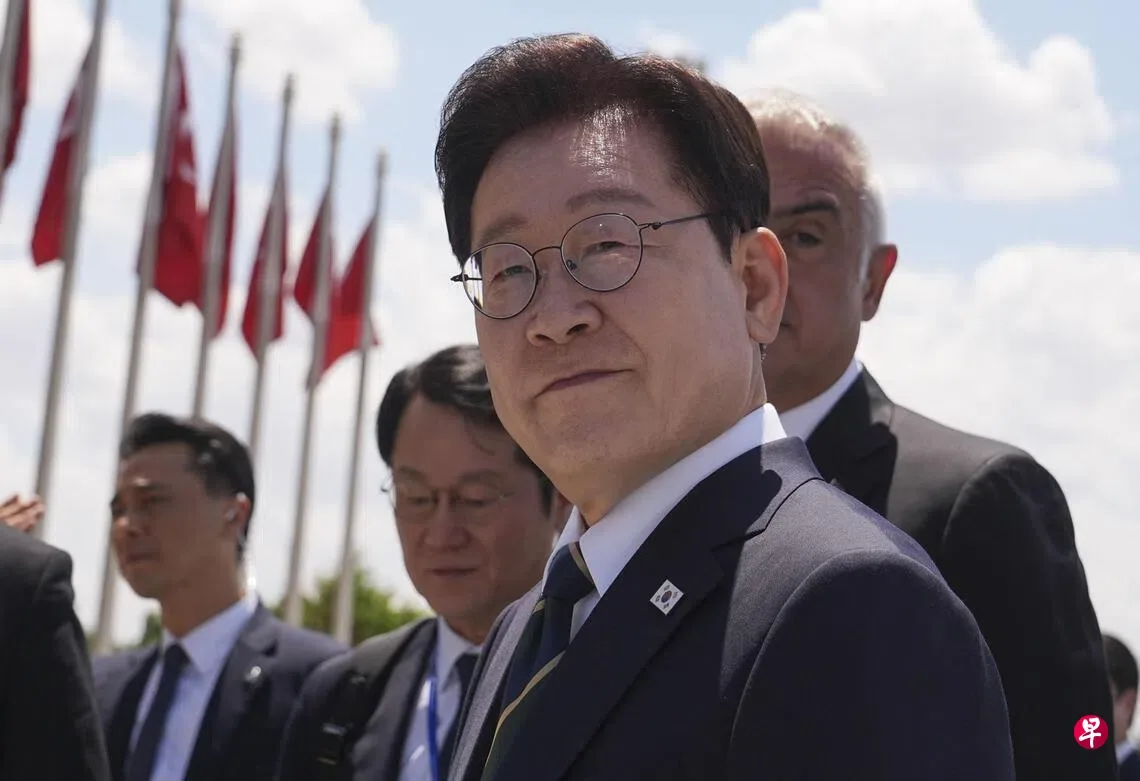
South Korean President Lee Jae Myung attended an AI summit in San Francisco on July 24, 2026, where he announced cooperation agreements between South Korean semiconductor giants Samsung Electronics and SK Hynix and leading US technology firms worth approximately $9.5 trillion [1, 2, 3].
SK Group’s share of the cooperation accounts for around $7.5 trillion, including deals with Nvidia exceeding $5 trillion, reflecting surging demand for AI computing power and storage. SK chairman Chey Tae-won said, "AI customers’ demand for computing power and storage far exceeds expectations. Nvidia has said storage chip demand may be raised again soon, and OpenAI wants SK Group to supply them directly" [2].
Samsung Electronics signed a five-year memorandum of understanding with Broadcom valued at about $2 trillion. The deal covers collaboration on storage chips, wafer foundry services, and advanced packaging technology [2]. The agreements include long-term memory chip supply, strategic investments, and MOUs between South Korean and US companies to expand AI data centers, chip manufacturing, and AI infrastructure [1, 4, 5, 6].
The initial phase aims to realize approximately 8 gigawatts of AI data center capacity. South Korea’s government has announced a massive investment plan of 1,300 trillion Korean won (about $9.3 trillion) focused on semiconductors, physical AI, and AI data centers to strengthen its role in the AI supply chain [5, 6, 7].
President Lee hosted a business dinner on July 24 at The Ramp restaurant in San Francisco with global AI industry leaders including Nvidia CEO Jensen Huang, Broadcom’s Hock Tan, Microsoft Azure’s Rani Borkar, Samsung’s Jay Y Lee, and SK’s Chey Tae-won to discuss cooperation. Huang called Korea "a country capable of helping build AI infrastructure worldwide," and South Korean presidential spokesperson Kang Woo-jin said the gathering emphasized South Korea's rise as a core AI supply chain hub [8, 9, 10, 2].
On July 25, Lee held a networking event with Silicon Valley venture capitalists where South Korea’s National Pension Service signed MOUs with six VC firms to boost investments in Korean startups [11]. US commerce officials encouraged Samsung and SK Hynix to increase US-based chip production but made no formal demands [1].
According to policy chief Kim Yong-beom, the visit acted as a "catalyst," helping close long-running negotiations between South Korean and US companies [1]. South Korean officials said the cooperation moves the country beyond a memory chip foundry role to an indispensable AI leader involved in next-generation HBM memory supply, AI factory construction, and physical AI collaboration for 2026-2027 capital deployment [2, 5, 6, 8].
President Lee stated via video conference from Brazil on July 26 his commitment to making Korea a unique AI leader by upgrading partnerships with global tech firms into an AI alliance [3]. US industry analyst Bob O'Donnell said the publicized cooperation agreements will boost market confidence [5].
The announcements follow a July 23 statement by South Korea’s presidential policy chief that large-scale chip supply deals would be signed during Lee’s Silicon Valley visit [4]. The next key milestone is the planned expansion of AI data centers and initial realization of the first phase 8-gigawatt AI data center capacity.