SpaceX and Tesla announced a $16.8 billion initial investment to build Terafab, an advanced AI semiconductor fabrication campus in Grimes County, Texas. The facility will produce leading-edge logic chips, memory chips, chip packaging, and testing—all integrated on one site to meet the companies’ growing AI compute needs exceeding 1 terawatt (TW) [1, 2, 3, 4, 5, 6, 7].
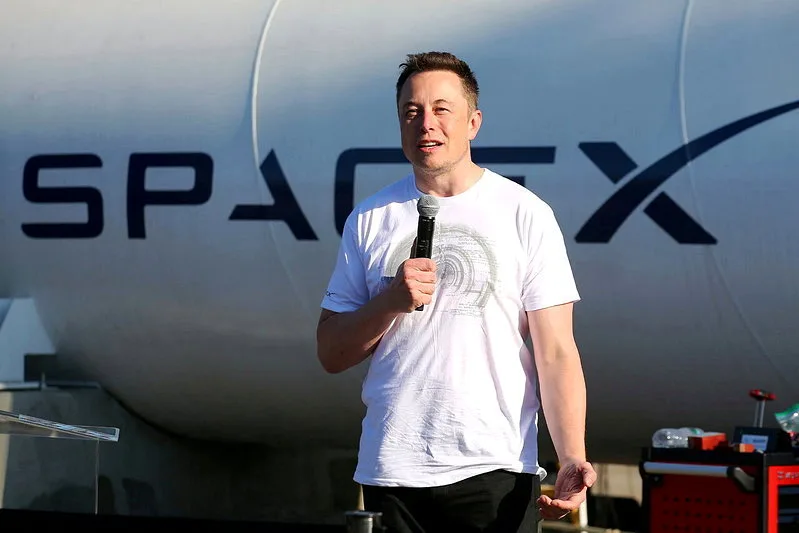
The fab is planned to cover about 100 million square feet (approximately 2.81 million tsubo) and will create at least 3,000 high-paying jobs in the region. Elon Musk said, "Terafab is bringing the most advanced manufacturing capabilities back to the US, creating thousands of high-paying jobs in Texas, enabling us to mass produce AI chips for Earth and space applications" [1].
Terafab will supply chips for Tesla’s Optimus humanoid robot, the Cybercab self-driving taxi, and SpaceX’s space data centers and AI systems. Tesla has already begun building a research center at its Giga Texas north campus since April 2026 as a precursor to the fab [1, 2, 5, 6].
The facility will use Intel's 14A advanced process technology for chip manufacturing under a cooperation agreement with Intel. It will be powered by a self-built natural gas power plant and a large-scale battery energy storage system to ensure stable electricity supply. Riley Trettel, SpaceX’s energy and data center development lead, said, "We will provide our own power. We will build a natural gas power plant and large-scale battery energy storage system to store electricity" [1, 4, 5, 6]
Water supply for the fab will come from the nearby Gibbons Creek Reservoir instead of local groundwater to minimize environmental impact [1, 2, 5, 6, 7]. Tesla is actively recruiting DRAM process integration engineers to address memory chip supply shortages by vertically integrating production at Terafab [7].
Earlier filings indicated the initial project investment could reach $55 billion, with total possible expansion investments up to $119 billion after scaling [1, 2, 3, 5, 6]. This aligns with SpaceX plans to build up to 20 gigawatts (GW) of electricity generation and cooling infrastructure to support AI supercomputing by the end of 2027 [4].
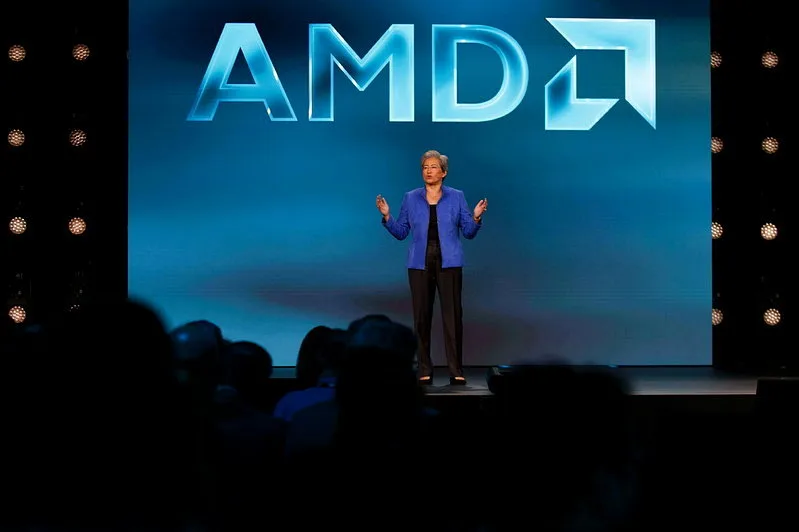
In related AI chip news, AMD announced on August 6 an acquisition agreement with Canadian AI chip startup Taalas, which develops customized AI inference chips that encode AI model weights directly into silicon for greater efficiency and lower cost. Taalas, founded in 2023, had raised $219 million in venture funding. AMD CEO Lisa Su noted, "GPUs will remain the mainstay, but specialized inference chips are important complements" [8, 9, 10, 11, 12]. Taalas CEO Ljubisa Bajic said their platform can convert any AI model into a customized chip in as little as two months [11].
SpaceX and Tesla’s Terafab project marks a significant effort to bridge forecasted chip supply-demand gaps for high-demand AI applications across robotics, autonomous vehicles, and space infrastructure.
The SpaceX-led power infrastructure buildup to support the fab and AI systems is scheduled to complete by December 31, 2027 [4].