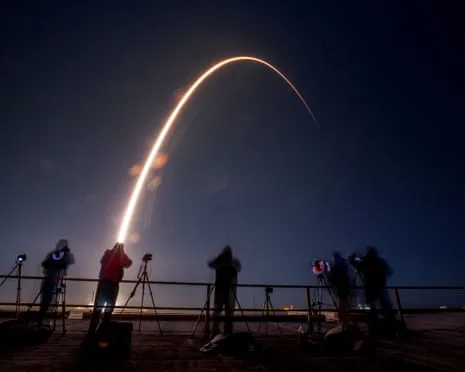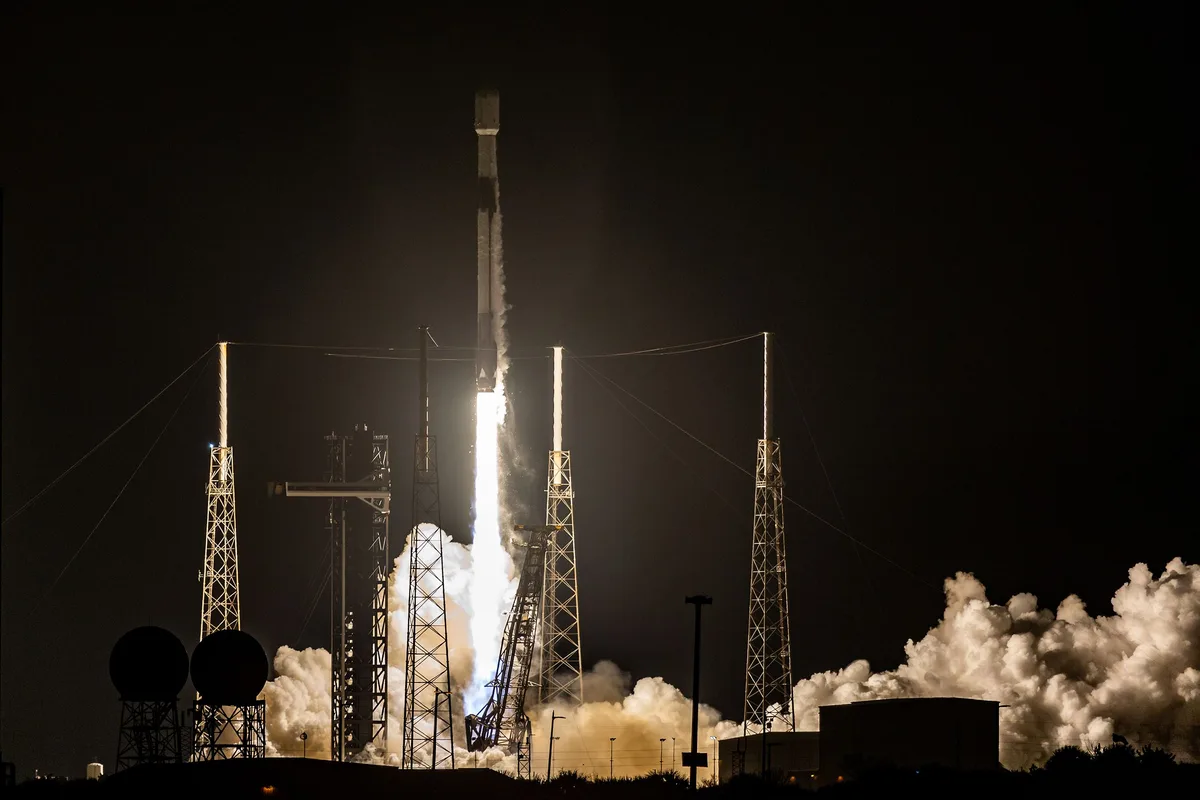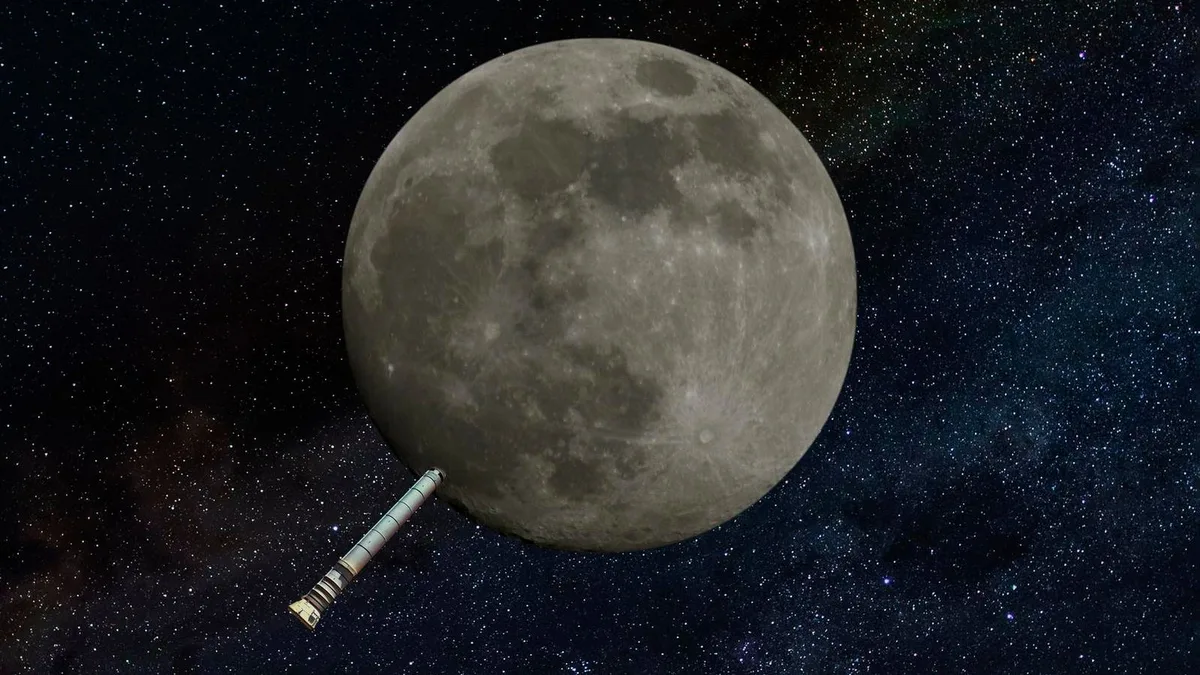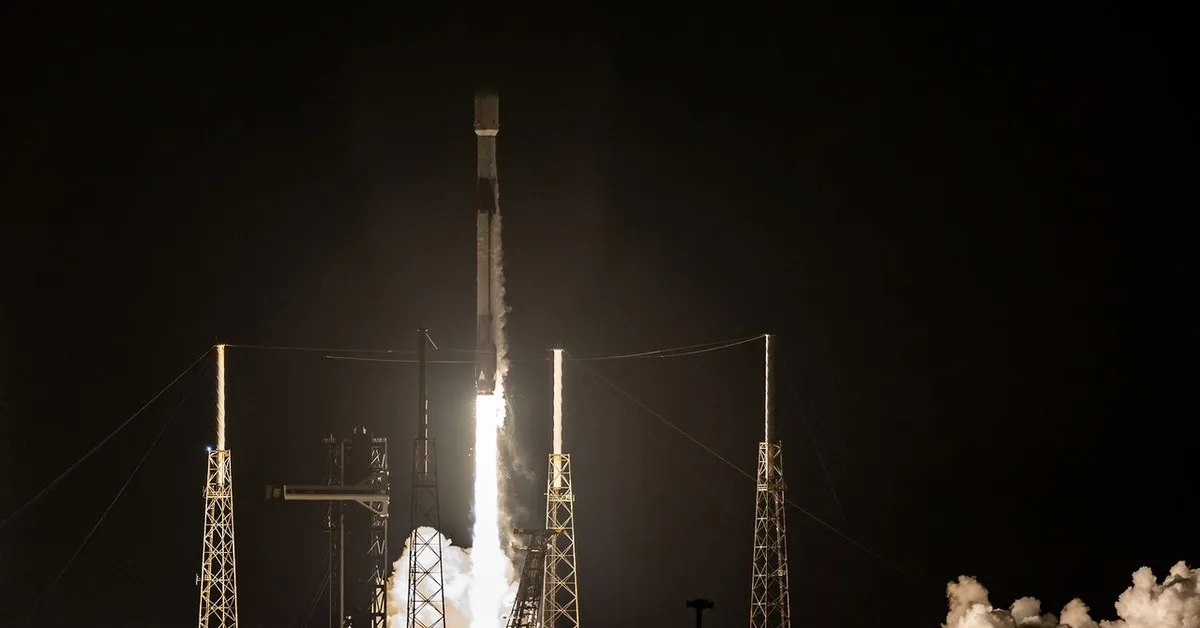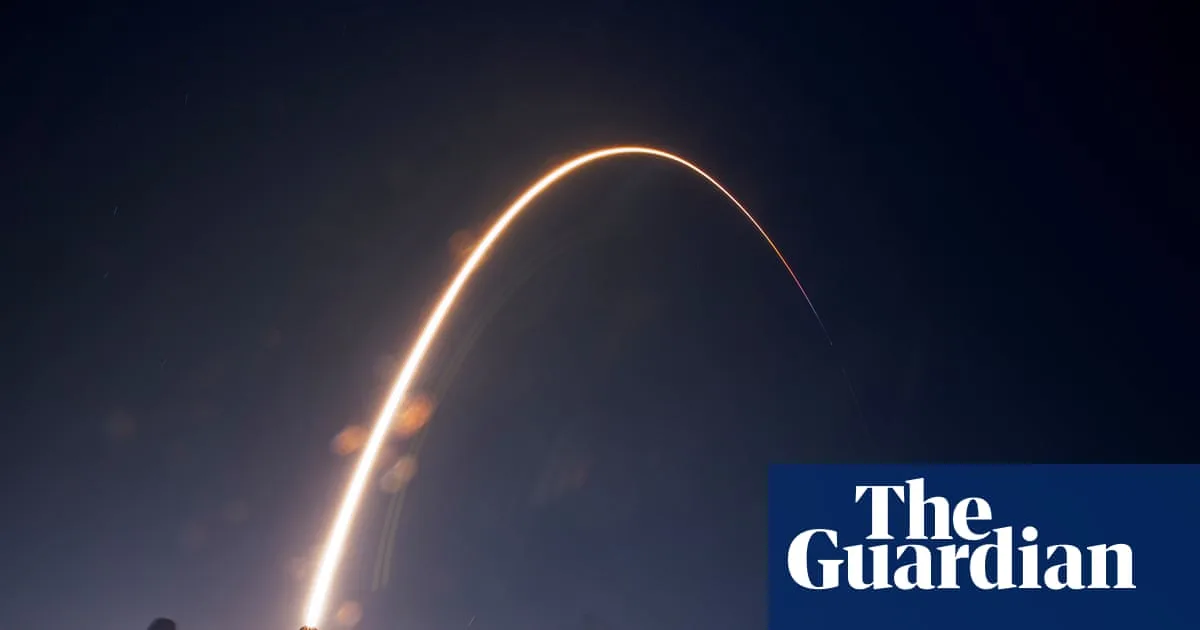
A spent SpaceX Falcon 9 upper stage is expected to impact the Moon near Einstein Crater on August 5, 2026, traveling at about 5,400 mph (8,700 km/h) [1, 2, 3]. The 45-foot (13.8 meters) long upper stage weighs approximately 8,800 lbs (4,000 kg) and was launched from Kennedy Space Center on January 15, 2025, carrying two lunar landers [2, 3].
The collision is predicted to carve out a crater approximately 90 feet (27 meters) wide and 16 feet (5 meters) deep on the Moon's sunlit western limb [1, 2]. Simulation models suggest the impact will eject around 12,700 kg of lunar debris, forming a plume that might spread up to 183 km wide [3]. Although the initial impact flash will likely be too brief or faint to see from Earth, telescopes could observe the resulting dust plume for several minutes [1, 2, 3].
David Goldstein described the upper stage as "like an empty eggshell, because it had all the fuel in it, and there is a rocket engine at one end that's denser" [3]. Experts stress the event illustrates the growing risks posed by orbital debris to lunar missions and future surface bases. Bill Gray noted, "Things are getting crowded up there" [1]. Benjamin Fernando added that scientists want to better understand "how much of a hazard debris impacts pose to future astronauts" [1].
This will be the second known accidental rocket impact on the Moon; a Chinese rocket stage crashed onto the lunar far side in 2022 [1]. NASA’s Lunar Reconnaissance Orbiter and South Korea’s Danuri lunar orbiter plan to image the site before and after the impact to study the changes [1].
The impact is scheduled for 06:34–06:35 UTC on August 5, 2026, marking a key observation opportunity for lunar debris hazard assessment [1, 2, 3].