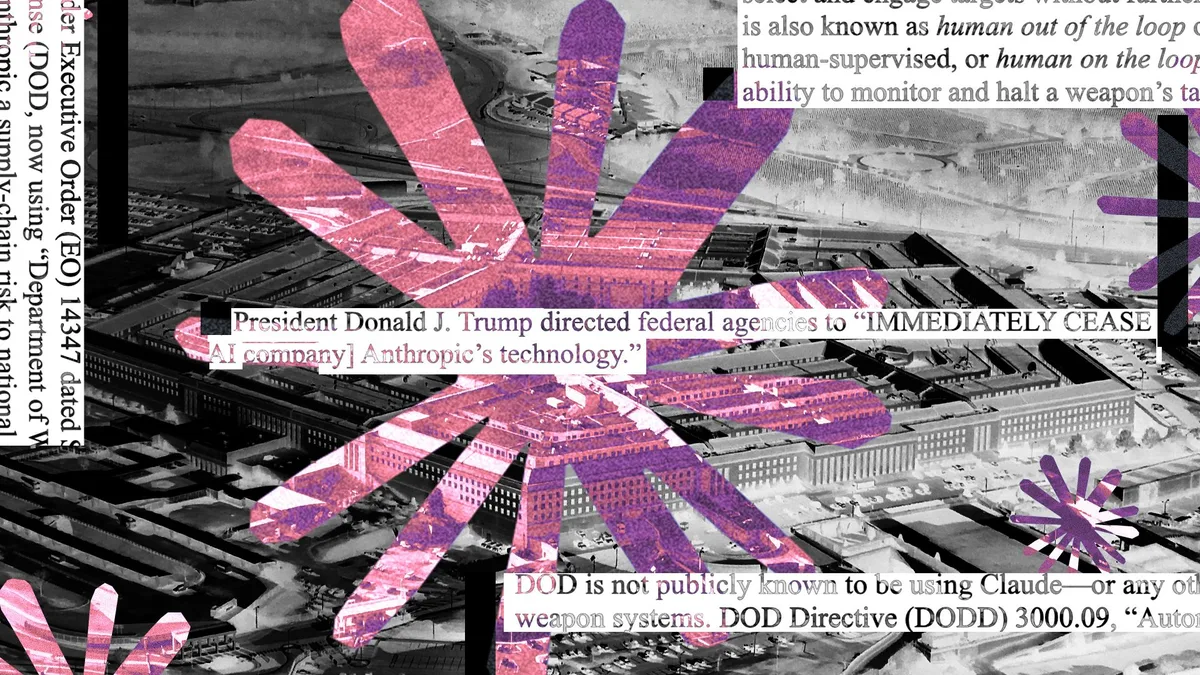
The US Department of Defense designated AI startup Anthropic as a supply chain risk, canceling military contracts involving its Claude AI models amid national security concerns [1, 2]. The Pentagon argues Anthropic’s refusal to grant “all lawful use” access and the AI’s unpredictable behavior in military contexts pose a risk [1, 3, 2]. Government lawyer Sharon Swingle said the "guardrails" Anthropic builds into its AI cause it to shut down unexpectedly at critical moments, making it untrustworthy for military use [2].
Anthropic filed a lawsuit in March 2026 challenging the designation as retaliatory and damaging to its reputation. The company stresses ethical red lines prohibiting fully autonomous weapons and domestic mass surveillance [1, 2]. Anthropic’s models have been deployed by the US military before, including during a January 2026 operation targeting Venezuelan leader Nicolas Maduro [2].
The federal appeals court in Washington, D.C. held oral arguments on May 19 before a three-judge panel. Each side received 15 minutes to present their case starting at 9:30 a.m. ET [1, 3]. Judges expressed skepticism about the Pentagon’s evidence. Judge Karen Henderson said, "For the life of me, I do not see any evidence of maliciousness...看不出有任何證據支持軍方所謂的「重大供應鏈風險」,更形容政府的行為是「驚人的過度擴權」" [3, 2]. Judge Gregory Katsas noted that AI capabilities in three months will differ greatly from today, challenging the government’s basis for the designation [3].
The court expedited the case due to potential irreparable harm to Anthropic but denied a request to pause the supply chain designation pending the outcome [1]. The case follows the court’s April 2026 decision to reject Anthropic’s initial request to block the blacklisting temporarily [1].
After oral arguments, the court is expected to issue a ruling on the validity of the Pentagon’s supply chain risk designation and its impact on Anthropic’s business dealings with the military.