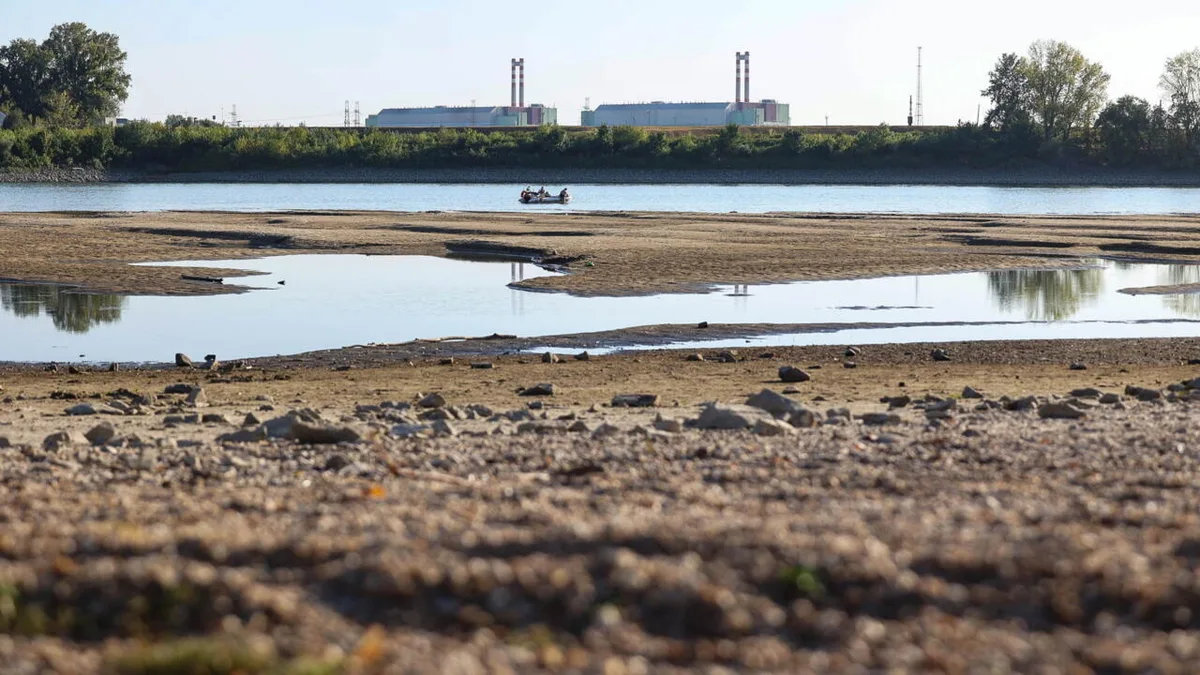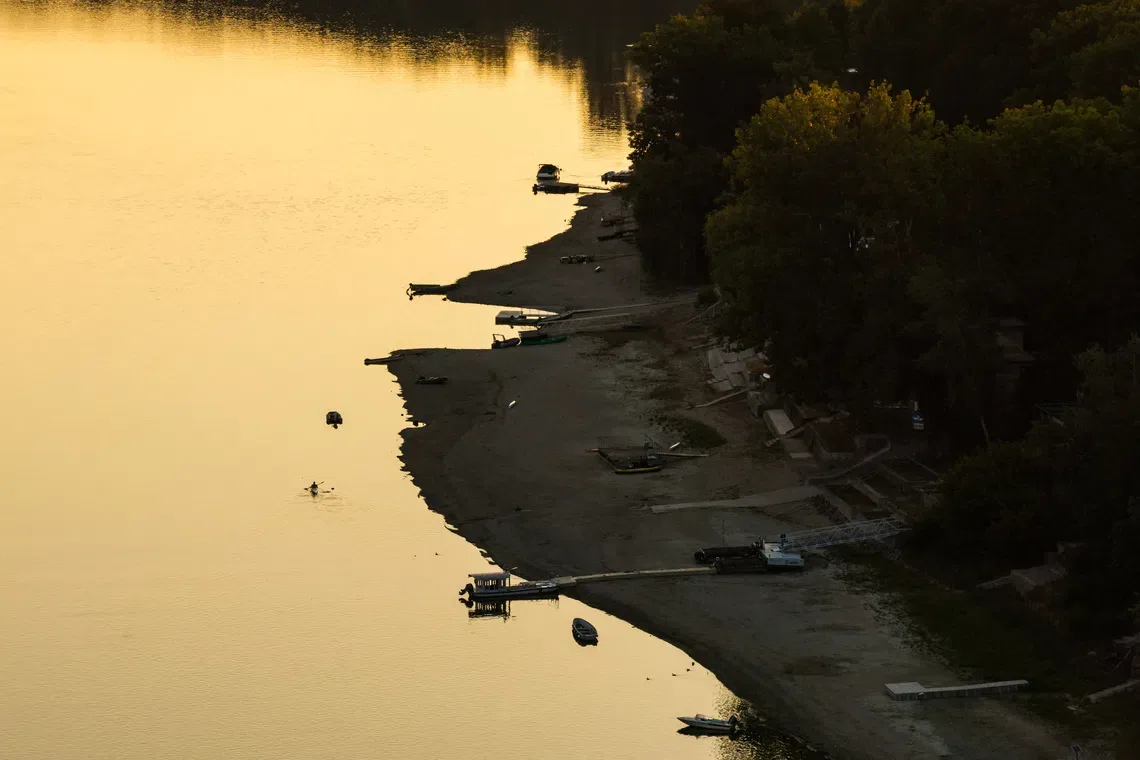
Hungary has sharply reduced production at its only nuclear power plant, Paks, because record low water levels in the Danube River have limited the plant’s cooling capacity. The plant is expected to continue running at just over 10% capacity for weeks depending on the river’s water level [1, 2, 3].
The Danube’s historic low water levels also disrupted shipping, with a Bulgarian cruise ship running aground and a WWII Nazi warship recently exposed in Serbia due to dried riverbeds [3]. Meanwhile, Hungary’s Lake Velence has dropped to a mere 29 centimeters as of August 4, 2026, down from 53 centimeters in September 2022, highlighting the severity of the drought [4].
Hungarian households and companies have voluntarily cut 600 to 700 megawatts of power consumption during peak hours between 5 p.m. and 10 p.m. since early August. They have responded to appeals by Prime Minister Peter Magyar, who said, "The heatwave will peak today and tomorrow... so voluntary cutbacks in power consumption will be especially important between 5pm and 10pm" [1]. State railways have suspended freight transport during these hours to save 60 to 90 megawatts of power, and decorative lighting on Budapest landmarks has been switched off to reduce electricity use during peak heat days [1].
The heatwave has pushed Budapest temperatures to a peak of 40 to 42 degrees Celsius on August 5 and 6 [1, 4]. The drought has also impacted neighboring Romania, which shut one reactor at its Cernavoda nuclear power plant and plans to shut a second, due to cooling water shortages and overheating risks [2, 3].
The Rhine River in western Europe is also at near-historic lows, measured at 22.9 centimeters on August 5 in Koblenz, causing shipping disruptions and raising costs [3]. Climate science professor Richard Allan said, "We are now experiencing extreme hydrological events which are likely only the tip of the iceberg; these river water level records will likely be revisited in the coming years" [3].
Budapest resident Krisztina Nemeth described the situation as "a sad and scary thing, and a very serious warning to society that we need to be careful with our resources... It’s a very serious wake-up call" [1].
Hungary’s energy demand remains above 7,000 megawatts, keeping pressure on the already strained power grid [1]. Authorities will monitor Danube water levels closely over the coming weeks to determine whether Paks can safely increase output.