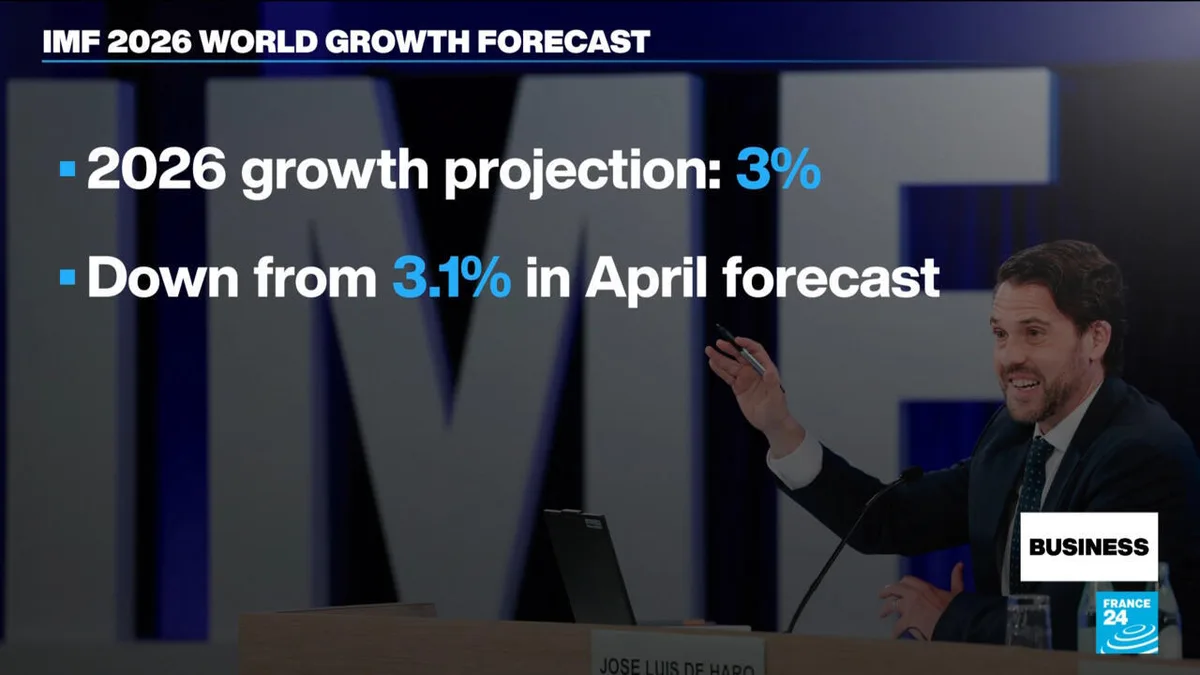
The International Monetary Fund (IMF) cut its global growth forecast for 2026 to 3.0%, down from an earlier estimate of 3.1% and marking the second downward revision this year [1, 2, 3]. The reduction reflects escalating risks from the conflict in the Middle East involving Iran, ongoing trade fragmentation, and potential market corrections tied to artificial intelligence developments [1, 2, 3].
Energy prices contribute significantly to the outlook, rising about 25% since the war began on February 28 and remaining elevated [2]. Shipping traffic through the crucial Strait of Hormuz is still heavily constrained, with only 41 daily ship transits verified compared to about 130 prewar levels [3]. The IMF assumes the strait’s reopening will start mid-July and return to prewar conditions by March 2027 [2, 3].
The forecast projects global inflation will rise to 4.7% in 2026, up 0.3 percentage points from April forecasts, before easing to 3.9% in 2027 [2, 3]. Meanwhile, global trade growth is expected to slow sharply to 3.5% in 2026 from 5% in 2025, with a rebound to 4.3% projected in 2027 [2].
IMF Deputy Director Petya Koeva Brooks said, "The global outlook is being shaped by two powerful forces pulling in opposite directions: the lingering effects of the energy shock from the war in the Middle East and a technology-driven investment boom" [3]. This technology-driven demand helped offset some war-related energy supply drops, supporting economic resilience [2, 3].
Deniz Igan, IMF Research Chief, cautioned, "So far things have been okay, but that doesn’t take away the risk factors that are there, particularly with the war" [2]. Recent US military strikes on Iran between August 5 and 6 have increased geopolitical uncertainty, further impacting the outlook [3].
Growth is forecast to rebound to 3.4% in 2027, though this remains below the average 3.5% growth seen in 2024 and 2025 [2, 3]. The IMF’s next major update on the global economy will likely factor in developments surrounding the reopening of the Strait of Hormuz and any shifts in geopolitical tensions.