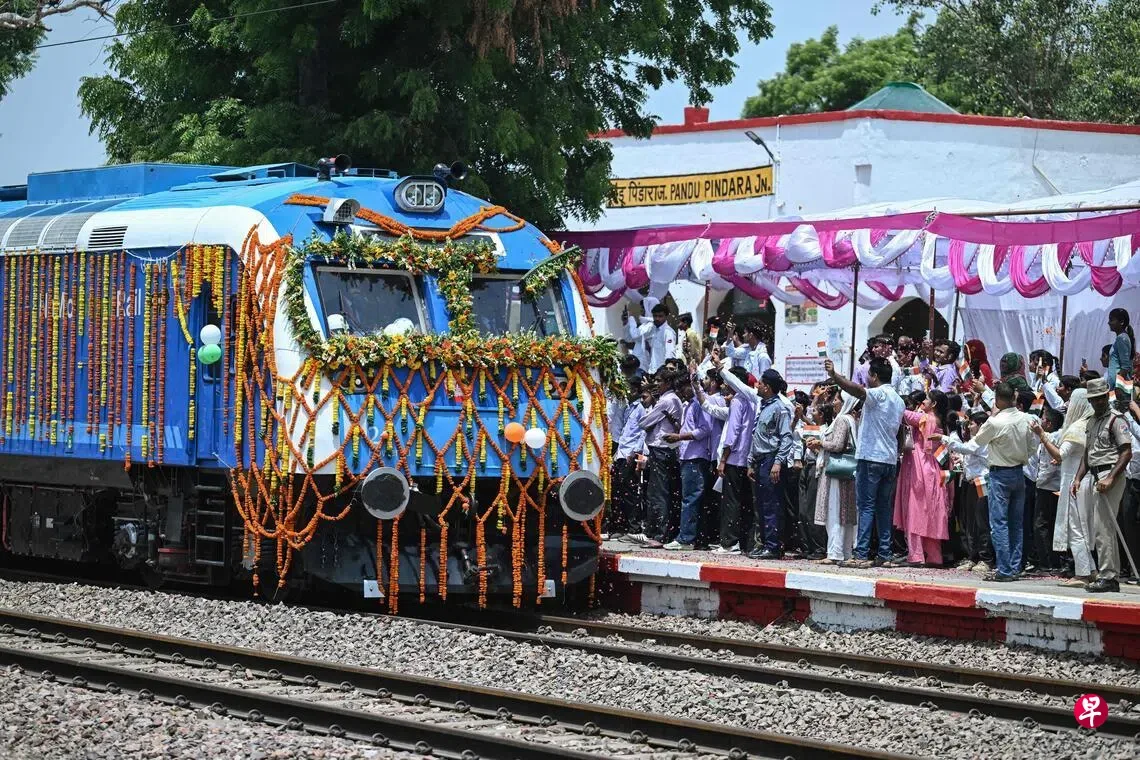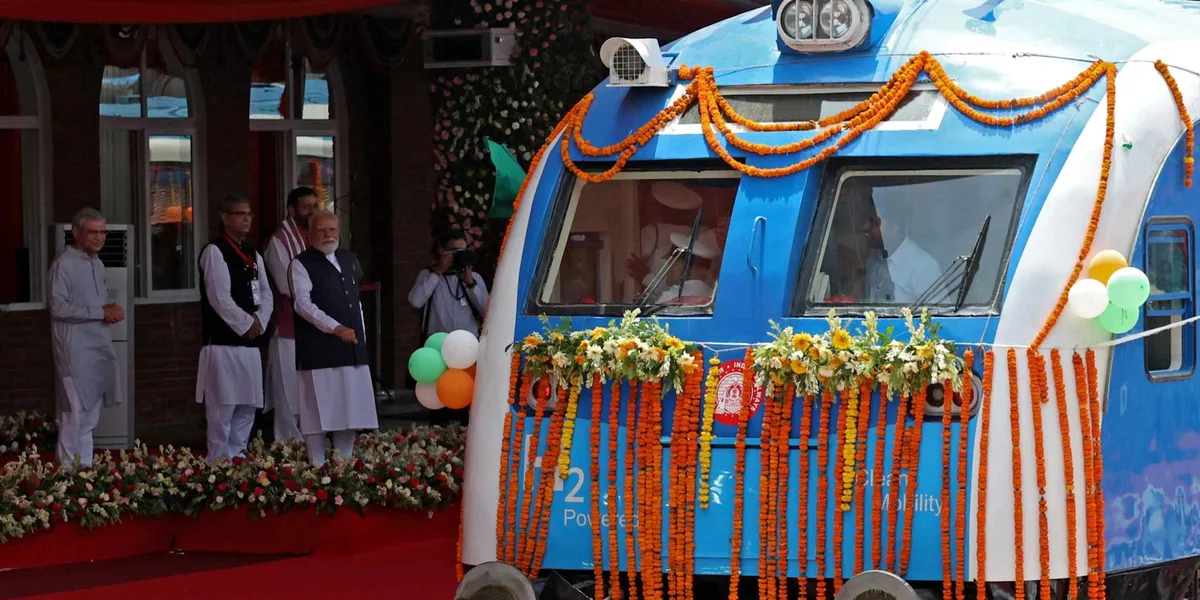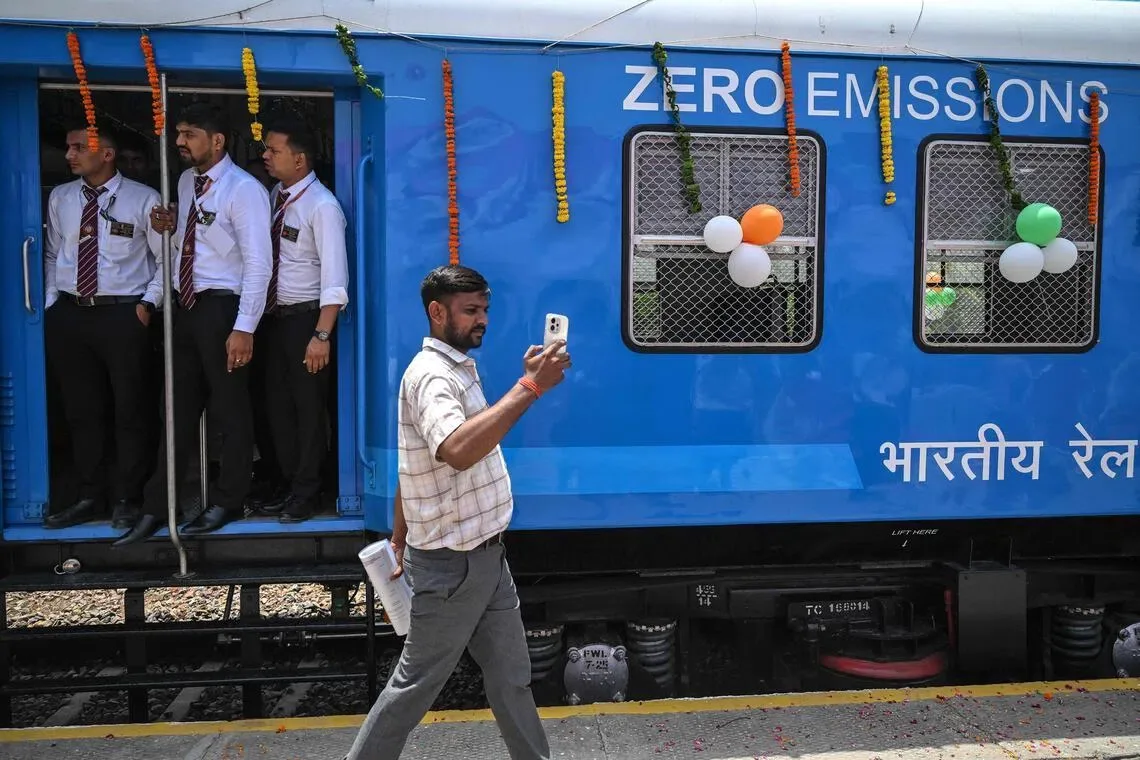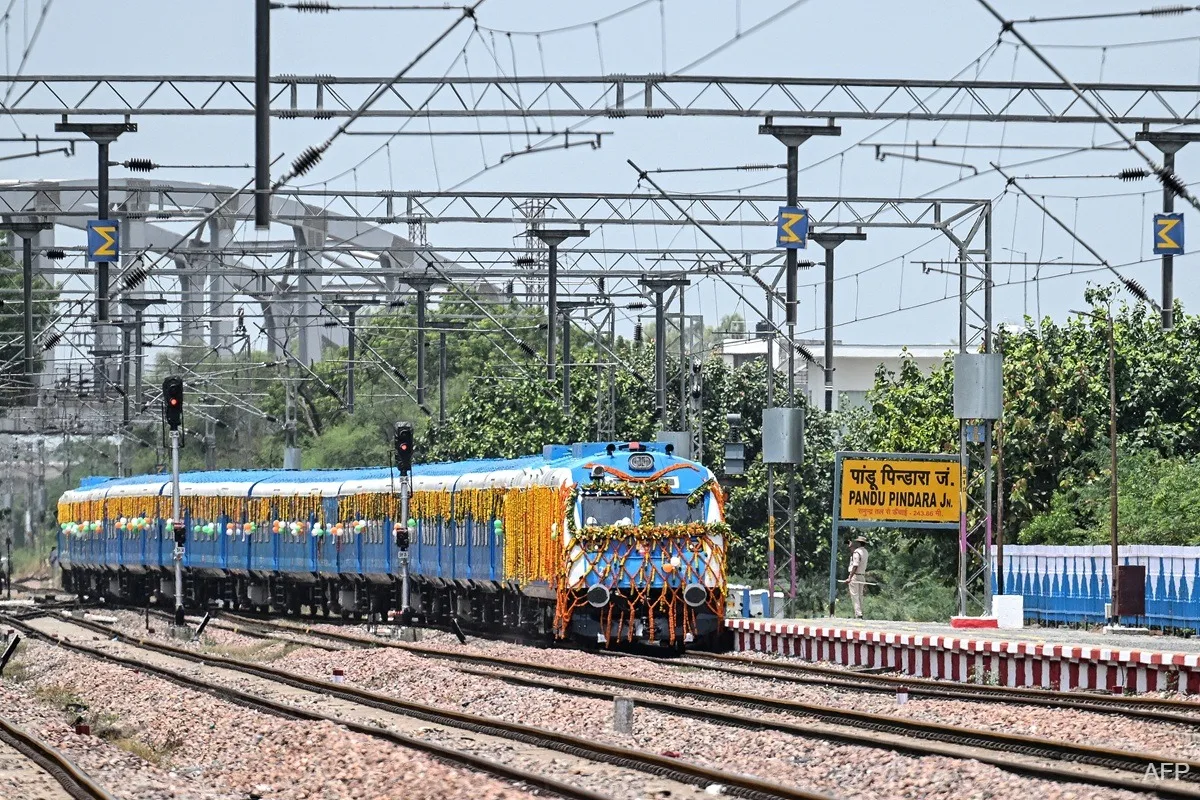
India launched its first hydrogen-powered train on July 17, 2026, with Prime Minister Narendra Modi flagging off the inaugural journey on the route between Jind and Sonipat in Haryana [1, 2, 3, 4, 5]. The train, called the NaMo Green Rail, is a 10-coach vehicle powered by a 1,200-kilowatt hydrogen fuel cell propulsion system, emitting only water and steam during operation [1, 3, 4, 5]. It can travel up to 75 km/h and seat approximately 2,600 passengers, running two return trips daily along the roughly 90-kilometer route [5].
Modi described the launch as "a very significant day in the direction of self-reliant India and sustainable development" [1]. The train was developed entirely in India, though some key components like the fuel cells were imported [1, 3, 4]. The project cost about $12 million USD and is currently more expensive than conventional train services, but costs are expected to fall as the technology matures [1, 3].
Alongside the train, India inaugurated the country's largest hydrogen storage and refueling facility in Jind, with a capacity of around 3,000 kilograms [1, 3, 4]. This pilot project places India among countries such as Germany, Japan, China, and the United States that operate or test hydrogen-powered trains [1, 3, 5].
India's rail network carried 7.41 billion passengers and 1.67 billion tonnes of freight in 2025, making it one of the world's busiest rail systems [1, 3]. Nearly all of the roughly 70,000-kilometer network is electrified, but hydrogen trains can serve routes where electrification is not feasible [5]. India aims to achieve net-zero carbon emissions from its railways by 2030, integrating hydrogen and other sustainability efforts [5].
The launch complements India’s plans to open its first high-speed rail line using Japanese Shinkansen technology, expected in 2027 [1, 3]. The hydrogen train provides a cleaner alternative for medium-speed routes as the country works to modernize and decarbonize its rail system.