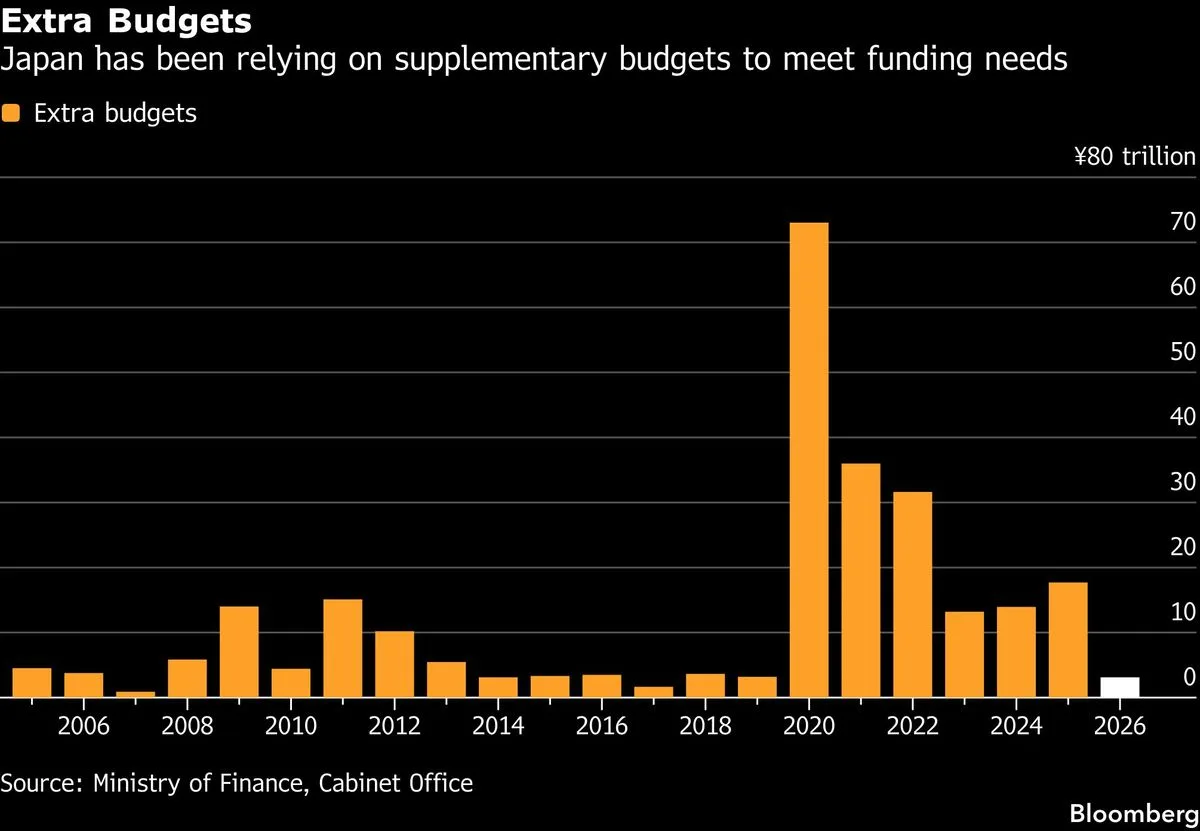
Finance Minister Satsuki Katayama announced on June 9 that Japan is undergoing the largest budgetary reform process since the end of World War II, calling it "the biggest overhaul since the end of the war" and emphasizing the government's strong commitment to change [1]. The reform aims to reduce Japan's long-standing reliance on extra budgets, which are typically used throughout the fiscal year to cover unexpected expenses such as natural disasters, economic shocks, or sudden crises [2].
A recently approved extra budget totaling ¥3.1 trillion (US$19.4 billion) includes a newly created ¥2.5 trillion reserve fund designed to address rising inflation and the economic fallout from the ongoing Middle East conflict [2, 1]. Katayama explained this reserve fund is a key part of adapting government finances to better anticipate and respond to such external shocks [1].
Prime Minister Sanae Takaichi supports the reform's goal to reduce dependence on supplementary budgets, aiming for greater fiscal predictability and discipline within Japan's annual budgeting process [2]. Japan currently has the highest ratio of public debt to GDP among advanced economies, fueling urgency around tighter fiscal management and sustainable budgeting practices [2].
Though the government intends to largely phase out the routine use of extra budgets, officials acknowledge that compiling supplementary budgets will remain necessary for unforeseen events that cannot be fully anticipated during the initial fiscal planning [2]. Katayama noted the reform is intended to bring a new level of commitment to fiscal governance and budget system overhaul [1].
The approved extra budget and reserve fund came into effect in early June, marking the first concrete step in what officials describe as a historic restructuring of Japan's budgetary approach [2, 1].