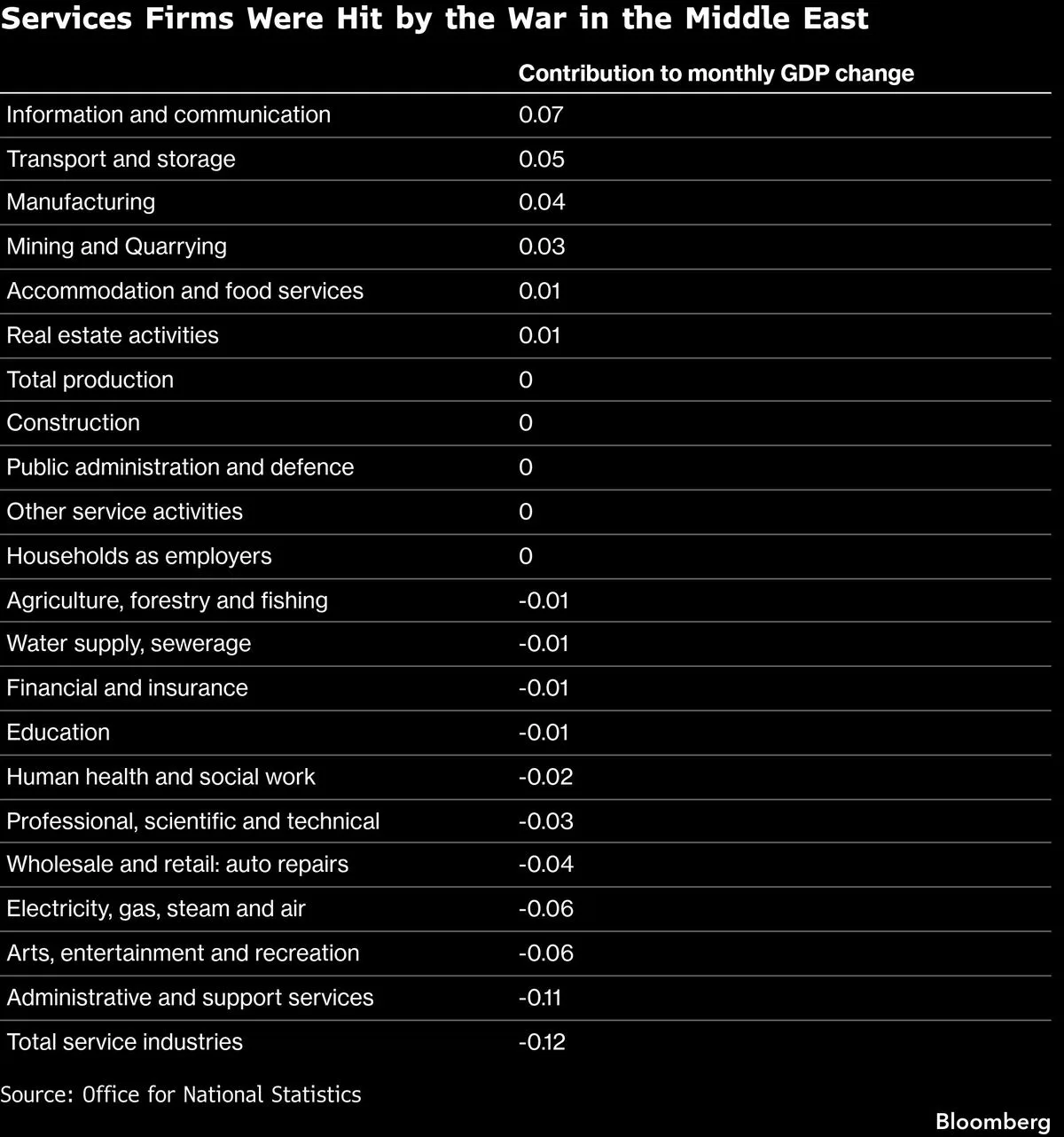
The UK economy contracted by 0.1% in April 2026, marking its first monthly decline since August 2025, official data showed today [1, 2, 3, 4, 5, 6, 7, 8]. This followed monthly growth of around 0.3% in March and a robust 0.6% increase in the first quarter of 2026, which had been the strongest among G7 nations [1, 2, 3, 4, 6, 8].
The slowdown was driven mainly by a 0.2% drop in services output, partially offset by a 0.1% rise in construction and a small uptick in manufacturing [1, 2, 3, 4, 5, 6, 7]. Key service sectors affected included administration, arts, entertainment, and disruptions to sporting events linked to the conflict in the Middle East, which caused UK companies to face cancellations and reduced activity [1, 2, 3]. Manufacturing, wholesale, warehousing, transport, accommodation, and travel agencies also saw lower turnover in April [2, 3].
The downturn reflects the economic impact of the Iran war, which began in early 2026 after US and Israeli military actions against Iran at the end of February sparked global energy price spikes and raised inflation expectations [1, 2, 3, 4, 9, 6, 7, 8]. Energy costs and borrowing rates increased significantly due to the conflict, complicating growth prospects. Chancellor Rachel Reeves said, "Before the conflict in the Middle East, growth was higher than expected and inflation was falling. This is not a war we wanted or joined, but one that will have an impact at home" [1, 2, 3].
The Bank of England faces a delicate balancing act between tackling inflation driven by energy prices and avoiding further damage to already weak demand. The outlook for further interest rate hikes remains uncertain [1, 2, 3, 6]. The International Monetary Fund forecast in May that UK growth will slow to around 1.0% for the year due to the ongoing Middle East conflict [4].
Prime Minister Keir Starmer is under increasing political pressure amid the economic slowdown linked to the war [2, 3, 9, 8].
Higher energy costs and rising borrowing rates are expected to suppress economic growth further in the second quarter, analysts warn [1, 2, 3, 4, 6, 7]. The UK government maintains that the economy entered the crisis on a relatively strong footing despite the challenges posed by the war [1, 2, 3, 9].
The Office for National Statistics and news outlets published the complete GDP figures for April on June 12, confirming the contraction and the war’s economic effect [1, 2, 3, 4, 5, 6, 7, 8].