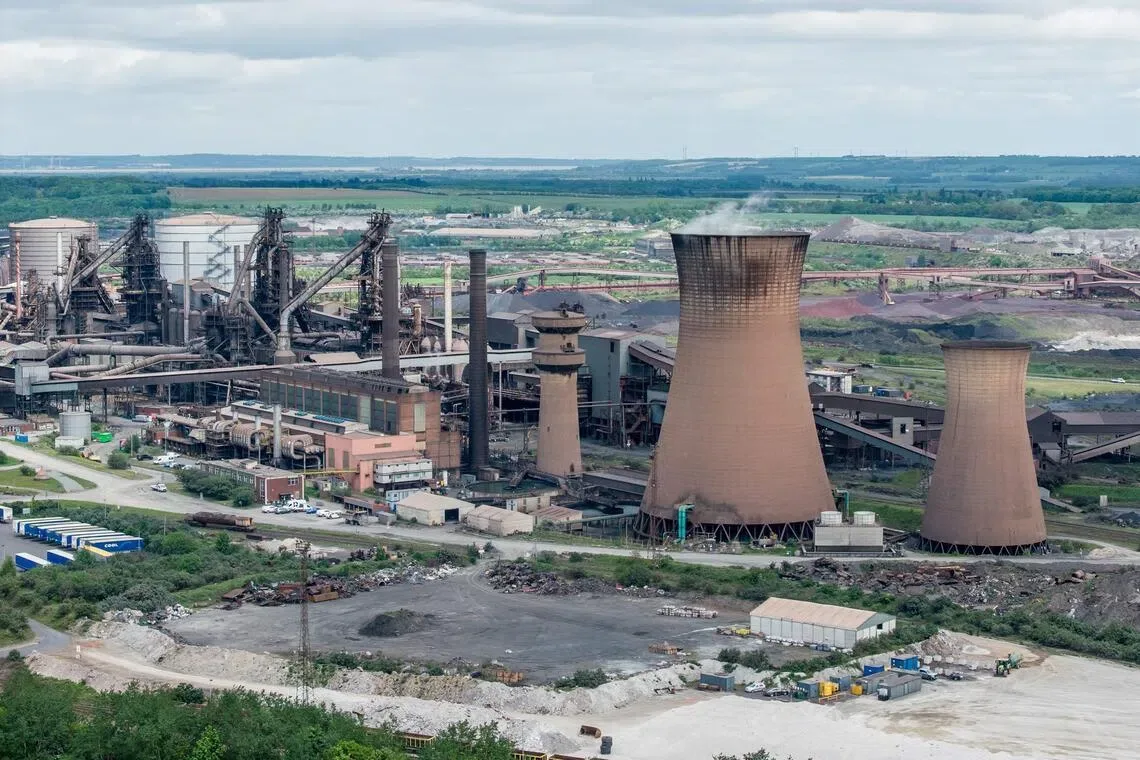
The UK government formally nationalised British Steel on July 15, 2026, after Parliament passed legislation enabling the move earlier in May 2026 [1, 2, 3]. The Scunthorpe plant, employing around 2,700 people, is the last UK facility capable of producing steel from raw materials [2, 3].
The government had taken operational control of British Steel in April 2025 from Chinese owner Jingye amid threats to close the Scunthorpe blast furnaces [1, 2, 3]. Jingye was reportedly losing about £700,000 per day before nationalisation and engaged in talks with the UK government that did not produce an agreement [2, 3]. The UK has spent over £1 million daily to keep the plant running since April 2025 [4].
Prime Minister Keir Starmer said the nationalisation safeguards "a vital national capability," protects skilled jobs, and secures British manufacturing [1, 4, 3]. Business Secretary Peter Kyle warned that without blast furnaces running, the UK would lose primary steel production and become wholly dependent on international markets for supply critical to railways and construction. He said, "If that business disappears, we will lose the ability for primary steel production in our country" and stressed the risks of the alternative—letting the company fail [1, 2].
The Scunthorpe plant’s blast furnaces, Queen Anne and Queen Bess, date back to 1954 and 1938, respectively [2]. The government plans to stabilise British Steel and prepare it for a commercially sustainable, low-carbon future to ensure it remains a resilient business [1, 3].
This marks the first time British Steel has been publicly owned since 1988 [1]. Union leaders welcomed the decision and called for investments in public infrastructure to support British Steel and the wider industry [1, 2]. Sharon Graham of Unite called for "serious investment on the ground across the industry to create jobs and make Britain a leading producer of green steel" [2].
Incoming Prime Minister Andy Burnham is expected to pursue more interventionist industrial policies, including additional nationalisations, and the government is considering nationalisation or rescue efforts for other sectors like Thames Water [4].