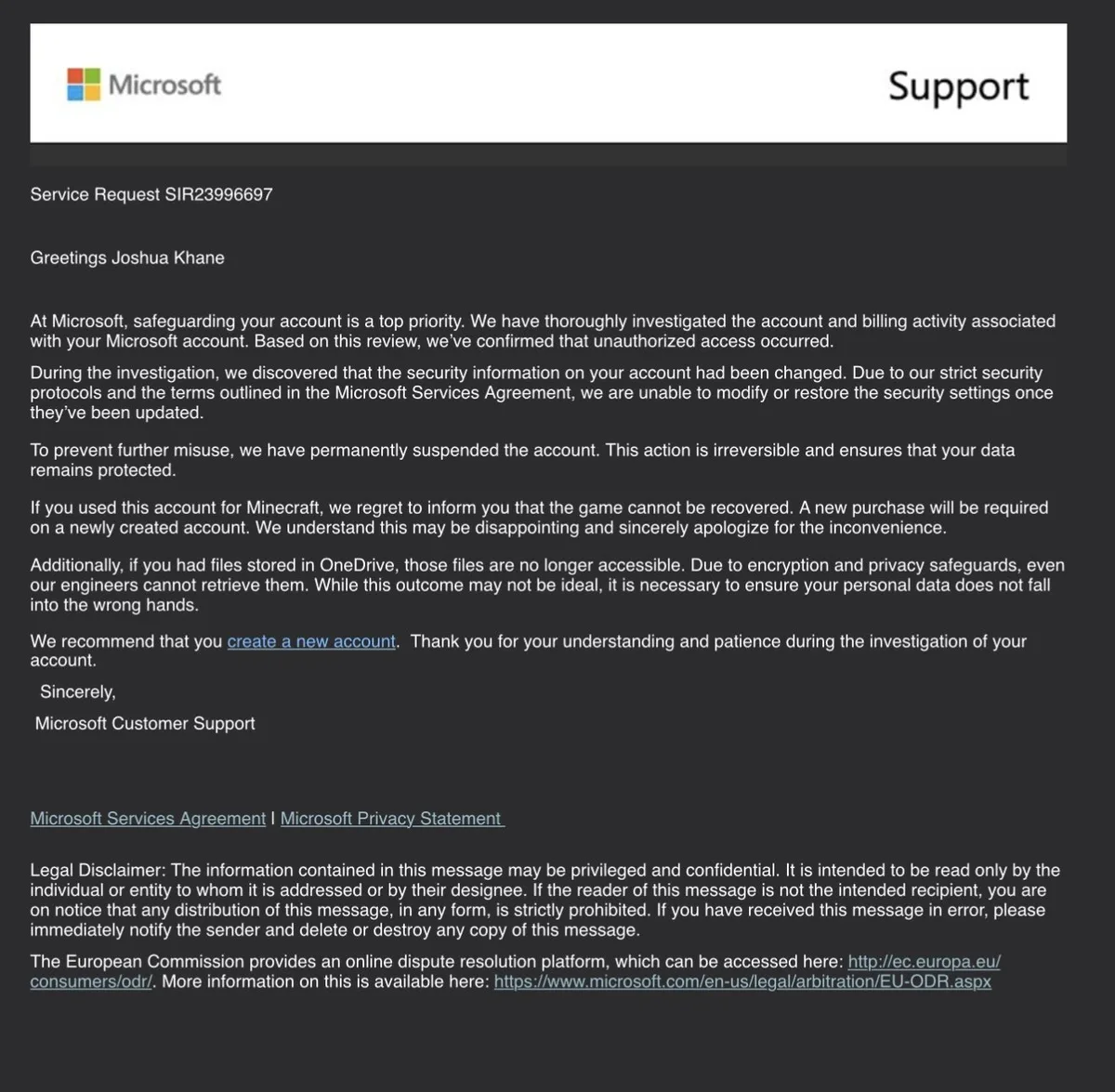
Joshua Khane’s Microsoft account, which contained 25 years of data including games worth thousands of euros and baby pictures of his son, was hacked and subsequently deleted by Microsoft despite Khane verifying ownership multiple times [1, 2, 3, 4, 5, 6, 7]. On July 13, Khane publicly tweeted about his compromised account and Microsoft’s refusal to restore it [3, 8]. The following day Microsoft confirmed the account had been hacked and deleted, telling Khane the suspension was permanent and the data irretrievable [1, 2, 5, 6, 7].
Khane expressed sharp criticism toward Microsoft’s customer support, saying, "Microsoft DELETED my account AND OneDrive!!?? After ACKNOWLEDGING that I’m the owner of the account and that it was compromised??? 25 fucking years of data, thousands of euros spended on games?? My son’s baby pictures? GONE!" [1]. He further suggested Microsoft selectively restores accounts based on user status, stating "It’s unfortunate that such a big company can bring back your account if you ask them to. The way it all went, to me, is a little bit shady, because it’s not that they can’t bring back your account — they won’t bring back your account if you’re a nobody." [8]
After the story went viral and drew community attention, Microsoft responded publicly. On July 15, the official Xbox account said, "We’re sorry this happened, it’s not the experience we want anyone to have when their account is compromised. We have been working to restore access to your purchases and reached out with the next steps." [8] Microsoft restored Khane's account and data on July 16. Khane publicly thanked the company but reiterated his dissatisfaction with the initial handling of the case [8, 2].
This incident has renewed discussions about the risks of digital ownership and the need for robust account recovery options as the gaming industry increasingly depends on digital content delivery [3, 8, 4, 7]. Similar prior cases include a Brazilian player suing Microsoft over a hacked account, which Microsoft lost in court after refusing to restore access and ultimately settling for 400 USD [5, 6, 7]. Sony’s removal of digital content and store closures have also raised concerns regarding digital rights [5, 6, 7].
Microsoft’s next steps on the issue have not been detailed, but the restoration sets a precedent for handling hacked accounts containing extensive user data and digital purchases.