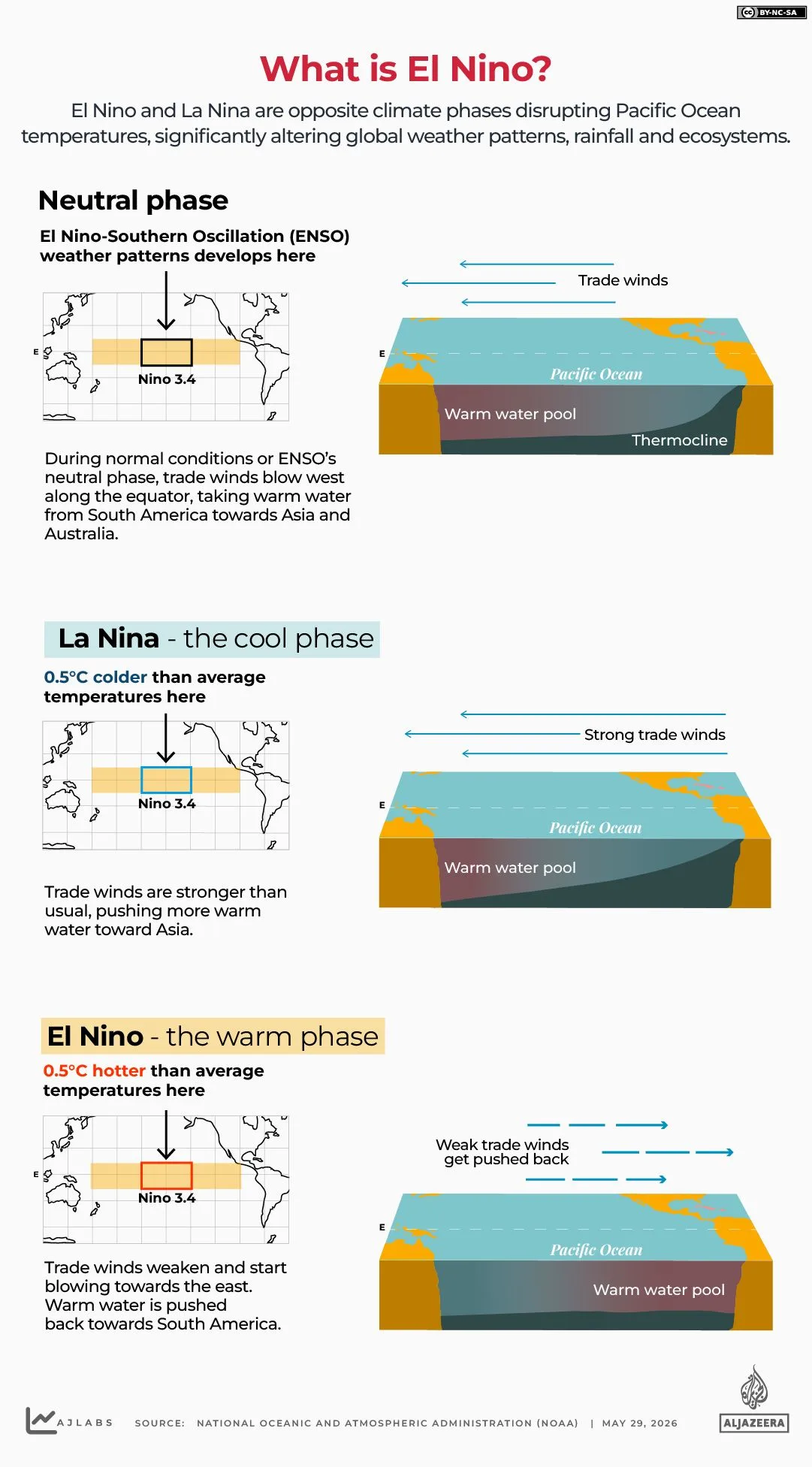
Australia's Bureau of Meteorology officially declared an El Niño event underway in the tropical Pacific on June 16, 2026. The event is forecast to be strong to very strong based on warming sea surface temperatures in the central tropical Pacific, with about half of forecast models suggesting it could become the strongest since 1950, nearly 70 years ago [1, 2, 3, 4, 5, 6, 7, 8].
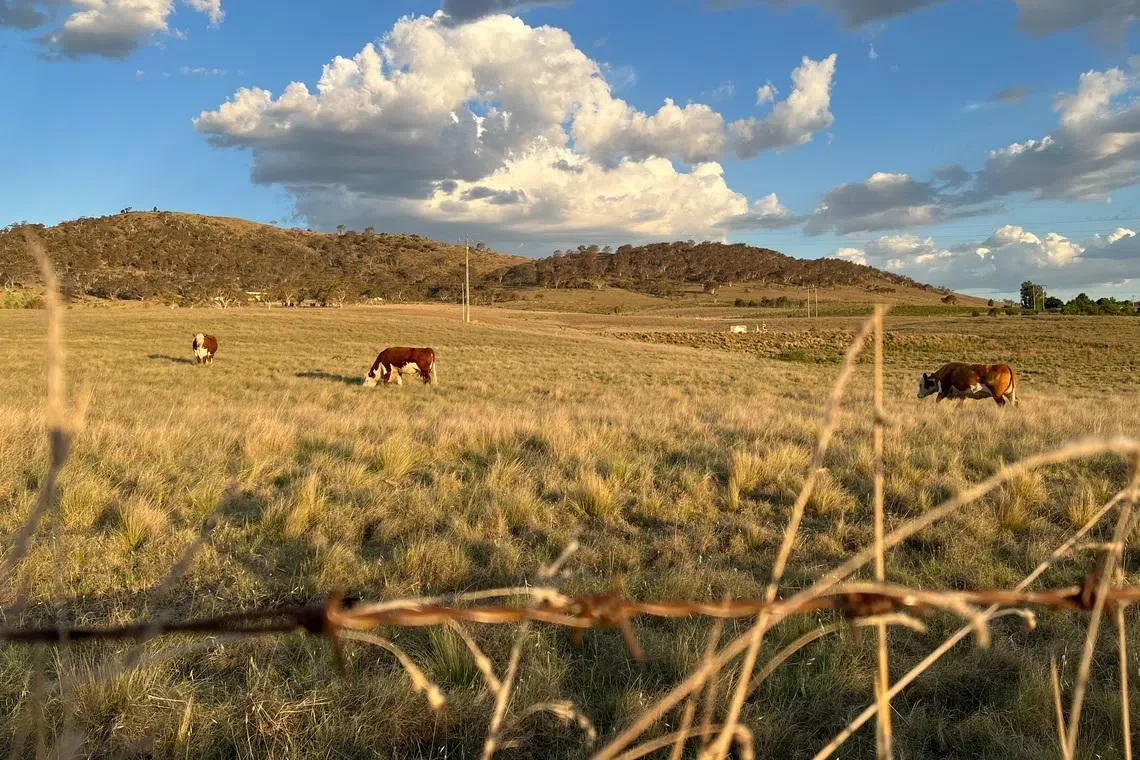
El Niño events typically cause reduced rainfall in eastern Australia during winter and spring, higher daytime temperatures in southern areas, and an increased risk of frost. These conditions threaten agricultural output including key exports such as wheat, sugar, and beef [1, 2, 3, 4, 7]. The Bureau cautioned the strength of this El Niño does not guarantee the severity of climate impacts across Australia [2].
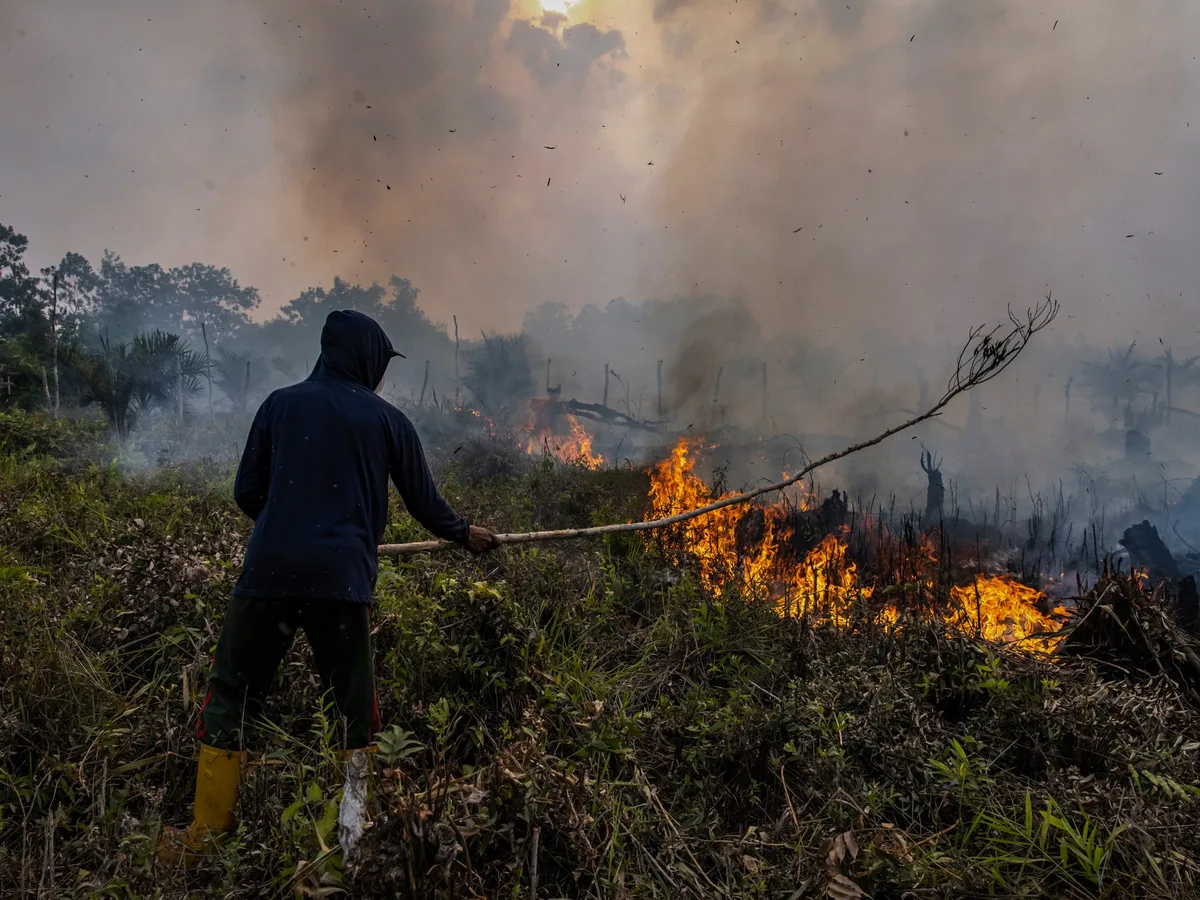
Climate change is expected to worsen the impacts of the event. Felicity Gamble of the Bureau of Meteorology said, "We have to keep in mind that we are in unprecedented conditions because of the global heat [in the oceans]. We see this event emerge in a world that is 1.5C hotter, and we are likely to see unprecedented temperatures in our oceans. Climate change will amplify those impacts that we anticipate, such as heat and fires." [2]
Previous strong El Niño events had significant effects. The most recent occurred in 2023-2024, causing the driest three-month period on record in Australia. The 2015-2016 event triggered widespread drought and reduced grain and oilseed production [1, 3, 4].
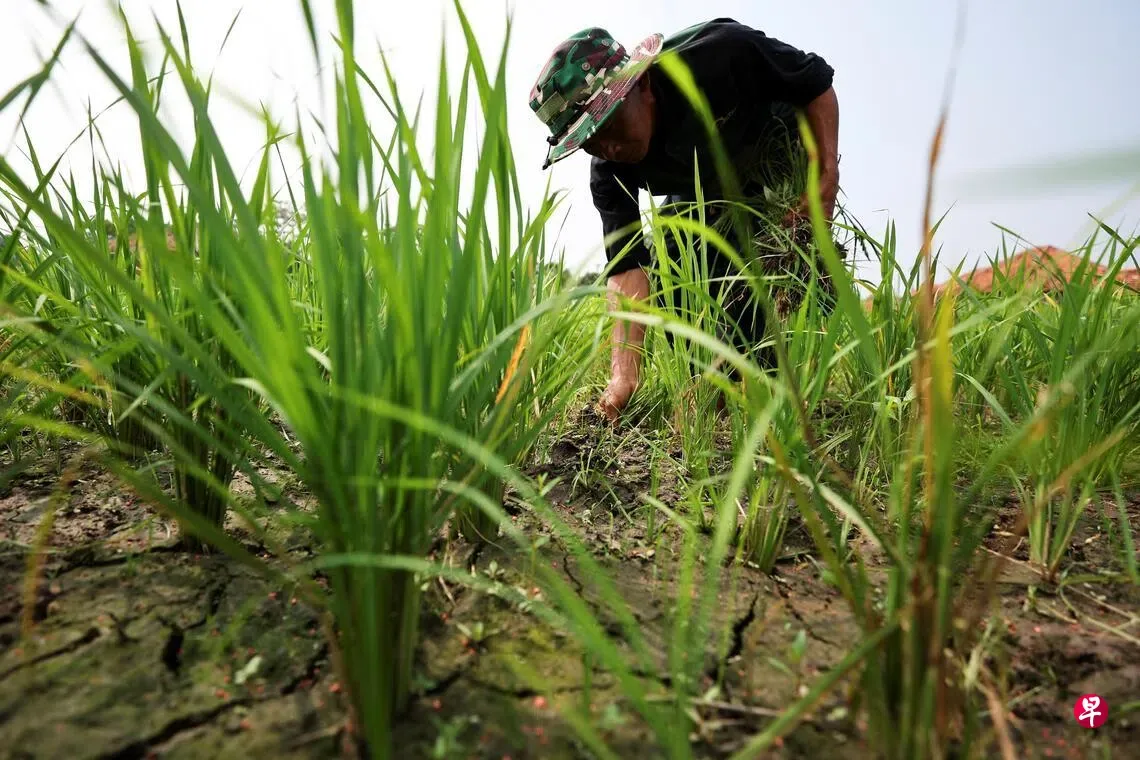
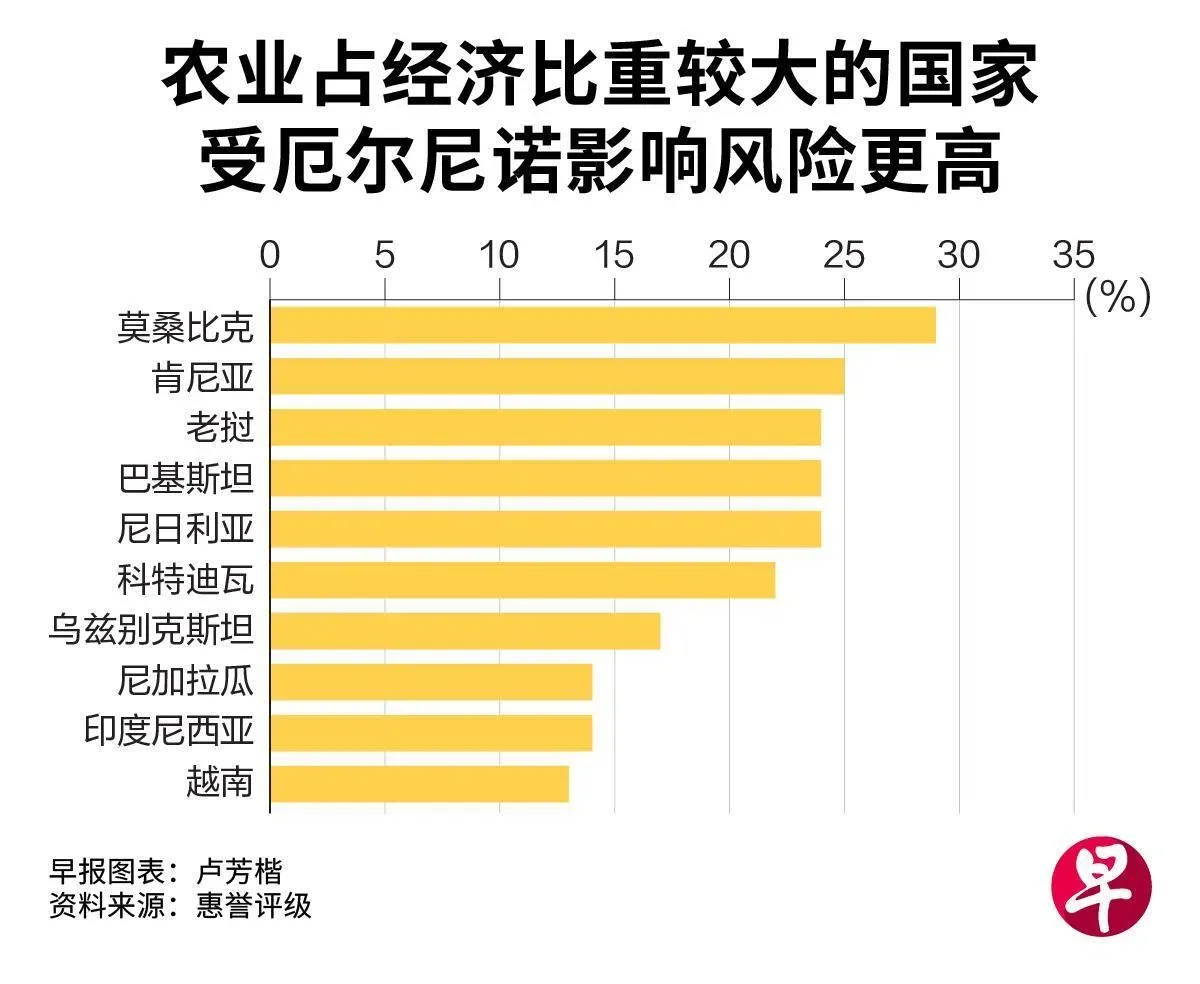
Globally, El Niño disrupts weather patterns with excessive rains in the Americas and hot, dry conditions across Asia, impacting crop planting and food supplies in densely populated regions [3, 4, 5, 6, 7, 8]. Fitch Ratings warned that El Niño could boost food prices and inflation in Southeast Asia, especially Indonesia and Vietnam, where agriculture accounts for over 10% of GDP. They noted drought and irregular rainfall risks would compound production challenges amid rising fertilizer costs [9].
The World Meteorological Organization forecasts an 80% chance the El Niño event will persist through June to August 2026 and over 90% chance it will continue until at least November 2026 [4].