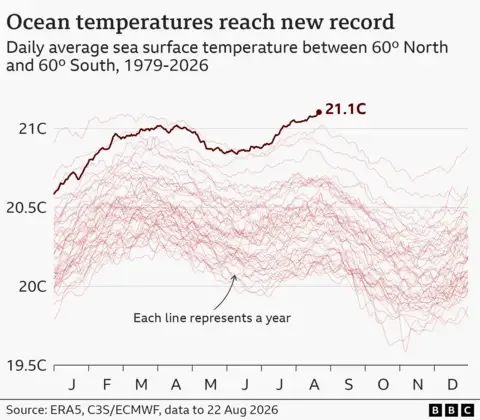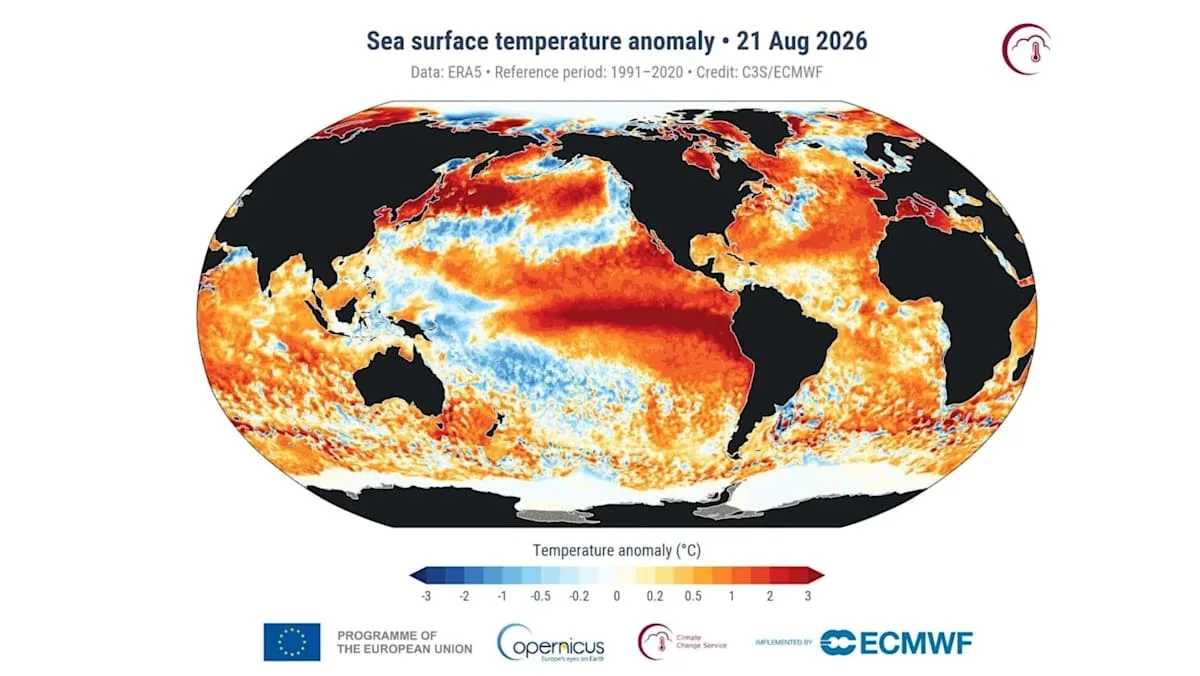
The global average sea surface temperature outside polar regions reached a record 21.1°C on August 22, 2026, surpassing the previous high of 21.09°C set in March 2024, according to data from the European Copernicus Climate Change Service and ECMWF's ERA5 dataset [1, 2, 3, 4, 5]. This record is unusual as ocean temperatures typically peak in March or April, following the Southern Hemisphere summer, rather than in August [1, 2, 6, 3, 4, 5].
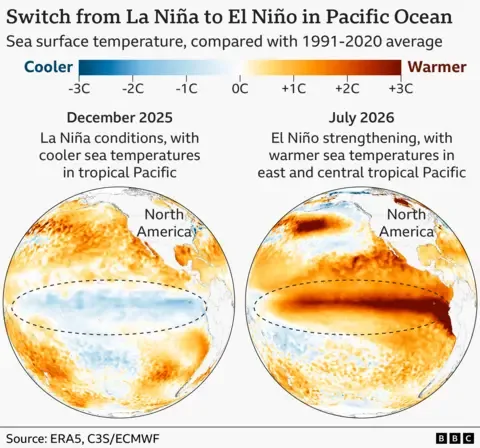
Measurements were collected by satellites, buoys, and ships, providing comprehensive coverage of ocean surface conditions worldwide [1, 2, 4]. Scientists attribute the early and record-breaking peak largely to the current El Niño event, which is compounding decades of human-driven warming. Dr. Samantha Burgess explained, "El Niño is adding heat to the system, but it is doing so on top of decades of human-driven warming" [1]. She added that rising ocean temperatures increase risks for marine ecosystems and coastal communities [2].
Warm ocean waters have been detected not only across the tropical Pacific but also in distant regions. For instance, the western English Channel and parts of Europe have experienced prolonged marine heat wave conditions, with temperatures in July reaching up to 7°C above normal, a phenomenon described by Prof. Tim Smyth as "unprecedented" [1, 5].
Dr. Jeremy Grist noted the significance of the current record, stating, "The fact that we are already breaking records is an early indicator of how strong the El Niño is becoming." He predicted that if conditions remain similar, "we might expect the ocean temperature record to be broken again in March or April 2027" [1, 5].
The 2026 El Niño event is expected to peak between November 2026 and January 2027, likely pushing ocean temperatures even higher during that period [6, 5]. Scientists warn that continuing increases in sea surface temperatures will heighten threats such as extreme weather, sea level rise from thermal expansion, damage to marine ecosystems, and reduced carbon dioxide absorption by oceans [1, 2, 3, 4, 5].