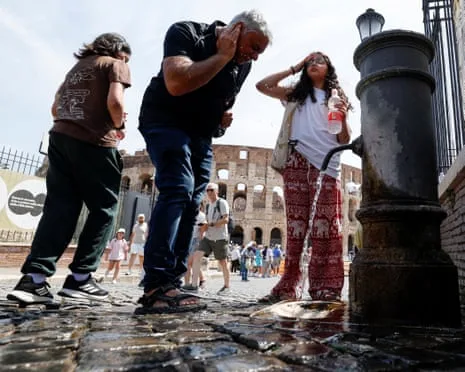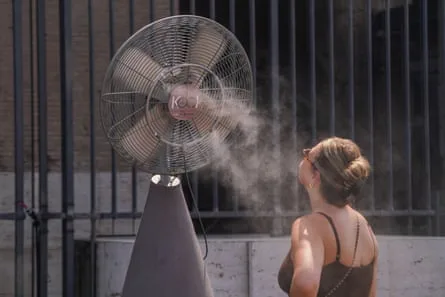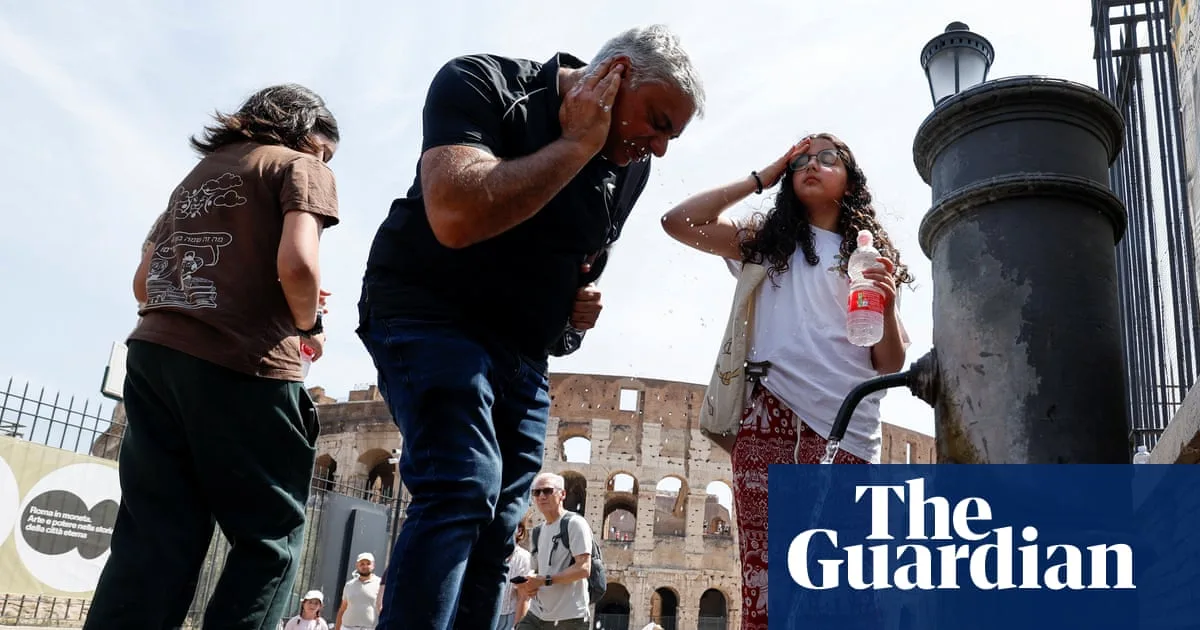
Italy is experiencing its fourth heatwave of the summer, prompting the health ministry to place all 27 of its major cities under the highest "red" heat alert by Thursday, August 6, 2026 [1, 2]. By Monday, August 3, 25 cities were already under the red alert, with only Reggio Calabria and Messina remaining on lower amber/yellow alerts [3, 4, 5].
Temperatures have reached extreme levels across the country. Many areas recorded 40C or higher, including a peak of 41C in the province of Terni on Sunday, August 2 [1, 5]. Night-time temperatures have also remained unusually high, staying above 25C in some areas and causing what meteorologists call "super-tropical nights" [5].
Meteorologists attribute the intense heat to a subtropical anticyclone originating from North Africa that strengthened over the Mediterranean, combined with warming sea surface temperatures around 30C [3, 4, 5]. Lorenzo Tedici, a meteorologist at iLMeteo.it, said, "All this excess heat will fuel atmospheric instability," indicating potential thunderstorms in mountainous regions later this month [5].
Authorities have urged residents to take precautions against the heat. They advise avoiding direct sunlight between 11 a.m. and 6 p.m., staying indoors as much as possible, and hydrating by drinking at least 1.5 liters of water daily while avoiding fizzy drinks, coffee, alcohol, and heavy meals [3, 1, 4].
The heatwave has led to at least four heat-related deaths since late July and early August. Victims include a 19-year-old tomato-picker, a 40-year-old carpenter, a 55-year-old security guard, and a 90-year-old woman [1, 2].
The prolonged heat and drought have worsened conditions in the Po Valley. Over 100 towns face water supply issues, and agriculture is suffering. Grape ripening has accelerated, and milk production has dropped by about 10% due to heat stress on livestock [1]. The extreme heat has also increased wildfire risks across Italy and other European countries such as France, Greece, Spain, and Portugal [3, 4, 5, 2].
The hottest phase of the summer is expected to continue at least until mid-August, with some forecasts predicting thunderstorms in the Alps and Apennines [5]. Authorities and experts remain focused on mitigating health risks as temperatures remain dangerously high.
The next official update on heat alerts and weather conditions is expected in the coming days as the heatwave progresses [1, 2].