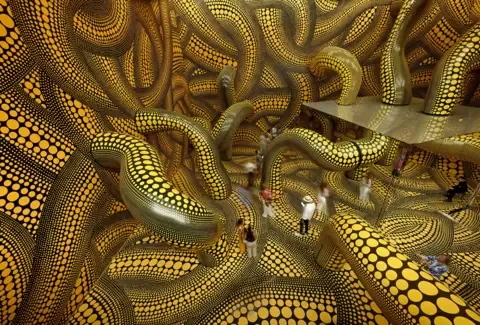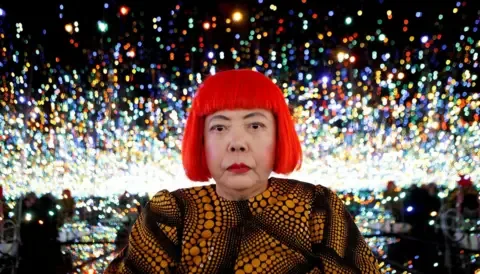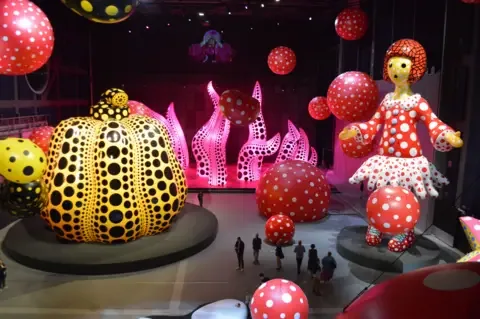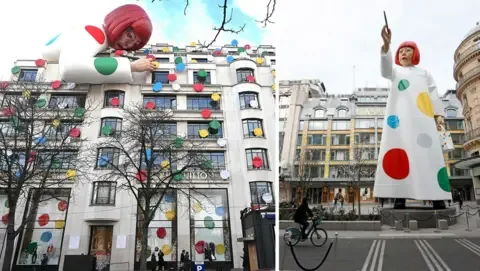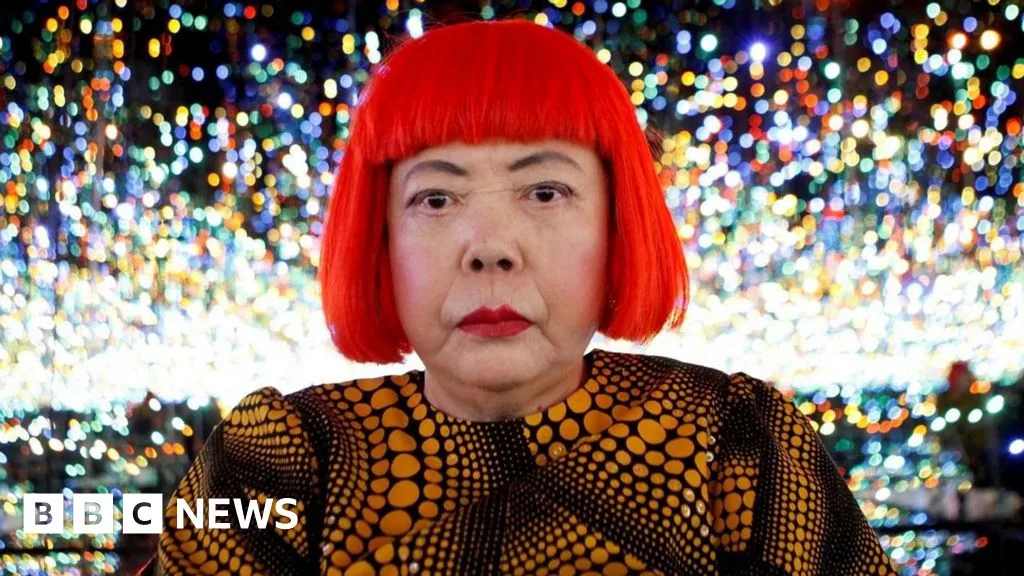
Yayoi Kusama, the Japanese avant-garde artist famous for her polka dot-covered sculptures and immersive installations, died at age 97 on August 14, 2026, in a Tokyo hospital [1, 2]. Kusama spent the latter half of her life voluntarily living in a psychiatric hospital in Tokyo, where she continued creating art [1, 2].
Born in 1929 to a wealthy yet troubled family, Kusama began drawing her signature dots and net patterns at the age of 10 [2]. She moved from Japan to Seattle in 1957, then to New York, encouraged by Georgia O'Keeffe to pursue her international art career [2]. Kusama described Japan as “small, vulgar, feudalistic and full of disdain for women,” stating, “I was born and raised in Japan, but I’m not influenced by Japanese culture and tradition” [2].
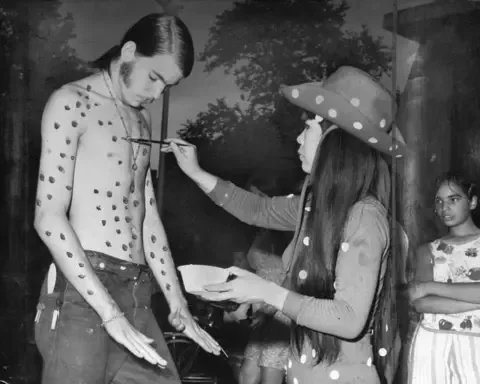
Her art frequently explored themes of "self-obliteration," using repetitive dot patterns to cover herself and her surroundings, creating a unique visual language [2]. Kusama stirred controversy in the 1960s New York art scene with phallic sculptures and nudity exhibitions during a time when the art world was dominated by men [1].
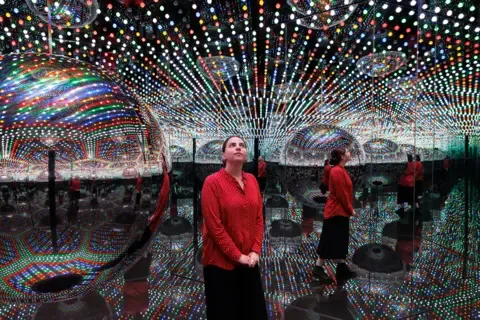
Beginning in 1965, Kusama's "Infinity Mirror Rooms" installation attracted millions of visitors worldwide and remain iconic in contemporary art [1, 2]. Her exhibitions drew large international crowds, and her works became highly sought after, fetching some of the highest prices ever recorded for a female artist [1, 2].
Despite her influence, Kusama experienced distress as male contemporaries like Andy Warhol and Claes Oldenburg drew on her ideas and gained more recognition [1]. Kusama held her first solo exhibition in Matsumoto, Japan, in 1952 before launching her international career [2].
Kusama remained active in her art practice until her death at age 97. Her legacy as a pioneering avant-garde artist endures worldwide [1, 2].