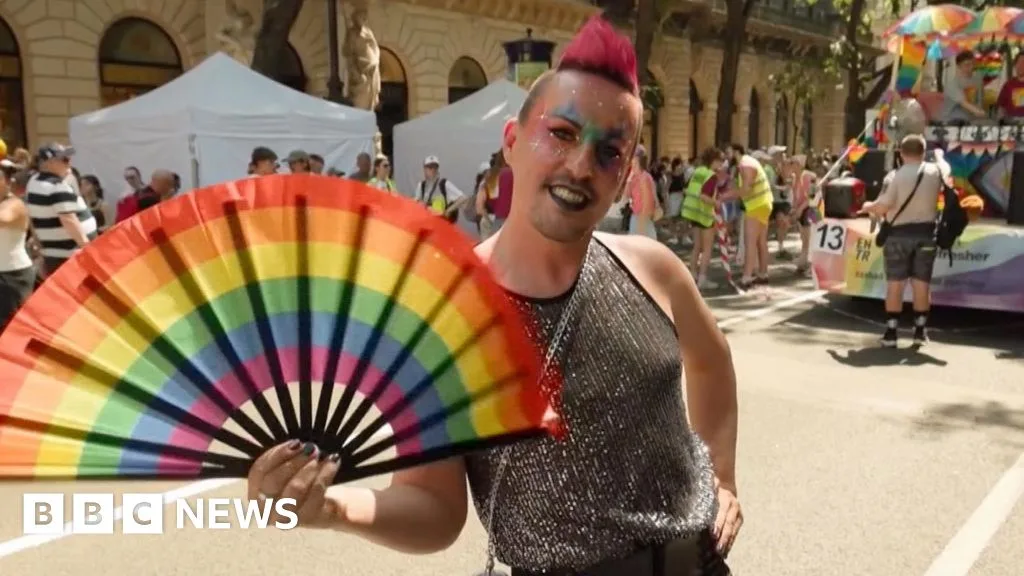
Budapest held its first Pride parade since Viktor Orban's defeat in the April 2026 election, with more than 10,000 people marching on June 27 despite record heat around 40C [1, 2, 3].
Last year's Pride march was banned by Orban's government but still attracted a record turnout estimated around 200,000 participants who defied the ban [1, 2, 3]. Orban passed restrictive laws targeting LGBTQ rights, including banning gender changes on official documents, halting adoption rights for same-sex couples, and banning certain school materials related to homosexuality and gender transition [1, 2].
The April election ended Orban's 16-year rule when Peter Magyar's centre-right Tisza party defeated Fidesz, signaling a political shift [1, 2, 3]. Since taking office, Prime Minister Magyar has expressed willingness to discuss LGBTQ rights, saying, "We have made it clear that, in our view, everyone is free to love whom they want and live with whom they want, as long as they do not violate the law... we are open to that" [2].
Many Pride participants expressed hope and optimism after the political change. Eighteen-year-old student Fanni Fajth said, "Everyone is just so much more uplifted. I think it would be wonderful if we just had equal rights finally after all these years" [1]. Petra Toth, also 18, said, "I think the situation is getting better and better, mainly because of the change in government" [2]. Chemist Mate Tarnai, 51, said the political change brought a more relaxed atmosphere: "We feel more freedom personally as well, and also the atmosphere in the country is much more relaxed than last year" [1].
LGBTQ acceptance remains stronger in Budapest than in rural Hungary, where social attitudes are more conservative. A participant named Lidia from northern Hungary noted, "In Budapest, people are ahead of the curve and accept everyone, but in rural areas... it’s a whole other world. I hope the country gets back on track and that gay people will be able to marry and adopt children—but it will take time" [3].
Teacher Zsuzsanna Naszalyi, 53, noted the physical challenge of the heat during the march saying, "We’re proud of ourselves and everyone else for being here and coming out despite what feels like 50C on the asphalt" [3].
The political shift that enabled this Pride march follows the April 2026 election defeat of Orban’s government, ending a 16-year rule marked by restrictive LGBTQ policies [1, 2, 3]. No new specific LGBTQ policy changes have been announced yet by Magyar's government [1, 2].