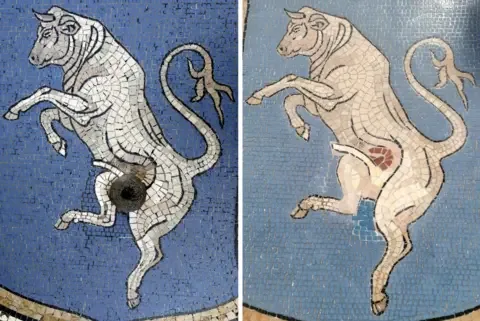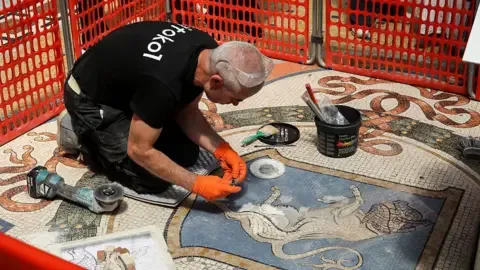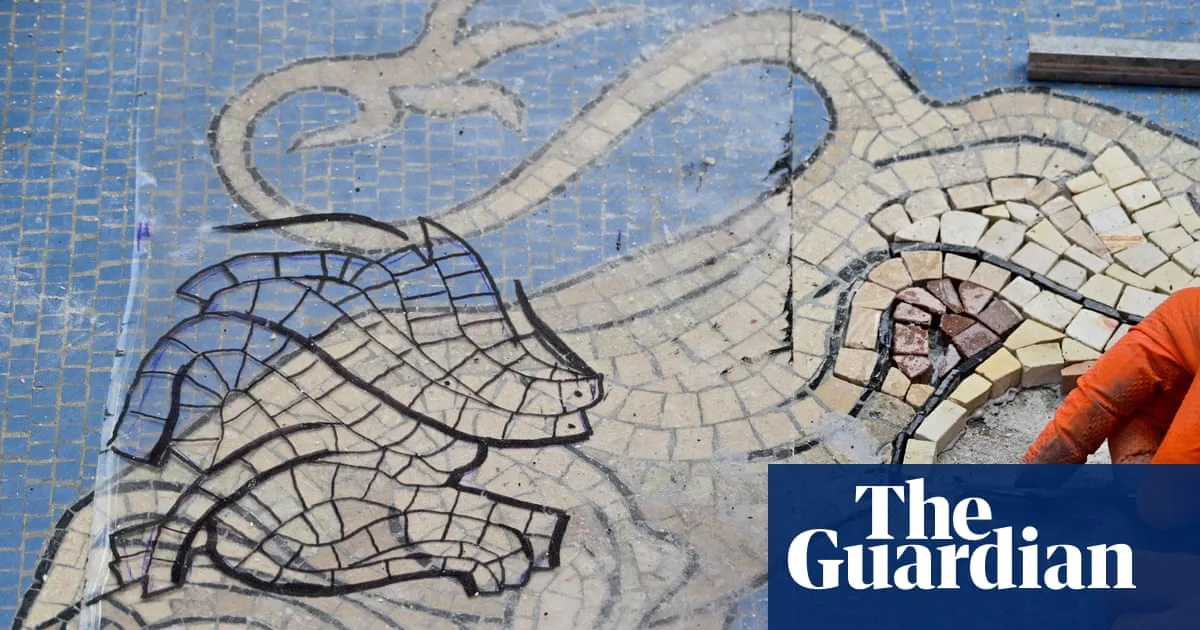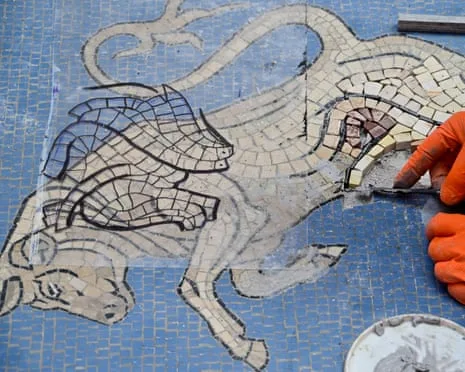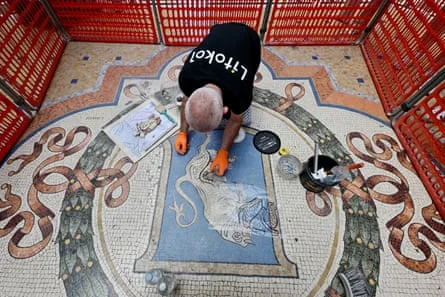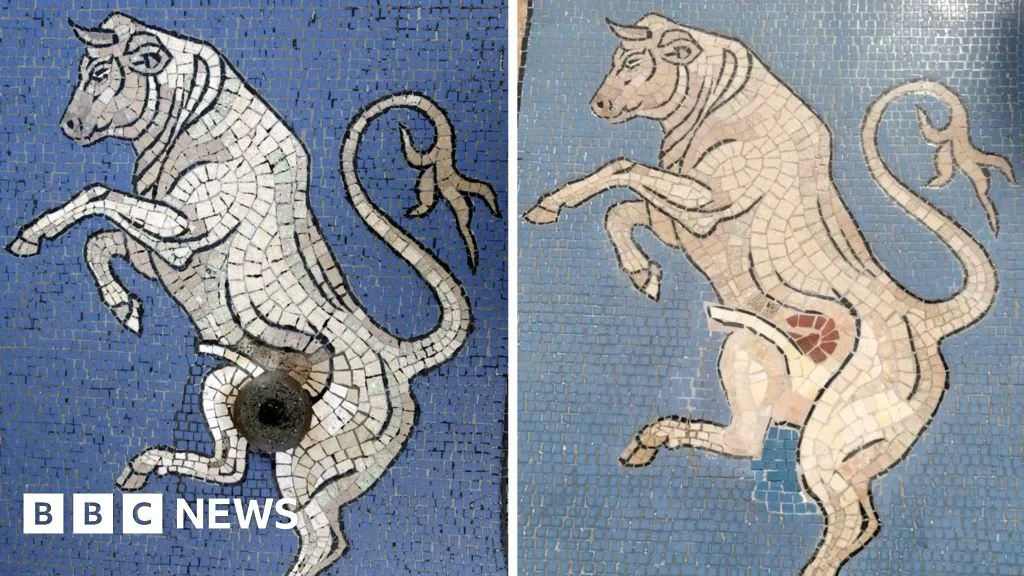
The Rampant Bull mosaic at Milan’s Galleria Vittorio Emanuele II underwent restoration last week to fix a crater caused by tourists repeatedly spinning their heels on the bull’s testicles, a local good-luck ritual believed to bring a return to Milan [1, 2]. The mosaic, originally made with beige and blue marble and symbolizing the city of Turin, has become a popular tourist attraction since the Galleria’s construction between 1865 and 1877 [1, 2].
Milan councillor Marco Granelli announced the mosaic was "completely restored" over the weekend prior to June 1, though the city council later clarified the work was not yet fully completed [1, 2]. The €30,000 (£26,000) restoration used pink marble closely matching the original stones, unlike a darker marble used in a 2017 repair [1, 2]. Master restorer Gianluca Galli crafted the new pieces by hand and said he "had received no objections to his work, carried out under the 'watchful eye' of the council" [1].
However, when the mosaic reopened to the public on June 1, it sparked immediate mockery online for the missing or less visible testicles. Tourist commenters asked: "What happened to the testicles?" and said "Something’s missing." [1, 2]. Some accused the restoration of 'castration' or censorship, though officials said the bull’s figure remains an admired "living heritage site which can wear out easily precisely because it is loved and frequented," according to Granelli [2].
The bull’s testicles have long been worn down due to the heel-spinning ritual popular among tourists, similar to damage seen on other Italian attractions like Juliet’s statue in Verona [2]. The restoration aimed to repair this wear while preserving the mosaic’s historic integrity.
The next phase of the restoration will conclude as additional finishing touches still remain, according to Milan’s city council statements. Officials plan to continue monitoring the mosaic to balance preservation and public access.